Best Value Power Tool Kit for Basic Remodeling Work
What's inside
As an Amazon Associate I earn from qualifying purchases. This post may contain affiliate links at no extra cost to you.
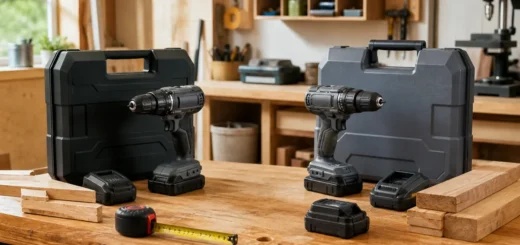
For basic remodeling—hanging doors, installing trim, assembling cabinets, repairing drywall, and building occasional shelves—a compact cordless kit is usually the best value. You do not need the biggest batteries or the most powerful impact driver. You need a drill, an impact driver, a light, and perhaps a reciprocating saw, backed by batteries that are easy to replace and shared across other tools.
As an Amazon Associate we earn from qualifying purchases at no extra cost to you.


What Basic Remodeling Really Requires
A two-tool kit with a drill and impact driver handles most indoor work. The drill is for controlled holes and screws in softer materials. The impact driver is faster for long construction screws, but it is easier to overdrive small fasteners and damage cabinet hardware or trim.
A typical starter kit should include two batteries, a charger, and a soft bag or case. One 1.5Ah or 2.0Ah battery is useful for light drilling and driving; a 4.0Ah or 5.0Ah pack lasts longer when cutting or driving many screws. Two batteries matter more than a free accessory light because one can charge while the other is working.
If your remodeling includes demolition, add a reciprocating saw. It is useful for cutting copper pipe, removing old trim, and opening wall sections, but it is not a precision tool. For clean plywood or flooring cuts, a circular saw is the better choice. Buying both saws immediately is usually poor value unless you already have specific work planned.
Best-Value Cordless Platforms
Battery platform cost matters more than the first kit price. A cheap kit can become expensive if replacement batteries cost nearly as much as the original tools. Before buying, check the price of a bare drill, a replacement battery, and the tools you may add in two years.
| Platform type | Typical kit price | Best use | Main trade-off |
|---|---|---|---|
| 12V compact | $100–$180 for a two-tool kit | Cabinets, trim, fixtures, light repairs | Less power and shorter runtime |
| 18V/20V brushless entry kit | $180–$300 for two or three tools | General remodeling and regular DIY work | Heavier; batteries and accessories cost more |
| 18V/20V brushed kit | $100–$200 for two or three tools | Occasional, low-cost projects | More heat, shorter life under heavy use |
| Premium contractor platform | $300–$500 or more | Frequent remodeling and jobsite use | Overkill for a few projects per year |
For most homeowners, an entry-level brushless 18V or 20V platform offers the best balance. Brushless motors generally run cooler and deliver better runtime, but they do not make a poorly designed tool stronger than a good brushed one. If you only expect to use the kit for one weekend every few months, a reputable brushed kit can be a sensible bargain.
Brands with broad ecosystems tend to offer the best long-term value because you can buy bare tools without another charger and battery. Look at 18V or 20V brushless drill and impact driver kits from established lines, then compare the included battery sizes rather than focusing only on the tool count.
Where to Spend and Where to Save
Spend money on batteries, the drill chuck, and the charger. A loose chuck can let bits slip, while a weak battery may shut down during repetitive work. A fast charger is convenient, but it is not essential for occasional projects; a slow charger is fine if you can charge overnight.
Save on the work light if the kit includes one. A $15 to $25 plug-in LED work light often illuminates a room better than a small tool-mounted light. Save on the included bit set, too. Many kit bits are soft and round over quickly. Buy a modest set of impact-rated driver bits and quality brad-point or multipurpose drill bits separately.
Do not choose a kit because it includes a large number of tools you will not use. A drill, impact driver, reciprocating saw, and light for $250 can be a better purchase than a nine-tool kit for $400 if the extra tools are low-grade or require extra batteries. For basic remodeling, a cordless reciprocating saw bare tool is a reasonable second purchase after the two-tool kit.
Corded Versus Cordless
Cordless tools are easier in occupied rooms, on ladders, and in unfinished spaces without convenient outlets. Their weakness is runtime and battery cost. A circular saw cutting sheet goods can drain a small battery quickly, especially with a dull blade or a pinched cut.
Corded tools remain excellent value for stationary or high-demand work. A corded random-orbit sander, jigsaw, or circular saw can cost less than a battery bare tool and never needs charging. The failure mode is practical: cords snag, get cut, or limit where you can work. If you are refinishing floors or sanding cabinets for hours, corded is often the cheaper and more reliable choice.
When to Buy
Major tool discounts commonly appear around Memorial Day, July 4, Labor Day, Black Friday, and the weeks before Christmas. The best promotions often bundle a free bare tool with a battery kit rather than simply reducing the sticker price. Compare the normal price of the battery pack and free tool separately; some “free” offers are based on an inflated kit price.
Spring promotions are useful for drills, saws, and outdoor tools, while late-fall sales often produce the deepest discounts on multi-tool kits. Avoid buying a large kit just before a newer battery generation arrives unless the price is exceptionally low and the platform remains supported.
A Practical Buying Plan
Start with a two-tool brushless kit containing a drill, impact driver, charger, and two batteries totaling at least 4Ah. Add a compact reciprocating saw only when demolition work justifies it. Buy a corded sander or circular saw if the tool will run continuously. This approach usually keeps the initial cost near $200 to $300 while leaving room to expand.
For the lowest-cost acceptable setup, choose a reputable brushed kit, buy better bits, and keep the workload modest. It is fine for hanging shelves and installing trim. It becomes false economy when the tools will be used weekly, driven hard into framing lumber, or shared with outdoor equipment.
Before checkout, verify the battery warranty, return policy, charger voltage, and whether the advertised kit includes two batteries or one. Those details can change the real value by $50 or more. If you need a lower-cost second battery, compare replacement batteries for the same cordless platform rather than mixing brands or buying unverified packs.