Craftsman vs Ridgid Tool Sets: Comparing Starter Costs for a Home Garage
What's inside
As an Amazon Associate I earn from qualifying purchases. This post may contain affiliate links at no extra cost to you.
For a home garage, the choice between Craftsman and Ridgid usually comes down to how much tool you need on day one. Craftsman starter sets are often cheaper and easier to find on sale. Ridgid sets typically cost more, but the brand leans toward larger mechanics’ kits and heavier-duty cordless tools. Neither brand is automatically the better value for every garage.
Prices change frequently, especially around holiday promotions. As a realistic starting point, expect to spend roughly $80 to $150 for a basic Craftsman hand-tool set, $150 to $300 for a larger Craftsman kit with more sockets and accessories, and about $150 to $350 for a Ridgid hand-tool or mixed starter package. Cordless kits can push either brand well past $300 once batteries and a charger are included.
As an Amazon Associate we earn from qualifying purchases at no extra cost to you.


What You Get for the Money
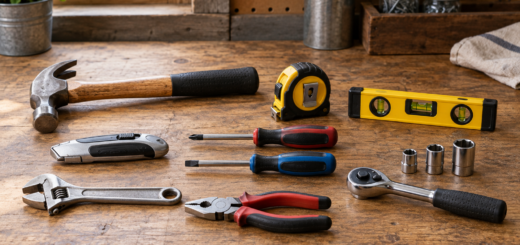
A basic starter set should cover common garage work: 1/4-inch and 3/8-inch drive ratchets, metric and SAE sockets, combination wrenches, screwdrivers, hex keys, and pliers. For most homeowners, a 3/8-inch drive set with sockets from about 8mm through 19mm handles oil changes, battery replacement, brackets, furniture repairs, and light vehicle work.
Craftsman generally offers more low-cost kits in this range. A compact set can be enough if you are building a tool collection slowly. The compromise is that inexpensive kits may omit deep sockets, larger sizes, universal joints, or a torque wrench. Check the actual contents rather than judging by the piece count. A 200-piece set may count bits, adapters, and duplicate socket sizes as separate pieces.
Ridgid’s consumer tool offerings are often more attractive when you want a larger kit or are already buying into its 18-volt cordless platform. A Ridgid package may include a drill, impact driver, battery, charger, and bag. That can be a better first purchase than buying bare tools, but the initial price is higher and you may not need every tool included.
| Factor | Craftsman | Ridgid |
|---|---|---|
| Typical starter cost | About $80–$300 for hand-tool kits | About $150–$350 for hand-tool or mixed starter kits |
| Best fit | First garage kit and occasional repairs | Frequent DIY work and cordless-tool expansion |
| Common advantage | Lower sale prices and broad availability | Strong 18-volt cordless ecosystem and substantial kits |
| Common limitation | Entry kits can lack deep sockets and specialty tools | Higher upfront cost and larger packages can include unused tools |
Hand Tools and Warranty Value
For sockets, wrenches, and ratchets, both brands are reasonable for normal homeowner use. A Craftsman set is the cheaper option when the tools will see occasional work rather than daily shop use. If a ratchet eventually fails, the practical value of a warranty depends on whether a local retailer can exchange it or whether you must start a claim and wait for shipping.
Ridgid’s hand-tool warranty may look appealing, but read the terms for the specific set. Warranty coverage, registration requirements, and replacement procedures can differ between product categories. Do not pay an extra $100 solely for a warranty you may never use. Spend that money on missing tools such as a 3/8-inch drive torque wrench if you work on vehicle fasteners.
One important failure mode is using a ratchet as a breaker bar. The gears and reversing mechanism are not designed for maximum loosening force. Use a dedicated breaker bar, and do not add a pipe extension to a small ratchet. That is how budget tools get damaged even when the steel and warranty are otherwise adequate.
Cordless Tools Change the Calculation
For garage projects, an impact driver and drill are usually more useful than a large hand-tool set alone. Craftsman cordless kits often win on purchase price, particularly when discounted with a battery and charger. Ridgid can be the stronger long-term choice if you expect to add an impact wrench, grinder, light, or inflator over several years.
Battery compatibility matters more than a small difference in motor power. A cheap bare tool is not cheap if you still need a battery and charger. Compare the complete package, including battery capacity. A compact 2.0Ah battery keeps a drill light, while a 4.0Ah or larger pack is more suitable for an impact wrench or extended drilling.
For light assembly, shelving, and occasional screws, a Craftsman cordless drill kit is often sufficient. If you remove rusted automotive fasteners, a drill or impact driver is not a substitute for a proper impact wrench. An impact driver uses a 1/4-inch hex chuck and accepts driver bits; an impact wrench uses square-drive sockets and produces a different level of torque.
Which Starter Set Makes Sense?
Choose Craftsman when your budget is below about $150, you need basic hand tools now, and most projects are occasional household or light automotive repairs. Buy the largest sensible kit only if it includes tools you can identify using. Otherwise, a smaller set plus separate pliers, a torque wrench, and a breaker bar is usually better value.
Choose Ridgid when you are comfortable spending $200 or more, expect to buy several cordless tools, or routinely work on vehicles, equipment, and larger garage projects. Its higher entry price is easier to justify when a kit includes useful batteries and tools rather than filler accessories.
Whichever brand you choose, plan for a few additions. A socket set will not replace a jack and jack stands, and neither brand’s starter kit normally includes safe lifting equipment. Add a quality 1/2-inch drive breaker bar, work light, magnetic parts tray, and eye protection before tackling vehicle repairs.
Seasonal Buying Advice
Watch for tool promotions around Memorial Day, July sales, Labor Day, Black Friday, and the weeks before Christmas. Cordless kits are commonly discounted when manufacturers refresh a platform. Compare the sale price with the normal price, and check whether the kit includes the newest battery size or an older, lower-capacity pack.
For hand tools, a discount of 20% to 30% is common enough that there is little reason to pay full price unless you need the set immediately. Buy based on the included sizes, drive types, and battery compatibility—not the piece count printed on the box. That approach makes the cheaper Craftsman option perfectly sensible for many garages, while Ridgid earns its premium when you will actually use and expand the system.