
What's inside
- Top Picks at a Glance
- Battery Pole Saws Compared
- 1. Greenworks 40V 8-Inch Pole Saw: Best Overall
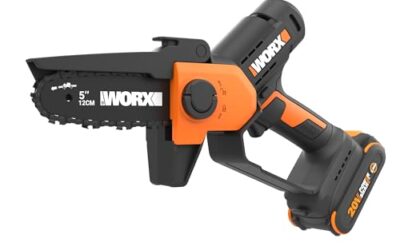
- 2. WORX WG349: Best for 20V Battery Owners
- 3. CRAFTSMAN V20 Cordless Pole Saw: Best Value Reach
- 4. SKIL PWR CORE 40 10-Inch Pole Saw Kit: Best Larger Bar
- 5. Husqvarna 530iP4: Best Premium Pick
- 6. WORX WG323 10-Inch 2-in-1: Best Two-in-One
- 7. SEESII 2-in-1 8-Inch Brushless Pole Saw: Best Budget
- Also Consider
- Reach, Weight and Real Cutting Height
- Which Chain Type Suits a Pole Saw?
- How We Chose
- Buying Guide
- Safety Near Power Lines
- Common Pole Saw Mistakes
- Frequently Asked Questions
- Which One Should You Buy?
- Sources
As an Amazon Associate I earn from qualifying purchases. This post may contain affiliate links at no extra cost to you.
For most yards, the Greenworks 40V 8-inch pole saw is the best battery pole saw to start with: the maker lists about 11 feet of reach and roughly 8 pounds, which is enough for typical backyard limbs without needing a ladder. If you already own 20V batteries, the WORX WG349 is the runner-up, with a listed reach of up to 13.3 feet at about 8 pounds. This guide looks at battery pole saws the way an arborist would frame the choice: how far you really need to reach, how much weight you can hold overhead, which bar and chain suit tree trimming, and why none of these tools belong near a power line. It also answers common searches such as best battery operated pole saws, best battery pole saws for tree trimming, and which chain type is best for a pole saw.
This guide is research-based. We did not personally use these tools; specifications come from manufacturer pages and product listings, and where a figure is not stated we write “not listed”. Reach numbers in listings usually mean the tool length plus an assumed user reach, so the real height you can cut is lower than the headline figure.
As an Amazon Associate we earn from qualifying purchases at no extra cost to you.


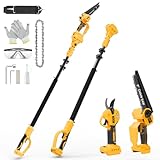

Our Top Picks


Top Picks at a Glance
- Best Overall: Greenworks 40V 8-inch Pole Saw, about 11 ft listed reach.
- Best for 20V Owners: WORX WG349, 20V 8-inch pole saw, up to 13.3 ft listed reach.
- Best Value Reach: CRAFTSMAN V20 Cordless Pole Saw, 14-foot listed reach.
- Best Larger Bar: SKIL PWR CORE 40 Brushless 10-inch Pole Saw Kit with telescoping shaft.
- Best Premium: Husqvarna 530iP4 10-inch professional battery pole saw, 13-foot listed reach.
- Best Two-in-One: WORX WG323 10-inch pole saw and chainsaw, 20V.
- Best Budget: SEESII 2-in-1 8-inch brushless pole saw with two 4.0Ah batteries.
Battery Pole Saws Compared
| Product | Best for | Key specs | Watch for | Price tier |
|---|---|---|---|---|
| Greenworks 40V 8 in | Backyard limbs | 8 in bar; 40V; about 11 ft reach; about 8.2 lb per maker | Weight differs by source | Mid-range |
| WORX WG349 | 20V battery owners | 8 in bar; 20V; up to 13.3 ft reach; about 8 lb; three cutting angles | Battery included only in the full kit | Mid-range |
| CRAFTSMAN V20 | Longer reach | V20 platform; 14 ft listed reach | Bar length not shown in listing title | Mid-range |
| SKIL PWR CORE 40 10 in | Thicker limbs | 10 in bar; 40V brushless; over 9 ft telescoping shaft; angled head | Reach shorter than some rivals | Mid-range to premium |
| Husqvarna 530iP4 | Frequent heavy use | 10 in bar; 40V; 13 ft reach listed | Highest cost in this guide | Premium |
| WORX WG323 | One tool for two jobs | 10 in bar; 20V; 12 in extra reach with pole; about 10 lb | Heavier when used on the pole | Mid-range |
| SEESII 2-in-1 8 in | Occasional light use | 8 in bar; brushless; two 4.0Ah batteries; mini chainsaw mode | Limited independent coverage | Budget |
1. Greenworks 40V 8-Inch Pole Saw: Best Overall
- Bar length: 8 inches.
- Voltage: 40V.
- Pole: extends to about 9 feet, with a listed reach of about 11 feet.
- Weight: 8.2 pounds per the maker; one independent review lists a heavier figure near 9.3 pounds.
- Battery: 2.0Ah battery and charger in the kit; a tool-only version also exists.
Best for: homeowners with a mix of ornamental and fruit trees who need to remove branches up to a few inches thick at roughly 8 to 10 feet. Skip if: you need to cut above about 12 feet from the ground, or you want a brushless motor with faster cutting.
The strength of this model is balance. Eight pounds is about the practical limit for most people to hold at an angle above their shoulders for more than a few minutes, and the Greenworks keeps the weight close to that. A short, 8-inch bar is also easier to control than a long one, and it is enough to cut limbs up to roughly 6 inches thick in two passes. The listed reach of 11 feet is the maker’s figure for a typical standing user, so expect to cut branches at about 9 to 10 feet in practice.
Ownership reality: the chain still needs bar oil, and pole saws are the tools people most often forget to oil because the reservoir is out of sight. Check the oil level before every session and watch for dripping when you tilt the head. After use, wipe the head clean of sap and sawdust, and store it with the battery removed. Greenworks has a large 40V battery family, so a spare pack can also run mowers and trimmers.
Pros:
- Listed reach that covers most backyard trimming.
- Weight in a practical range for overhead work.
- Broad battery platform.
- Kit and tool-only options.
Cons:
- 2.0Ah battery in the kit limits cutting time on bigger jobs.
- Reported weight varies by source.
2. WORX WG349: Best for 20V Battery Owners
- Bar length: 8 inches.
- Voltage: 20V platform with PowerShare batteries.
- Reach: up to 13.3 feet total reach per the listing.
- Weight: about 8 pounds; some listings show a slightly higher product-detail figure.
- Features: three cutting angles and tool-free tensioning.
Best for: anyone who already owns WORX or other PowerShare batteries and wants a compact pole saw. Skip if: you need a brushless motor or are cutting hardwood branches near the top of the capacity range.
The adjustable head is the feature to appreciate. Cutting angles let you approach a branch from the side instead of from directly below, which keeps falling wood out of your face and makes the saw easier to hold. A 20V platform keeps the weight down, which is useful given how much of a pole saw’s burden is carried at arm’s length. The trade-off is power: lower voltage means slower cutting through dense or wet wood, so work patiently and let the chain do the cutting.
If you do not already own batteries, check which package you are buying. The WG349 is listed as a kit, and a separate tool-only variant exists; buying the wrong one is an easy mistake. The reach figure is a maximum, so expect to cut lower than 13 feet when you are standing on the ground.
Pros:
- Long listed reach for an 8-pound tool.
- Adjustable cutting angles.
- Tool-free chain tensioning.
- Shares batteries across WORX tools.
Cons:
- 20V power suits lighter wood.
- Package differences between kit and tool-only.
3. CRAFTSMAN V20 Cordless Pole Saw: Best Value Reach
- Platform: CRAFTSMAN V20.
- Reach: 14 feet listed.
- Kit: battery and charger included per the listing.
- Bar length and weight: some sources list a 6-inch cutting capacity and about 7.9 pounds, but figures are inconsistent, so confirm on the maker page.
Best for: people who want maximum reach for a mainstream price and already use, or plan to use, V20 batteries. Skip if: you want clear published specs; the available sources disagree on bar details.
The headline here is the 14-foot listed reach. That extra reach is useful on taller shrubs and trees with high lateral limbs, but it also has downsides: the longer the pole, the more flex and leverage work against you at the head. Pole saws with long shafts can feel top-heavy, and cutting at the limit of reach demands strong control and a stable stance.
V20 is a long-running platform with many tools, and CRAFTSMAN provides a retail presence that helps with parts and warranty claims. Check the bar and chain model in the owner’s manual so you can order a replacement chain with the correct pitch and gauge.
Pros:
- Long listed reach.
- Kit with battery and charger.
- Established tool platform.
Cons:
- Conflicting bar and weight information across sources.
- Long poles amplify wobble when fully extended.
4. SKIL PWR CORE 40 10-Inch Pole Saw Kit: Best Larger Bar
- Bar length: 10 inches.
- Voltage: 40V brushless.
- Shaft: telescoping, over 9 feet, with an angled head.
- Kit: 2.5Ah battery and charger.
Best for: trimming thicker limbs where a larger bar saves time. Skip if: you need the longest possible reach, since the shaft is shorter than some rivals.
A 10-inch bar can cut through a limb of around 8 inches in thickness in a single pass if the chain is sharp, and a brushless motor typically offers better efficiency than a brushed one. The angled head is useful because it lets you place the bar against a branch at an angle that reduces binding. If you cut mainly above head height and need a stable tool, the reach of just over 9 feet, plus your own standing height, still lets you work comfortably at about 10 to 12 feet.
Larger bars mean more weight at the end of the pole, so you will notice the difference over longer sessions. If you only have a few limbs to trim, an 8-inch saw is easier to hold. If you have trees that regularly drop branches thick enough to stall an 8-inch bar, the extra bar length justifies itself.
Pros:
- 10-inch bar with brushless motor.
- Angled head and telescoping shaft.
- Kit includes battery and charger.
Cons:
- Shorter listed reach than the longest rivals.
- Weight not listed in the source we used.
5. Husqvarna 530iP4: Best Premium Pick
- Bar length: 10 inches.
- Reach: 13 feet listed.
- Voltage: 40V fixed battery system per the listing.
- Positioning: professional battery pole saw.
- Weight: not listed in the source we used.
Best for: tree-care users who prune for hours at a time and want a professional-grade tool with dealer support. Skip if: you trim a few times a year, because the cost is far above what an occasional user needs.
This model sits at the top of the guide because it targets professional users. A pro-oriented pole saw typically offers a more durable head, better balance and parts support through local dealers. Those things do not show up in a spec table but they matter for ownership: a pole saw that you can service and buy chains for locally will be usable for far longer than a disposable one.
Because the listing does not give weight, check the manufacturer’s page before buying. A professional saw may weigh more than a homeowner model, and that matters if you are using it overhead. Treat the 13-foot figure as a listed maximum and plan your stance accordingly.
Pros:
- Professional build and dealer network.
- 10-inch bar with a long listed reach.
- Suited to frequent use.
Cons:
- Highest cost in this guide.
- Weight and battery details need checking on the maker page.
6. WORX WG323 10-Inch 2-in-1: Best Two-in-One
- Bar length: 10 inches.
- Voltage: 20V.
- Reach: about 12 feet of extra reach with the pole, per the listing.
- Weight: about 10 pounds.
- Feature: auto-tensioning; detaches from the pole for use as a chainsaw.
Best for: a household that wants one tool to handle overhead limbs and ground-level cutting. Skip if: weight matters most, since 10 pounds is a lot to hold overhead.
Two-in-one saws appeal to people with limited storage. Instead of owning a pole saw and a small chainsaw, you own one head that fits both. The trade-off is that the combined unit is heavier than a dedicated pole saw, and the 10-pound weight is noticeable if you are cutting above shoulder height. Plan short sessions with rests, and use the pole for lighter jobs.
Auto-tensioning is a sensible convenience on a tool that is often stored and handled roughly, because a loose chain can derail. Still, check the chain before each use, and replace it when the teeth are worn.
Pros:
- One head for both pole and handheld use.
- 10-inch bar.
- Auto-tensioning.
Cons:
- Heavier at about 10 pounds.
- 20V power for a 10-inch bar is modest.
7. SEESII 2-in-1 8-Inch Brushless Pole Saw: Best Budget
- Bar length: 8 inches, with a 6-inch mini chainsaw mode in some versions.
- Motor: brushless.
- Battery: two 4.0Ah batteries.
- Weight and reach: reach is advertised in the 15 to 16 foot range for similar models in this brand’s lineup, but not confirmed for this exact listing, so treat it as not listed.
Best for: occasional trimming where cost matters more than brand pedigree. Skip if: you need long-term parts support or want reviews from multiple independent publications.
Budget pole saws from lesser-known brands tend to bundle a lot of hardware, such as two batteries and a charger, for a lower upfront cost. That makes them attractive if you only cut a few branches a year. The things to check before buying are the return policy, the warranty length and whether replacement chains and bars are available, because those decide whether the tool is still useful in three years.
When the shaft is extended, cheap pole saws can feel less stiff, which makes accurate cuts harder. Check the lock and wobble as soon as it arrives, and return it if the joints feel loose.
Pros:
- Two batteries and a brushless motor at a low tier.
- Dual-mode design.
- Low entry cost.
Cons:
- Limited independent coverage and unclear long-term support.
- Shaft stiffness varies on budget models.
Also Consider
AVADA 2-in-1 8-Inch Pole Saw for DEWALT 20V MAX
A brushless attachment-style saw that uses DEWALT 20V MAX batteries. Choose it if you already have those packs. The listing advertises about 15.9 feet of maximum reach. Confirm that the battery is not included.
yardenX 2-in-1 8-Inch Pole Saw and Mini Chainsaw
A 20V saw with two 4Ah batteries and automatic oiling in the listing. It advertises 15.5 feet of reach. Similar considerations apply to other lesser-known budget brands.
Supstable 8-Inch and 6-Inch Electric Pole Saw
A two-bar-length kit with 16 feet of advertised reach and two 4.0Ah batteries. Useful if you want both bar sizes, but check weight and customer support policy first.
SEESII 6-in-1 Pole Saw and Hedge Trimmer Combo
A multi-attachment kit for people who also want hedge trimming. It is heavier and more complex than a single-purpose pole saw, so consider whether you really need the extra heads.
Reach, Weight and Real Cutting Height
Listed reach is not cutting height. A tool described as having 11 feet of reach generally assumes your hand sits several feet above the ground, so the head ends up around 10 to 11 feet and you cut comfortably at about 9 to 10 feet. Use this rule: subtract about one foot from the listed reach to estimate safe working height, and never stretch to get one more branch. Weight is the second constraint. A pole saw weighing 8 pounds feels like 20 when held at arm’s length and angled upward, because leverage multiplies the load. Plan on short sessions, and consider a second person to spot you.
Which Chain Type Suits a Pole Saw?
Many readers search for the best chain type for pole saws. Most battery pole saws use a low-profile chain with 1/4 inch or 3/8 inch low-profile pitch in a narrow gauge such as .043 inch, chosen because it cuts with less effort and has a lower kickback tendency. Always buy a chain that matches the pitch, gauge and drive-link count marked on the bar or printed in the manual; an incorrect chain will not seat properly. For occasional pruning, a standard chain from the manufacturer is fine. If you cut dirty or hard wood, keep a spare chain on hand and sharpen or swap it as soon as it starts producing powder rather than chips.
How We Chose
This guide is research-based. We did not personally use these tools. We started from the product store, then checked specs against manufacturer pages and independent publications that review pole saws, such as home improvement and tool-review sites. Where sources disagreed, particularly on weight, we say so. If we could not confirm a figure, we write “not listed”.
We limited the list to two products per brand, balanced the picks across platforms (Greenworks 40V, WORX 20V, CRAFTSMAN V20, SKIL 40V and a professional Husqvarna model), and kept price to tier words. We also treated safety information as part of the evaluation, since a pole saw is an overhead tool.
Buying Guide
Reach: How Tall Are Your Branches?
Measure or estimate the height of the highest branch you need to cut, then subtract about one foot from a model’s listed reach to find its practical limit. For branches at 8 to 10 feet, an 11-foot saw is enough. For 12 to 13 feet, you need a 14 to 16-foot listed reach, and at that point you should consider a professional because the risk of a falling limb grows quickly.
Weight and Balance
Choose a saw weighing 8 pounds or less for frequent use, and expect to rest after a few minutes. Heavier models in the 10-pound range are fine for short sessions. A shoulder strap helps if one is offered, and gloves improve grip on the shaft.
Bar Length and Motor
An 8-inch bar covers most homeowner branches up to about 6 inches. A 10-inch bar speeds up thicker cuts but adds weight. Brushless motors are more efficient and need less maintenance than brushed ones.
Battery Platform
As with all cordless tools, the battery platform you already own is the biggest factor in total cost. A tool-only version on your platform may be much cheaper than a full kit on a new one. If you start fresh, favour a platform with mowers, trimmers and blowers you may want later.
Safety Features
Look for a chain brake or guard where available, a trigger lockout, an automatic oiler and a tensioning system that does not need tools. Wear a hard hat, safety glasses, hearing protection and gloves, and stand outside the drop zone. Cut small limbs in sections and start with the underside cut to prevent bark tearing.
Safety Near Power Lines
Do not use a pole saw near power lines. The Electrical Safety Foundation International advises staying at least 10 feet away from power lines and their connections, and the guidance applies to the tip of whatever you hold, including the end of an extended pole. Utility guidance also stresses looking up before you raise any long tool, because most pole saws are not electrically insulated. If a branch is touching or near a line, do not try to remove it yourself. Call the utility or a licensed arborist. Also avoid working in wet conditions or wind, and never cut a branch that could fall on a line.
Common Pole Saw Mistakes
- Cutting directly overhead, where debris falls on you. Stand to the side and keep your face out of the drop path.
- Over-reaching or standing on unstable ground or a ladder.
- Forgetting bar oil, or using the wrong oil.
- Choosing the longest reach available even when you only trim lower branches.
- Skipping a plan for the branch drop, including where it will land.
- Working near power lines or in wet or windy weather.
Frequently Asked Questions
What is the best battery pole saw for tree trimming?
The Greenworks 40V 8-inch is our top pick for most backyard trees because of its listed reach and weight. For thicker limbs, the SKIL PWR CORE 40 10-inch or the Husqvarna 530iP4 offer more bar length.
How high can a battery pole saw really reach?
Listed reach is usually the tool length plus an assumed user reach. Plan on a practical cutting height about a foot lower than the listing, and never stretch beyond your stable stance.
Are battery pole saws good enough for thick branches?
They are best for branches up to about 6 to 8 inches, depending on bar length and motor. For thicker limbs, use a larger saw on the ground or hire an arborist.
Which chain type is best for a pole saw?
Use the chain specified for your bar, usually a low-profile chain. Match pitch, gauge and drive-link count exactly, and keep a spare for hard or dirty wood.
Can I use a pole saw near power lines?
No. Keep at least 10 feet of clearance from power lines, including the tip of the extended pole, and call the utility or a licensed arborist for any branch near a line.
Do battery pole saws need bar oil?
Yes. Even models with automatic oiling need the reservoir filled and checked before each use. A dry chain wears quickly and can damage the bar.
Is a 2-in-1 pole saw worth it?
It is worth it if you want one head for both overhead and handheld cutting and have limited storage. The trade-off is weight and, often, lower power than a dedicated saw.
Which One Should You Buy?
Buy the Greenworks 40V 8-inch pole saw if you want a balanced homeowner tool. Pick the WORX WG349 if you already own 20V batteries. The CRAFTSMAN V20 is the choice for people who need extra reach and use V20 tools, while the SKIL PWR CORE 40 10-inch suits thicker limbs. Spend on the Husqvarna 530iP4 only if you trim trees regularly. In every case, check the maker page for weight and bar details, wear protective gear, and keep your distance from power lines.
Sources
- Greenworks product pages for the 40V 8-inch pole saw
- WORX product pages for WG349 and WG323 pole saws
- Electrical Safety Foundation International power line safety tips
- Utility power line safety guidance for tree trimming
- Bob Vila pole saw buying guide
- SKIL, CRAFTSMAN and Husqvarna product pages
Last updated: October 2026
Related guides
More from Amazon
Programs that pair well with the guide above. Offers and eligibility are set by Amazon and may change.
A free business account with business pricing and bulk-buying tools for work, shop or home office.
Create a business accountFree shipping on eligible items, Prime Video and more. Eligible new members can start with a free trial.
Start a Prime free trialAudiobooks and podcasts to listen to on the go. Eligible new members can start with a free trial.
Try Audible freeAd-free music streaming. Eligible new subscribers can start with a free trial.
Try Music Unlimited freeAs an Amazon Associate we earn from qualifying purchases.
Write Your Review
No reviews yet. Be the first to share your experience!