Best Affordable Snow Blower for Clearing Walkways and Steps
What's inside
As an Amazon Associate I earn from qualifying purchases. This post may contain affiliate links at no extra cost to you.
What works on walkways and steps
For a short, mostly level walkway and a few outdoor steps, a corded electric snow shovel or a small cordless snow shovel is usually the affordable place to start. These compact machines are lighter and easier to store than a two-stage snow blower, but they have limited clearing width and can struggle with deep, wet snow. They also throw snow forward, so they are not a good choice when you need to move it far away from a doorway or clear a long driveway.
A corded model makes sense if the route is short and you have a suitable outdoor-rated extension cord and a GFCI-protected outlet. A cordless one costs more once batteries are included, but avoids dragging a cord across a wet, icy path. For a small area, a shovel may still be cheaper and faster than buying a powered machine. The right choice depends on snowfall, path length, and how much lifting you can comfortably do.
As an Amazon Associate we earn from qualifying purchases at no extra cost to you.


Choose by snowfall and area
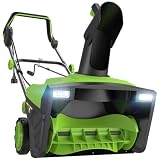
Check the machine’s stated clearing width, intake depth, and recommended snow depth, then compare those figures with your usual storms. Many compact electric snow shovels clear roughly 10 to 12 inches wide. That can suit a narrow walkway, but a 30-foot path takes several passes; a wider machine may finish sooner but be heavier and harder to steer around steps and railings.
Depth claims need context: light, dry snow is much easier to move than wet snow at the same depth. If storms often leave 6 inches or more, a small electric shovel may require shallow passes and frequent clearing. Letting snow accumulate can make the job noticeably harder. For deeper, heavier snowfall or a longer paved area, look at a single-stage snow blower rather than expecting a compact shovel to do the same work.
Compare the options
| Option | Best fit | Cost and trade-off |
|---|---|---|
| Manual shovel | Small areas, occasional light snow | Lowest purchase cost; requires the most physical effort and can be slow in repeated storms. |
| Corded electric snow shovel | Short paths near an outlet | Typically less expensive than battery models; cord management limits reach and can complicate movement. |
| Cordless electric snow shovel | Short-to-medium paths without convenient power | More freedom of movement; battery and charger can raise the total cost, and runtime falls in cold weather or heavy snow. |
| Single-stage snow blower | Longer walks and moderate paved areas | More capacity and throwing distance, but costs more and is bulkier to store and maneuver on steps. |
Prices change with sales and battery bundles, so compare the complete kit rather than the bare tool. If you already own compatible batteries, a tool-only listing may be good value. If not, include the battery and charger before deciding that cordless is the cheaper option.
Corded or cordless?
Choose a corded electric snow shovel when the clearing area is compact and an outlet is close enough for safe cord routing. Use only an outdoor-rated extension cord of the gauge and maximum length specified in the manual. Keep the cord behind you and away from the intake. A cord crossing the working area can snag, and working around it on steps raises the chance of a trip or accidental damage.
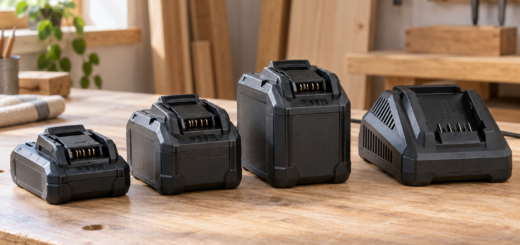
A cordless snow shovel avoids that hazard, but check whether the advertised price includes a battery. Cold weather reduces battery performance, and thick or wet snow uses power faster. If you have a large area, ask whether one battery can finish it in typical conditions and whether replacements are available at a sensible price. A second battery may be more useful than a small increase in clearing width.
Steps, surfaces, and safe use
Most powered snow shovels are intended for the ground, not for clearing stairs. Their moving intake can catch on stair edges, and the machine’s weight is awkward to control on a slope. Use a lightweight hand shovel or broom on steps unless the manufacturer specifically approves the powered tool for that use. Clear the landing first, keep your footing, and do not lift a running machine by its handle.
On walkways, check for gravel, raised pavers, edging, and loose debris before starting. A rotating paddle or auger can pick up stones and throw them, while uneven paving can cause the intake to catch. Wear eye protection and sturdy footwear. Keep hands away from the intake and follow the manual’s clearing procedure if snow jams the machine; never reach into a moving mechanism.
Know where the snow will go. Compact electric shovels often throw snow only a limited distance, so aim away from doors, parked cars, and places where it will drift back onto the path. They may not have a chute you can adjust as precisely as a larger blower. If there is nowhere safe for the snow to land, a wider machine is not necessarily the answer.
Where to save and when to buy
For occasional light snow on a short, flat walk, a basic corded model—or a manual shovel—can be the better value. Paying more for cordless convenience is worthwhile mainly when the cord would be unsafe or frustrating. For regular storms or deeper snow, spending more on a single-stage blower may save time and repeated passes; it is poor value if it will sit unused in a tight storage space.
Compare sale prices before the first major storm, when selection is usually better than during a cold snap. Look for a usable warranty, replacement parts, and clear instructions for clearing jams. Also check the machine’s weight, not just its motor rating: a tool that is hard to lift, turn, or store is unlikely to make walkway clearing easier. A single-stage electric snow blower is worth comparing when your paths are longer or your snowfall regularly exceeds what a compact shovel can handle.