Best Affordable Tools for Cutting and Fitting PEX Tubing
What's inside
As an Amazon Associate I earn from qualifying purchases. This post may contain affiliate links at no extra cost to you.
PEX jobs do not require an expensive tool kit, but the right cutter and fitting system depend on the tubing and connections you plan to use. A clean, square cut matters with every type. After that, the rules diverge: expansion fittings, crimp rings and push-to-connect fittings each need compatible parts and, in some cases, a dedicated tool.
As an Amazon Associate we earn from qualifying purchases at no extra cost to you.

Start with the fitting system
Before shopping, check what the project calls for. PEX-A expansion fittings need an expansion tool and compatible expansion rings. Crimp fittings use a copper ring and a tool sized for that ring. Clamp systems use stainless-steel clamps and a ratcheting clamp tool. Push-to-connect fittings usually need no connection tool, though a depth gauge or deburring tool may be useful. Do not assume parts from different systems are interchangeable just because they fit over the same tubing.
For a small repair, matching the existing system often costs less and creates fewer surprises than changing connection types. For a new project, compare the complete cost: tool, fittings, rings or clamps, and any inspection gauge required by the tool maker or local code.
Tools at a glance
| Tool or system | Typical cost range | Best for | Main trade-off |
|---|---|---|---|
| Ratchet PEX cutter | $10–$25 | Clean cuts on most common PEX sizes | Blades wear; poor cutters can flatten tubing |
| Manual crimp tool | $30–$80 | Occasional work with copper crimp rings | Requires correct jaw size and careful positioning |
| Clamp tool | $25–$70 | Clamp-ring connections and compact kits | Must match clamp system; access can be awkward |
| Manual expansion tool | $50–$150 | PEX-A work without buying a powered tool | Slower and tiring across many fittings |
| Push-to-connect fittings | Often $5–$15 per fitting | Small repairs or tool-free connections | Higher fitting cost; installation details matter |
These are broad US retail ranges, not fixed prices. Kit contents, pipe diameter and sales can move the total substantially.
Buy a decent cutter first
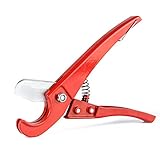
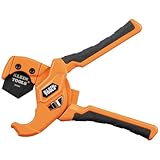
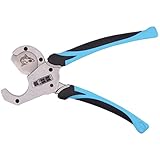
A ratcheting PEX cutter is the most broadly useful budget purchase. Many cost about $10–$25, and a basic ratchet design is usually enough for home repairs and a modest installation. Look for a replaceable blade, a secure lock and a cutting action that closes evenly. Search for a ratcheting PEX tubing cutter if you need one tool for repeated cuts.
Make each cut at 90 degrees to the tube. An angled or crushed end can keep a fitting from seating fully, particularly with expansion or push-fit systems. If the cutter twists the tube or leaves a ragged edge, stop and check the blade rather than forcing it. Replaceable blades can make a slightly dearer cutter cheaper over time. For one or two cuts, a sharp utility knife may seem economical, but controlling a square cut is harder and the blade can slip; a proper cutter is the safer value.
Choose the connection tool by job size
For copper crimp rings, an entry-level manual tool can be good value if it includes the jaws you need. Check the tool’s stated pipe sizes—commonly 1/2-inch and 3/4-inch—and confirm whether a go/no-go gauge is included or sold separately. A gauge checks the finished crimp; skipping that check can leave a connection that looks acceptable but is out of specification. A PEX crimp tool kit with a go/no-go gauge is a sensible starting point for several crimp connections.
Crimp tools can be bulky between joists or close to a wall. A clamp tool is often narrower and can be easier to position, though the clamp system and tool must match. Both systems reward a dry run: cut squarely, slide the ring or clamp to the specified position, insert the fitting fully, then compress the ring with the tool held straight. A misaligned ring or incomplete insertion is a common cause of leaks.
PEX-A expansion tools cost more than cutters and basic crimp tools, but a manual version may suit a small job. Expansion is a poor place to improvise: use the correct head, ring and tubing, and follow the tool maker’s rotation and expansion instructions. Too little expansion can make fitting insertion difficult; incorrect technique or incompatible materials can compromise the joint. For a larger project, compare rental or borrowing with buying a manual tool. A powered tool saves effort and time, but is rarely economical for a couple of fittings.
When tool-free fittings make sense
Push-to-connect fittings avoid buying a crimp, clamp or expansion tool, so they can be practical for a single accessible repair. Their higher per-fitting price can erase that saving across a whole house. Prepare the tube exactly as the fitting instructions specify: square cut, clean surface, and correct insertion depth. A tube pushed in short, or scratched near the sealing area, can leak. Use fittings approved for the application and permitted by local rules; concealed connections may have different requirements from accessible repairs.
Spend smart and check your work
For a few cuts and one connection, buy a sound cutter and consider whether a compatible push-fit fitting or borrowed connection tool gives the lowest total cost. For roughly 10–20 or more crimp connections, owning a manual tool often makes more sense than paying tool-rental fees, though prices vary. For repeated expansion work, compare a manual tool’s effort against the time saved by a powered one.
Sales on plumbing tools commonly appear around spring home-improvement season and major holiday promotions, but do not buy a cheap kit solely because it is discounted. Check that it covers the pipe sizes on your job, includes any required gauge, and has available replacement parts. Before closing a wall, inspect every joint and pressure-test the system according to the fitting manufacturer’s directions and local plumbing requirements. A tool that saves $20 is not a bargain if an untested connection means opening the wall again.