Best Value Tools for Cutting and Fitting Laminate Flooring
What's inside
As an Amazon Associate I earn from qualifying purchases. This post may contain affiliate links at no extra cost to you.
Laminate flooring needs clean cuts, but most rooms do not require a dedicated flooring saw. The best value setup depends on how many cuts you have, whether you are cutting indoors, and how often you expect to use the tools again. For one room, a jigsaw and a few inexpensive fitting tools can be enough. For several rooms, a laminate cutter may save time and keep dust down.
As an Amazon Associate we earn from qualifying purchases at no extra cost to you.


Choose tools by the job
Most laminate installations involve three kinds of cuts: straight crosscuts at row ends, lengthwise rips along the final row, and notches around door jambs or pipes. A single tool rarely handles all three well. A manual cutter makes quick crosscuts but is awkward for long rips and cutouts. A jigsaw handles curves and notches, while a circular saw is usually faster for repeated straight cuts.
Before buying, check the flooring thickness and maximum width listed for any cutter. Many laminate planks are about 7–12 mm thick, but thicker products and attached pads can exceed a tool’s capacity. Also check whether the manufacturer permits cutting with a manual shear; some rigid-core products can chip or exceed the cutter’s rating.
Value comparison
| Tool | Typical price range | Best use | Main trade-off |
|---|---|---|---|
| Jigsaw with laminate blade | $40–$120 | Notches, curves, small jobs | Slower cuts; dust and edge chipping are possible |
| Circular saw with fine-tooth blade | $60–$180 | Repeated crosscuts and long rips | Noisy and dusty; needs a stable cutting area |
| Manual laminate cutter | $70–$250 | Quiet, low-dust crosscuts | Capacity limits and less versatility |
| Oscillating multitool | $50–$150 | Undercutting door jambs | Poor choice for routine plank cuts |
Prices vary by brand, included accessories, and sales. Treat these as broad shopping ranges, not fixed quotes. A basic tool that cuts within its rated capacity is often better value than a premium model with features you will not use.
Best value for plank cuts
For a single room, a jigsaw is the most flexible low-cost choice. Fit it with a fine-tooth laminate or down-cut blade, clamp the plank securely, and support both sides of the cut. A down-cut blade can reduce chips on the top face, but it may be less common and can cut more slowly. Test on an offcut first; blade direction, feed speed, and the plank’s surface all affect the result. Browse jigsaws and laminate-cutting blades if you do not already own a suitable saw.
If you already have a circular saw, a fine-tooth carbide blade is often the cheapest way to handle repeated straight cuts. Use a guide or square, keep the plank supported, and cut with the finished face oriented to suit the saw’s tooth direction. A blade with roughly 40–60 teeth is a practical starting point for many 7¼-inch saws, though the correct choice depends on blade diameter and the flooring maker’s guidance. Expect dust: cut outside or use dust collection, eye protection, and hearing protection.
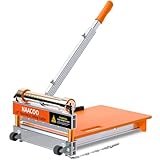
A manual cutter earns its cost when you have many crosscuts and want to work indoors with little noise or airborne dust. It is especially convenient for repeated end cuts, but it does not replace a saw for rips, doorways, or irregular shapes. Cheap cutters can flex, leave a rough edge, or struggle near their maximum thickness. Check reviews for the exact flooring type and verify the cutting width and thickness before ordering. See manual laminate floor cutters for current options.
Fitting tools worth buying
A pull bar, tapping block, and spacers help close joints without striking the plank edges directly. A modest flooring installation kit is usually adequate for one or two rooms; the important point is that the block fits the profile of your flooring and does not bear on a fragile locking lip. Keep a rubber mallet for controlled taps, but do not hit the plank hard to force a joint. If a seam will not close, check for debris, a damaged locking edge, or a row that has shifted out of alignment. A basic laminate installation kit is generally better value than buying each fitting tool separately.
For door jambs, an oscillating multitool can undercut the trim so the plank slides beneath it. Use an offcut as a height guide and cut slowly; removing too much material leaves an obvious gap. A handsaw can do the same job for a few doorways if you already own one. Do not buy a multitool solely for one jamb unless the price is low or you expect other uses.
Avoid costly mistakes
Measure twice and mark the waste side of the line. Leave the expansion gap specified by the flooring maker—often around ¼ inch, but it varies by product and room conditions. Cutting planks too tight against walls can cause buckling when the floor expands. Likewise, a chipped cut may be hidden under baseboard, but it should not compromise the locking joint or leave a visible edge at a doorway.
Do not assume a blade marketed for wood will leave laminate cleanly. Decorative wear layers can chip, and dull blades create more heat and rougher edges. Replace a blade when it starts burning, wandering, or tearing the surface rather than pressing harder. Wear eye protection with every powered saw, and use a respirator or suitable dust mask when cutting indoors; laminate dust is not something to breathe.
When to buy and what to skip
For a one-room project, borrow or rent a circular saw if you need many rips, and buy only the blade and fitting pieces you lack. For several rooms, compare the cost of a manual cutter with the rental price of a saw and the time saved by dust-free crosscuts. Seasonal sales around spring renovation periods and major holiday promotions can lower prices, but compare the final price and included accessories rather than relying on a “sale” label.
Skip a large flooring kit if it includes tools you will not use, and avoid buying a dedicated cutter before checking its capacity against your flooring. Spend first on a sharp, appropriate blade and reliable measuring tools. That combination prevents more waste than a premium saw used without support or a straight guide.