Best Value Tools for Maintaining an Older Home on a Tight Budget
What's inside
As an Amazon Associate I earn from qualifying purchases. This post may contain affiliate links at no extra cost to you.
Maintaining an older home is less about owning every tool and more about buying the few that prevent small problems from becoming expensive repairs. Houses built 40 or more years ago often have brittle fasteners, uneven surfaces, outdated wiring, plaster, old plumbing fittings, and layers of paint. A sensible starter kit should handle inspection, measurement, fastening, cutting, sealing, and basic cleanup without tying up hundreds of dollars in tools used once a year.
As an Amazon Associate we earn from qualifying purchases at no extra cost to you.



Buy for the house, not the tool aisle
Start with tools that solve repeated problems. A 16-foot tape measure, combination square, utility knife, adjustable wrench, tongue-and-groove pliers, claw hammer, bit set, stud finder, and headlamp cover a surprising amount of maintenance. Choose tools with comfortable handles and clear markings, but avoid paying extra for specialized finishes or oversized “contractor” versions unless you will use them weekly.
For hand tools, the cheapest option is often a false economy when it has loose jaws, soft cutting edges, or a driver tip that rounds out after a few screws. The middle of the store brand range is usually the value point. A $10 to $20 screwdriver and pliers set can be perfectly adequate for household work; a $4 set may slip badly and damage screws. On the other hand, you do not need premium professional hand tools for tightening a cabinet hinge twice a year.
The best first power tool
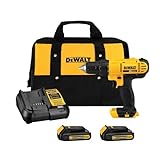
A cordless drill/driver is the most useful power tool for an older home. It handles cabinet hardware, curtain brackets, pilot holes, loose deck boards, small plumbing access panels, and countless repairs. Buy a 12-volt kit if you mainly work indoors and value low weight. Choose an 18- or 20-volt kit if you expect to drill masonry, drive long screws, or build outdoor repairs.
Do not compare battery voltage alone. Check whether the kit includes two batteries, a charger, a clutch, and a variable-speed trigger. A second battery is more valuable than a slightly higher top speed. A basic drill with a clutch prevents stripped screws and cracked old wood. For general repairs, a cordless drill/driver kit with two batteries is usually a better purchase than a bare tool.
| Tool category | Budget choice | When to spend more | Common failure |
|---|---|---|---|
| Drill/driver | 12V or entry-level 18V kit | Frequent masonry drilling or long structural screws | Stripped screws, overheated motor, dead battery |
| Oscillating tool | Corded model with generic blades | Regular remodeling or cordless convenience | Expensive blades and slow cutting |
| Shop vacuum | Small 5- to 8-gallon wet/dry vacuum | Fine dust collection or frequent renovation | Clogged filter and weak suction |
| Step ladder | Stable fiberglass or aluminum 4- to 6-foot ladder | Frequent work at 8 feet or more | Wobbling, damaged feet, unsafe overreaching |
Tools that pay for themselves
A moisture meter can save money in an older house by identifying damp drywall, flooring, and trim before you paint or close a wall. It is not a diagnosis by itself, but a reading substantially higher than nearby dry material tells you to investigate. Many inexpensive meters are adequate for comparisons. Use the same meter and test several locations rather than treating one number as absolute.
A basic inspection camera is useful for looking behind appliances, under cabinets, and through small access holes. It is less useful when its cable is stiff or the camera image is too dim. Buy one only if you regularly need to see into inaccessible spaces; otherwise, a bright flashlight and a small inspection mirror cost less and do not require charging.
For leaks, keep a basin wrench, adjustable wrench, tongue-and-groove pliers, and a shutoff-valve key if your property has an exterior main valve. Replace worn supply hoses before they burst. A $10 braided hose can prevent a flooring and drywall repair costing hundreds or thousands. Never force an old shutoff valve that is already corroded; it may break internally and leave you with a larger leak.
Cutting, sanding, and patching
An inexpensive pull saw or fine-tooth handsaw is enough for trim, shims, and small wood repairs. A jigsaw becomes worthwhile when you cut repeated curves or sheet goods, but it is not a substitute for a straightedge. For occasional work, buy blades suited to the material rather than the most powerful saw.
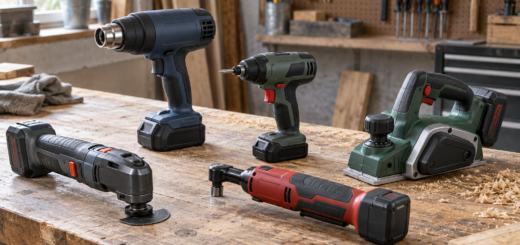
An oscillating multi-tool is particularly useful in old homes because it cuts flush nails, removes grout, trims door jambs, and opens small drywall sections with less damage than a reciprocating saw. The trade-off is blade cost: cheap blades may dull after cutting a few nails. A corded tool is often the best value for infrequent use because it avoids battery-platform costs. Pair it with a mixed pack of oscillating-tool wood and metal blades, but do not expect generic blades to match premium durability.
For wall repairs, spend on a good sanding block or pole sander, not an elaborate powered drywall sander. Use 120-grit paper to level joint compound and 180- or 220-grit paper for the final pass. Coarse paper can gouge old plaster and soft joint compound. A shop vacuum with a cartridge filter is useful for cleanup, but a vacuum is not a substitute for sealing the work area with plastic.
Seasonal buying and storage
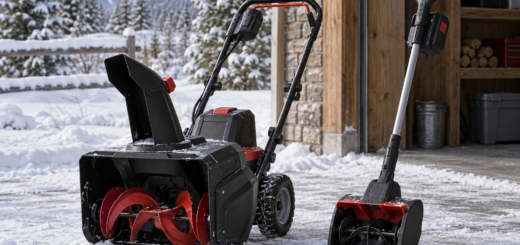
Buy outdoor tools in late summer or early fall, when retailers clear lawn and garden inventory. Snow tools are usually cheaper near the end of winter, while cordless power tools commonly see their best package discounts around major holiday sales. Compare the complete kit price, not the advertised discount. A “free” tool is poor value if it requires a new battery, charger, and $100 worth of accessories.
Store batteries indoors, away from freezing temperatures and hot garages. Keep lithium-ion packs partly charged for long-term storage and remove them from chargers once full. Clean sawdust from vents, dry metal tools before storage, and lightly oil pliers and saw blades. Replace damaged cords, cracked ladder feet, and mushroomed striking surfaces rather than trying to get one more season from them.
Where cheap tools are safe
Cheap tools are generally fine for disposable tasks: paint scrapers, caulk tools, sanding blocks, mixing paddles, plastic drop cloths, and one-off drill bits. Buy better quality for tools that control safety or precision, including ladders, electrical testers, torque-sensitive drivers, levels, and cutting tools used near your hands.
A non-contact voltage tester with a flashlight is convenient for checking whether a circuit may still be energized, but it is not proof that a circuit is safe. Turn off the breaker, verify the tester on a known live circuit, test the wires, and verify the tester again. If wiring is aluminum, cloth-covered, overheating, or otherwise unfamiliar, stop and call an electrician. The cheapest tool choice is not always the cheapest repair.