Best Affordable Cordless Vacuum for Cleaning a Home Workshop
What's inside
As an Amazon Associate I earn from qualifying purchases. This post may contain affiliate links at no extra cost to you.
Why a Home Workshop Needs a Different Vacuum
A house vacuum is built for dust bunnies, pet hair, and cereal crumbs. A home workshop throws fine sawdust, metal shavings, drywall dust, wood chips, and the occasional screw at your floor. Use a standard household stick vacuum in that environment and you will clog the filter in one afternoon, melt the brush roll on a hot shaving, or burn out the motor on fine particulates that get past a cheap filtration system.
You don’t need a $500 Dyson or a full-size corded shop vac for a 1-car garage or basement bench area. What you need is a cordless vacuum that can handle heavier debris than a living-room model, empty quickly without a dust cloud, and survive being banged against a workbench. For most hobbyists, the affordable range of $79 to $179 covers that job well enough, provided you pick the right format.
As an Amazon Associate we earn from qualifying purchases at no extra cost to you.


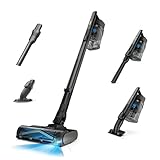
The Two Affordable Formats That Actually Work
In the budget cordless space there are really only two designs worth considering for workshop use:
1. Cordless Stick Vacuum with a Motorized Head: Light, easy to grab for a 2-minute sweep after cutting. Good on sawdust and general dirt on concrete, plywood, or epoxy floors. Weak on larger chips and metal offcuts, which can jam the roller or crack the plastic dust bin. Most run 15-35 minutes on a charge and need filter cleaning after every 2-3 uses in a dusty shop.
2. Cordless Shop Vac / Bucket Vac: A compact 2 to 2.5-gallon bucket with a hose, usually using the same battery platform as your drills and drivers. No brush roll to jam. Much better at sucking up wood chunks, drywall crumbles, and screws. Heavier, louder, and less convenient for quick passes, but far more durable. If you already own Ryobi ONE+, DeWalt 20V, Milwaukee M18, or Makita 18V tools, this is often the best value because you can buy it bare-tool for $59-$99.
If your workshop is mostly woodworking and you clean the floor daily, a cordless stick vacuum for garage use is fine for surface dust. If you do any grinding, cutting MDF, or drilling into concrete, get the bucket style. Sawdust plus concrete dust will kill a stick vac filter in weeks.
What to Check Before You Buy
Price matters, but these three specs decide whether a cheap vacuum survives workshop duty:
Filtration and Filter Cost: Look for a two-stage system with a pleated cartridge and a foam pre-filter, ideally HEPA-rated. Single-layer cloth filters let fine sanding dust straight into the motor. Check replacement filter price before you buy. A $79 vacuum with $28 filters that needs replacing every 3 months is not a deal. Washable filters save $30-$50 per year in a dusty shop. Failure mode: ultra-fine MDF and drywall dust packs into non-washable filters and cuts suction by 50% or more even after tapping it out.
Battery Reality: Advertised runtime is always on low power with no load. On high / max suction, most budget stick vacs drop from 35 minutes claimed to 12-18 minutes. For a 200 sq ft shop that is enough for one cleanup, but not two. Bucket-style vacs are more honest because they run on your tool batteries – a 4.0Ah 18V battery gives you about 18-25 minutes of continuous use. If you don’t already have batteries, factor in $40-$70 for a battery and charger. That often makes a $99 bare-tool vac more expensive than a $129 stick vac with its own battery.
Dust Bin Size and Emptying: A 0.6-liter stick vac bin fills with sawdust in about 40 square feet of shop floor. You will be emptying it 3-4 times per cleanup. A 2-gallon shop vac bin handles a full session without stopping. Also check how it empties. Bottom-release stick bins are fast but create a dust plume. Bucket vacs with a lid let you bag the debris. For metal shavings, you want a bin you can dump without reaching inside – the shavings will cut a bagless filter if you have to pull them out by hand.
Avoid any affordable cordless vacuum that uses proprietary tiny batteries you can’t replace, has no replacement filters in stock on Amazon, or has a non-removable brush roll. All three are signs it was designed for apartments, not shops.
Comparison: Budget Options for Workshop Cleanup
Prices below are typical street prices, not MSRP. Shop vac style prices assume you already own the battery platform.
| Type | Typical Price | Best For | Weakness | Filter Life in Shop |
|---|---|---|---|---|
| Budget Stick Vac (no-name / Amazon brands, 250-300W motor) | $79-$119 with battery | Light sawdust, quick daily sweeps on hard floors | Clogs on chips/screws, small bin, brush roll jams | 3-6 months with weekly washing |
| Brand Stick Vac (Tineco, Eureka, Levoit entry models) | $129-$179 with battery | Mixed home/shop use, better filtration | Still not for heavy debris, expensive filters | 6-9 months |
| Cordless Bucket / Shop Vac (Ryobi, Craftsman, Bauer) | $59-$99 bare tool, $119-$149 kit | Wood chips, drywall, metal shavings, car interior | Bulky, hose is short (3-4 ft), no mopping function | 9-12 months, washable cartridge |
| 2-in-1 Handheld + Stick (Black+Decker, Bissell) | $89-$139 with battery | Bench and tool cleaning, small shops | Low suction (15-20 AW), tiny battery | 4-8 months |
For pure value, the cordless bucket vac wins if you are already in a battery ecosystem. You get more suction per dollar, cheaper filters, and it will not be destroyed by a stray wood knot or drywall chunk. If you need one vacuum to do both house and shop, a brand-name stick vac with a washable HEPA filter cordless vacuum is the compromise – just accept you will be cleaning the filter twice as often as the manual says.
When the Cheaper Option Is Perfectly Fine
You do not need to spend $170 to keep a home workshop clean. A $89 stick vac is fine if your work is light: assembling, hand tool work, 3D printing, or electronics. Sawdust volume is low, debris is fine, and you are mostly on a clean floor. Spend the savings on a $12 pack of extra filters and just wash them on rotation.
Pay more only if you have concrete dust, do a lot of sanding, or work with MDF. Those fines are where cheap filtration fails. The extra $40-$60 for a model with a true HEPA cartridge and a sealed dust path pays for itself in motor life. In a test of budget vacuums, non-sealed models lost 30-40% suction after 10 lbs of fine dust had passed through them, measured at the hose, even after filter cleaning.
One other place not to cheap out: if you collect any metal shavings or see sparks while cutting, get a model with a metal or hard plastic hose and no beater bar. Hot shavings melt cheap stick vac hoses and roller housings. A cordless shop vacuum with a wide-mouth hose handles this without damage.
Seasonal Buying Advice
Cordless vacuums follow the same pricing cycle as power tools. Best prices are not in spring when everyone is cleaning.
Prime Day (July) and Amazon Spring Sale (March): Best time for off-brand stick vacs. Expect $20-$35 off $99 models. Check filter availability while you are there – some sellers discount the vac but not the filters.
Father’s Day and Labor Day: Tool-brand bucket vacs drop to their lowest bare-tool prices. Ryobi, Craftsman, and Hart often bundle a free battery. If you need a kit, this is when a $149 kit becomes $99.
Black Friday / Cyber Monday: Deepest discounts on brand-name stick vacs (Tineco, Shark, Bissell). Last year’s model is typically 30-40% off and identical for workshop use. Avoid buying corded shop vacs in this window if you want cordless – retailers push corded stock.
Avoid buying in January-February at full price. New models launch then and old stock hasn’t been discounted yet. If you need one immediately, buy the cheapest washable-filter option now and upgrade on sale – don’t pay MSRP for a budget tool.
Making It Last in a Dusty Shop
Even the best affordable vacuum will fail early if you treat it like a corded shop vac. Tap or wash the filter after every shop session, not every month. Let it dry fully for 24 hours before reinstalling – a damp filter packs dust into a paste that blocks airflow. Empty the bin outside, and keep a cheap dustpan for the big chips so you are not forcing the vacuum to ingest 2-inch offcuts. For drywall or cement dust, run the vac on low and make two passes; high suction just pulls fines deeper into the filter.
With that routine, a $100-$130 cordless vacuum will last 2-3 years in a home workshop. Without it, even a $180 model will lose suction in six months. The difference is maintenance, not price.