Knipex vs Channellock Pliers: Comparing Price, Durability, and Use-Case Value
What's inside
As an Amazon Associate I earn from qualifying purchases. This post may contain affiliate links at no extra cost to you.
The short version
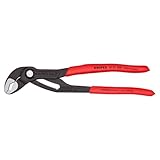
Knipex and Channellock both make useful pliers, but they earn their keep in different ways. Knipex Cobra-style water-pump pliers are built around fast, precise adjustment and strong jaw grip. Channellock’s tongue-and-groove pliers are often the better value for general plumbing, maintenance, and occasional home repairs, especially if you want several sizes without spending as much per tool.
For frequent work on fittings, rounded fasteners, or parts that need a secure grip in tight spaces, Knipex can justify its higher price. For a homeowner who needs pliers a few times a month, Channellock is usually enough. Neither brand is immune to misuse: both can slip, mark soft fittings, or get damaged if used as a substitute for a wrench.
As an Amazon Associate we earn from qualifying purchases at no extra cost to you.


Price and what you get
Exact prices change by size, retailer, and sales. As a rough comparison, common 10-inch water-pump pliers from Channellock often land around $15–$25, while comparable Knipex Cobra pliers commonly cost about $35–$50. Larger sizes and multi-tool sets raise both totals. Check the current price of the size you need rather than comparing a small pair from one brand with a large pair from the other.
The extra Knipex cost buys a quick push-button adjustment mechanism, a compact head for its capacity, and a grip that tends to hold well when the jaws are loaded correctly. Channellock’s familiar tongue-and-groove design is straightforward and widely available. Its adjustment is quick once you know how to set it, though it generally takes more repositioning than a push-button tool.
If you are shopping for a first pair, compare a Knipex Cobra-style water-pump pliers against a similarly sized Channellock tongue-and-groove pair. Look at jaw capacity and handle length as well as price. A tool that cannot reach around the fitting is no bargain.
Side-by-side comparison
| Factor | Knipex | Channellock |
|---|---|---|
| Typical price | Higher; often roughly $35–$50 for a common 10-inch pair | Lower; often roughly $15–$25 for a common 10-inch pair |
| Adjustment | Push-button adjustment is fast and precise | Tongue-and-groove adjustment is simple, but may take more steps |
| Grip and access | Compact head and strong bite suit repeated work in restricted spaces | Reliable general-purpose grip; larger tools may be needed for some fittings |
| Best value case | Frequent use, tight access, or work where slipping wastes time | Home repairs, occasional plumbing, and budget-conscious tool kits |
| Main risk | Paying a premium for features you rarely use | More adjustment effort; a poor jaw position can encourage slipping |
Durability and common failure modes
Both brands make steel pliers intended for repeated shop and job-site use. In normal service, the more important durability question is often not which logo is tougher, but whether the tool is correctly sized and used. Pliers that are too small invite excess force. Force applied at the end of a long handle can damage a joint, distort a part, or make the jaws skid.
On a water-pump plier, the most common practical problems are worn or contaminated teeth, a loose-feeling adjustment, and damage from using the jaws on soft brass, plated fittings, or finished surfaces. Keep the teeth clean and do not clamp down on a fitting you want to preserve. Use a strap wrench, padded jaws, or a proper wrench when surface damage matters. Do not extend the handles with a pipe; the added leverage can exceed what the joint or workpiece can tolerate.
Knipex’s push-button adjustment makes frequent changes easier, but it is still a mechanical joint that should be kept free of grit and checked for smooth movement. Channellock’s simpler adjustment is less fussy, but worn or damaged groove positions can make secure setting harder. A plier that will not stay adjusted should be inspected or replaced, not forced into service on a loaded fitting.
Which one fits your work?
Choose Knipex if you use water-pump pliers most workdays, regularly move between different pipe sizes, or work in cabinets and mechanical spaces where a bulky head gets in the way. Faster adjustment matters most when it saves repeated setup time over a long day. It also helps when you need to position the jaws carefully on a fitting, though proper alignment and pressure still matter more than the brand.
Choose Channellock if you do occasional sink repairs, tighten hose connections, or want a dependable pair for a household toolbox. For a few jobs each season, saving $15–$30 may be more useful than a quicker adjustment. If your work is mostly large pipe, compare the jaw capacity of the specific sizes before buying; an undersized premium tool is still the wrong tool.
For a first kit, a mid-sized pair around 10 inches covers many household tasks. If you routinely handle larger fittings, add a longer pair rather than trying to force the small one. Search for 10-inch water-pump pliers in either brand and compare capacity, handle comfort, and current price. Avoid buying a set just because it contains more sizes; only count tools you expect to use.
How to get good value
Buy the size that fits your actual fittings, and compare the complete cost if you are choosing between a single tool and a set. A two-size set can be worthwhile for frequent plumbing or maintenance, but a single quality pair is better value than unused duplicates. Check for smooth adjustment, even jaw contact, and handles that feel secure in your hand. When buying in person, open and close the joint several times; it should move cleanly without catching.
For most occasional users, Channellock is the sensible buy. Knipex is easier to justify when repeated adjustment, compact access, or daily use saves enough time to offset the price difference. Spend extra for a feature you will use—not just for the more expensive name—and protect fittings with the right wrench when a plier’s teeth could leave marks.