Hilti vs Milwaukee Rotary Hammers: Is Professional Pricing Justified for Contractors?
What's inside
As an Amazon Associate I earn from qualifying purchases. This post may contain affiliate links at no extra cost to you.
For contractors, the Hilti-versus-Milwaukee choice is less about whether either brand can drill concrete and more about what happens after hundreds of holes: downtime, repairs, battery costs and the price of keeping a tool on site. Milwaukee often makes more financial sense for crews already invested in its battery platform. Hilti can justify its higher cost when repair support, fleet management or heavy daily use saves enough labor to offset the premium.
As an Amazon Associate we earn from qualifying purchases at no extra cost to you.
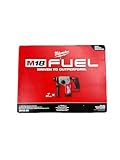
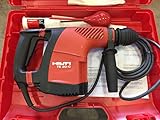
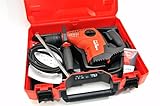

What you’re actually comparing
Rotary hammers use a hammer mechanism that drives the bit forward while it turns. That is different from a regular hammer drill, which relies on a toothed chuck and is generally slower and less comfortable for repeated work in concrete. For anchors and through-holes, compare tools with similar SDS-Plus or SDS-Max capacity, not simply the largest joule figure on the label.
Hilti’s contractor-focused offer often includes service or fleet options alongside the tool. Milwaukee’s main value proposition is a broad cordless system: a rotary hammer may share batteries with impact drivers, saws and other tools already on the truck. Package terms, tool generations and regional service plans change, so check the current quote and warranty rather than assuming a brand-wide promise.
Price and value at a glance
| Factor | Hilti | Milwaukee |
|---|---|---|
| Upfront cost | Often higher, especially for service-oriented packages | Can be lower if batteries and chargers are already owned |
| Best fit | High utilization, managed fleets, costly downtime | Mixed tasks and crews using the same cordless platform |
| Ownership cost | Compare contract, repair coverage and replacement terms | Include batteries, charger and any out-of-warranty repairs |
| Main trade-off | Pay more for the total service arrangement | Value depends heavily on platform ownership and workload |
There is no dependable single price comparison without matching tool size, kit contents and service terms. A bare tool is not comparable to a kit with two batteries, and a purchase price is not comparable to a fleet agreement with repair coverage. Get quotes for equivalent SDS capacity and ask what happens if the hammer is out of service.
Match the hammer to the work
For occasional anchor holes in the 6–12 mm range, a compact SDS-Plus hammer is usually enough. If the job means dozens of holes per shift, larger bits, or repeated drilling overhead, weight, vibration and dust control matter more. For larger penetrations or substantial chiseling, look at SDS-Max tools; they are heavier, so buying one for small anchors can make routine work slower and more tiring.
Battery runtime is a job variable, not a simple brand ranking. Concrete hardness, bit diameter, hole depth, operator pressure and battery age all change how many holes a charge delivers. A 10 mm hole in soft block is not a useful stand-in for a deep hole in reinforced concrete. If cordless runtime is tight, plan spare charged packs or compare a corded tool where access to power is reliable.
Before choosing, check the tool’s rated capacity, compatible dust-extraction attachment, vibration data and the actual kit contents. Dust extraction is especially important indoors: drilling masonry produces fine respirable silica dust. Use suitable extraction and respiratory protection for the task and site rules; a vacuum attachment does not replace a safe work setup.
When Hilti’s premium can pay
Consider Hilti when a failed hammer would stop a crew, when several tools need tracking, or when a service agreement provides a practical repair or replacement path. The premium is easier to defend if the terms cover the failures you are likely to face and the turnaround time is short enough to matter. Ask about exclusions, accidental damage, loan tools, shipping and whether wear items are covered.
Put a number on downtime. If a repair costs $250 and takes a day, but a crew loses several hours waiting for a replacement, the labor cost may exceed the repair bill. Compare that likely loss with the yearly premium—not just once, but across the tools and years in the agreement. If the tool can be swapped immediately from the van, the service advantage may be much smaller.
Hilti is not automatically the right choice for every professional. A small subcontractor drilling a few dozen holes a week may not use enough of the service or fleet features to recover the extra cost. Buying a tool that exceeds the job’s capacity can also mean paying for weight and features that do not improve output.
When Milwaukee is the better value
Milwaukee is often the practical pick when the crew already owns compatible batteries and chargers, needs a cordless hammer for mixed work, and can handle repairs without a managed fleet plan. The battery ecosystem has real value, but only if packs are available when needed. Buying a bare tool can be a false saving if the crew then needs several high-capacity batteries and a charger.
For a lighter workload, a cordless SDS-Plus rotary hammer is a sensible category to compare. Choose by capacity, weight and included batteries, not by brand badge alone. If most work is in one location with dependable power, a corded SDS-Plus rotary hammer may deliver better value than buying batteries for an occasional task.
Common failure modes are not exclusive to either badge: worn brushes on older designs, damaged cords, overheated motors, dust entering the mechanism and abused chucks or bit holders. For cordless tools, an aging or overheated battery can become the weak link. Avoid forcing a bit, clear dust from deep holes, use the right bit for the material, and follow the tool’s duty-cycle guidance. A more expensive tool cannot compensate for a blunt bit or poor technique.
When to buy
Compare complete kits during seasonal promotions, especially around major holiday sales and contractor-focused events. A discount on a bare tool matters less if you need batteries; a kit deal can be stronger if its packs match the rest of your fleet. Check whether the seller is authorized and whether the advertised warranty applies to that purchase.
For a high-use crew, request a written Hilti service quote and compare it with Milwaukee’s tool, batteries, likely repair costs and a spare-tool plan over three to five years. For an occasional user, buy the least expensive tool that meets the required hole size and workload, then spend the difference on quality bits and dust control. Professional pricing is justified only when the extra support or durability prevents costs your crew would otherwise actually incur.