Nail Gun Combo Kit
Our Top Picks

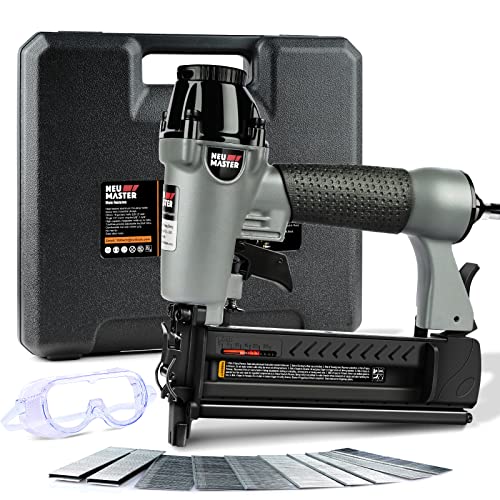


What's inside
As an Amazon Associate I earn from qualifying purchases. This post may contain affiliate links at no extra cost to you.
A nail gun combo kit only pays off when the math works, and the math is usually worse than the bundle photo suggests. Two nailers plus a compressor looks like a 40 percent saving until you price the same tools separately in a holiday sale and find the kit costs more. Cordless bundles run the same play with a different card: the pair looks generous until the fine print shows a 2.0Ah battery that will not push a framing nailer through one wall of studs.
What follows is the numbers version. The bands these kits really sell in, how deep a discount has to be before it is worth acting on, and the two pricing games that make an average offer look like a steal.
As an Amazon Associate we earn from qualifying purchases at no extra cost to you.




Price Bands: What a Nail Gun Combo Kit Is Actually Worth
Street prices move week to week, so read the bands below as categories rather than quotes. The column that matters is the third one, because that is the line between a real discount and routine shelf pricing.
| Kit type | Typical street band | Discount worth acting on | What usually gets shaved |
|---|---|---|---|
| Pneumatic 2 to 3 nailers plus compressor | $200-$400 | 25 percent or more off the 90-day average | Small tank, short hose, oil-lubed pump |
| Cordless brad nailer and stapler pair | $280-$450 | 20 to 30 percent with a usable battery | 2.0Ah packs, bare-tool swaps |
| Cordless framing plus finish nailer | $550-$850 | 15 to 25 percent, rarely deeper | High-output pack replaced by a compact |
| Single nailer plus free battery promo | Tool price | Free pack of 4.0Ah or larger | Bundle priced above the separate parts |
The benchmark rule: ignore MSRP and the strikethrough, and compare only against the trailing 60 to 90 day street average. Inside 10 percent of that average is a normal Tuesday. Fifteen to 20 percent under is a fair buy. Thirty percent or more on a current-generation cordless kit almost always has a reason behind it, usually a model changeover, a bundle being cleared, or a battery downgrade buried in the SKU.
The Two Tricks That Ruin Most Bundle Deals
The battery downgrade
Cordless nailers are among the most current-hungry tools on any platform. A framing nailer pulls hard on every shot, and pack size decides both shot count and whether the tool bogs in dense lumber. A battery is the easiest line item to trim, so a bundle sold last season with 5.0Ah packs quietly returns with a compact pack and a slow charger while the headline price drops 15 percent. That is a smaller product, not a discount.
Check three things in the listing: the amp-hour rating of every pack, whether the packs are standard or the high-output type the brand recommends for nailers, and whether a charger is included at all. Plenty of listings titled as combo kits are two bare tools in a bag. On DeWalt 20V MAX XR, Milwaukee M18 FUEL, or Makita 18V LXT, a compact pack is fine behind an 18-gauge brad nailer and marginal behind anything driving full-size framing nails.
The inflated was-price
The second trick is arithmetic. A percent-off figure is only as honest as the number it is measured from, and list prices on tool bundles are often set where no US retailer has charged in months. Watch the pattern before a big sale event: the reference price creeps up, then the discount is announced against the higher anchor. Marketplace sellers do the same on a smaller scale.
Two defenses. Check price history instead of the badge, and do not count store credit as a discount. A gift-card promo is worth face value only if you were spending there anyway.
Cordless Brad Nailer and Stapler Combo Kit
The most useful pairing for trim and DIY work, and the one where bundle pricing tends to be legitimate. Favor listings that state amp-hours in the title, and skip single compact-pack kits unless the price clearly reflects it.
Which Nailer Pairings Earn Their Keep
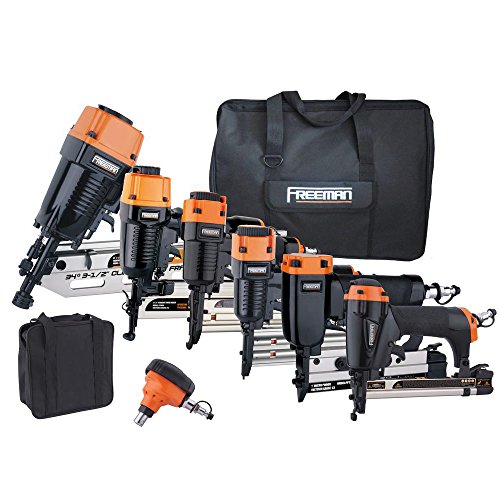
Piece count is a marketing metric. A four-piece kit padded with a palm nailer and a blow gun is not better than a two-piece kit you use weekly. The pairings that hold up:
18-gauge brad plus narrow crown stapler. Highest-use combination for cabinets, jigs, and shop builds. Staples hold plywood and thin stock far better than brads, and this bundle most often beats buying the two apart.
18-gauge brad plus 15 or 16-gauge finish. There is overlap, but casing, baseboard, and crown need real holding power. Angled 15-gauge for heavy casing work, straight 16-gauge if you want one nailer covering more ground.
Framing plus roofing or siding. Worth it only if you are actually building, and the band where pneumatic still wins on cost per tool by a wide margin.
Avoid kits that mix platforms, and avoid committing to a third battery system for the sake of one cheap bundle. That is not a saving.
Compressor Kits vs Cordless: Cost Per Tool
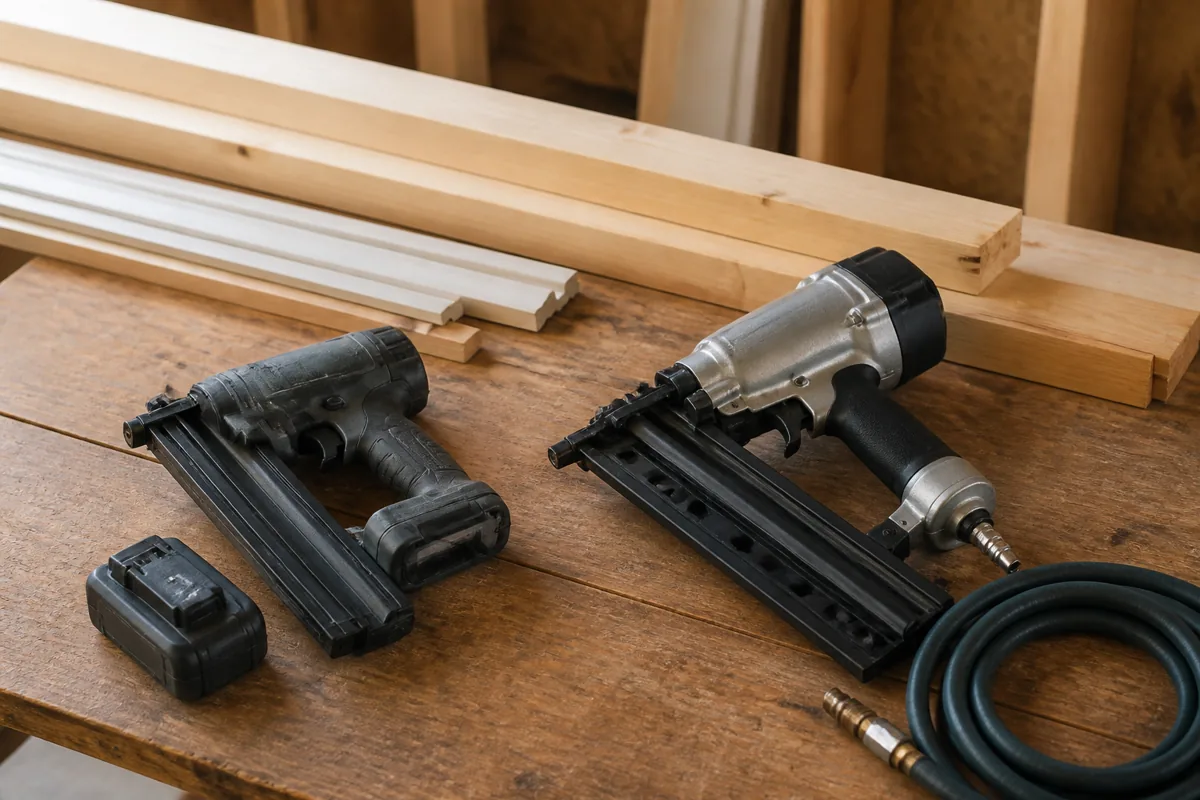
A pneumatic three-tool kit with a pancake compressor remains the cheapest way to own multiple nailers, frequently landing near the price of one mid-tier cordless nailer kit. The tradeoff is a hose, a cord, and noise. Cordless earns its premium on punch-list work, ladders, and finished rooms.
- ✔ Lowest cost per nailer by a wide margin
- ✔ No batteries to degrade or replace
- ✔ Air tools are light and simple to service
- ✔ Compressor covers blow guns and inflation too
- ✘ Setup time makes short jobs annoying
- ✘ Loud, and small tanks cycle often
- ✘ Hose management on ladders is a real cost
- ✘ Oil-lubed pumps need maintenance buyers skip
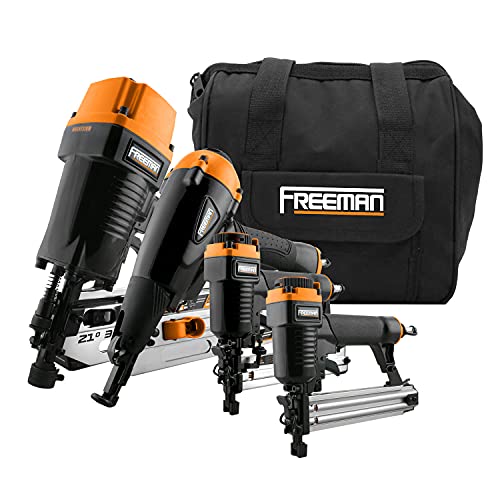
Pneumatic Nailer Kit With Compressor
If you need three nailers and are not choosing a battery platform, the value sits here. Look for a six-gallon or larger tank, an oil-free pump, and a hose long enough to be useful.
When to Wait and When to Buy
These bundles follow a predictable US calendar. Spring is the worst time to buy, with deck, fence, and trim demand peaking. Discounts appear around Memorial Day and Father’s Day, the midsummer and October marketplace events produce decent cordless pricing, and the deepest cuts land between Black Friday and Cyber Monday, when free-battery promos cluster.
Wait if the cut is under 15 percent off the trailing average, if the kit ships with one compact battery, or if the platform is due for a refresh. Buy at 25 percent or better on a pneumatic kit, on bundles carrying 4.0Ah or larger packs, or on previous-generation cordless kits clearing at 30 percent plus, since last-gen nailers give up very little in real work.
Factory-blemished and outlet channels are also worth watching, along with home center clearance on discontinued bundles. Confirm warranty length first, since refurbished coverage is usually shorter.
Cordless Framing and Finish Nailer Combo
The premium end, and the band where discounts stay shallowest. Only pay up if you already run the platform and truly need hose-free framing, and verify the framing tool ships with a high-capacity pack.
Nail Gun Combo Kit FAQ
Is a combo kit always cheaper than buying nailers separately? No. Pneumatic multi-tool kits with a compressor almost always win on cost per tool, but cordless bundles are closer to a coin flip because single-tool kits get promoted hard and often include a free battery. Price both paths.
How many nailers do I actually need? Most DIY work is covered by an 18-gauge brad nailer alone. Add a narrow crown stapler for cabinets and sheet goods, then a 15 or 16-gauge finish nailer for casing and baseboard. Framing and roofing tools only earn space if you build.
Are refurbished or factory-blemished kits a good deal? Often yes on air tools, where little can fail and the discount is meaningful. Be more careful with cordless, since the electronics and battery are the expensive parts. Check warranty terms and whether batteries are new.
Set a target band before you shop, check price history instead of the badge, and count the amp-hours in the box. Discipline on those three points beats any single sale event.
Check prices on Amazon →