Best Affordable Lawn Edger for Clean Driveway and Walkway Borders
What's inside
- Best Affordable Lawn Edger for Clean Driveway and Walkway Borders
- Affordable edger types compared
- Best value: corded electric for ordinary suburban yards
- When a cordless edger is worth the extra cost
- When a manual edger is the smarter buy
- Features that matter more than brand names
- How to get a clean driveway border
- Best Affordable Lawn Edger for Clean Driveway and Walkway Borders
- Affordable edger types compared
- Best value: corded electric for ordinary suburban yards
- When a cordless edger is worth the extra cost
- When a manual edger is the smarter buy
- Features that matter more than brand names
- How to get a clean driveway border
As an Amazon Associate I earn from qualifying purchases. This post may contain affiliate links at no extra cost to you.
Best Affordable Lawn Edger for Clean Driveway and Walkway Borders
A lawn edger does one job that a string trimmer cannot do well: it cuts a deliberate line between grass and a hard surface. That line keeps turf from creeping over the driveway, makes mowing cleaner, and prevents repeated trimming from slowly widening the border.
For most homeowners, the best value is a corded electric edger or a basic cordless model. Gas edgers still make sense for large properties and long, neglected borders, but they cost more, require fuel and maintenance, and are excessive for a typical suburban driveway. The right affordable edger depends mainly on border length, grass density, and whether you already own batteries in a tool platform.
As an Amazon Associate we earn from qualifying purchases at no extra cost to you.
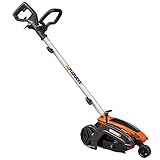
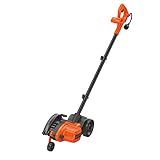


Affordable edger types compared
| Type | Typical street price | Best for | Main drawback |
|---|---|---|---|
| Manual rotary edger | $25–$60 | Short borders and occasional touch-ups | Slow and physically demanding |
| Corded electric | $60–$130 | Small and medium yards near an outlet | Extension cord management |
| Battery electric | $100–$250 without battery | Convenient routine edging | Battery and charger may cost extra |
| Gas-powered | $180–$400 | Long borders and heavy overgrowth | Noise, fuel, maintenance, and weight |
Best value: corded electric for ordinary suburban yards
A corded electric edger is usually the cheapest powered option that still feels like a proper lawn tool. Models in the roughly 10-amp to 12-amp range have enough power for grass along concrete, asphalt, and paver edges. They are light, start instantly, and do not lose performance as a battery discharges.
Choose a corded electric lawn edger if your longest border is under about 100 feet from an outdoor outlet. The important limitation is not cutting power; it is the cord. A 50-foot outdoor extension cord often covers a small front yard, while a 100-foot cord adds reach but also creates more opportunities to snag, drag, or accidentally cut it.
Corded models are especially good when you edge two or three times per season. The cheaper option is fine here because the motor runs consistently, and there is no battery to replace after several years. Store the cord indoors or under cover, and inspect it before every use. A damaged extension cord is a safety problem, not a minor inconvenience.
When a cordless edger is worth the extra cost
Battery edging is more convenient and usually easier to control because there is no cord behind you. It is the better choice for properties with gates, detached garages, multiple sections of sidewalk, or no convenient outdoor outlet. A typical 18- to 21-volt tool is adequate for maintained grass, while higher-voltage systems can handle tougher growth with less bogging.
Look at the complete kit price, not just the tool price. A bare tool may look like a $100 bargain, but a battery and charger can add $60 to $150. If you already own compatible batteries for a drill, blower, or trimmer, staying in that system can be the best brand-value decision. Otherwise, a corded edger may deliver the same cutting result for less money.
Shop cordless battery lawn edgers with battery capacity in mind. A 2.0Ah battery can be enough for a small front walk, but a 4.0Ah battery gives more useful working time for long borders or thick turf. Expect roughly 20 to 45 minutes of practical edging per charge, depending on grass density and how aggressively you cut.
When a manual edger is the smarter buy
A manual rotary edger or half-moon step edger is not a cheap imitation of a powered tool. It is a sensible choice for a driveway border that is 50 feet or less, particularly when the soil is soft and the edge is already established. There is no motor to maintain, no battery to charge, and almost nothing to break.
The trade-off is labor. A manual tool may take 20 to 40 minutes for work a powered edger completes in 10 minutes. It also struggles with compacted clay, roots, gravel, and thick runners. If you have let the grass grow 2 inches over the pavement, the blade can bind or require repeated cuts. For occasional maintenance, however, a manual lawn edger is often the lowest-cost option that produces a clean result.
Features that matter more than brand names
Prioritize an adjustable blade depth, an edge guide, and a comfortable grip. A 1- to 2-inch cutting depth is enough for routine maintenance. Going deeper can expose buried cable, irrigation lines, or landscape edging and may create an unnecessarily wide trench.
An adjustable shaft is useful if more than one person uses the tool, but it is not worth paying a large premium for minor ergonomic features. Look for a blade guard that covers the pavement-facing side and a guide wheel that rolls smoothly. A wheel that wobbles makes it difficult to hold a straight line.
Replacement blades are another value issue. Some inexpensive edgers use proprietary blades that cost nearly as much as the tool after shipping. Before buying, check whether replacement blades are readily available and whether the blade is reversible. On a budget tool, that detail can matter more than an extra amp or a slightly larger motor.
How to get a clean driveway border
Edge when the soil is slightly damp, not saturated. Moist soil cuts cleanly, while dry clay resists the blade and can make a low-powered edger overheat. Mow first, then mark the desired line if the border has drifted. Keep the blade on the pavement side of the grass and make one shallow pass before increasing depth.
Do not force the machine through gravel or buried roots. Release the trigger, unplug the tool or remove the battery, and clear the obstruction by hand. Common failure modes include a smoking motor from pushing too hard, a rapidly dulling blade from concrete contact, and a ragged edge caused by trying to remove too much growth in one pass.
For seasonal buying, prices are often best during late fall, winter clearance, and major holiday sales. Spring offers the widest selection but can bring higher prices. If you need an edger immediately, buy the type that matches your existing equipment: corded for lowest operating cost, cordless for convenience, and manual for short borders and occasional work.