Best Affordable Power Tools to Give a Beginning DIYer
What's inside
As an Amazon Associate I earn from qualifying purchases. This post may contain affiliate links at no extra cost to you.
Start With a Battery Platform
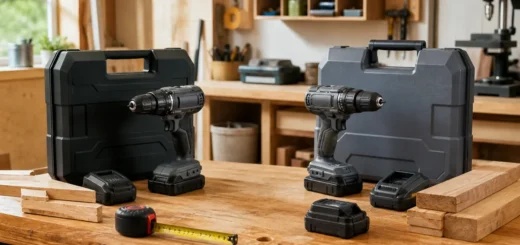
For a beginning DIYer, the most useful power tool is usually a drill/driver, but the battery system matters almost as much as the drill itself. Once someone owns two or three batteries and a charger, staying with that brand makes later tools cheaper. A bare tool can cost $30 to $80 less than a kit, while an extra battery may cost $40 or more.
For general household work, a compact 18V or 20V drill/driver is the best starting point. The voltage labels are effectively comparable; “20V” tools typically operate at 18V under load. Look for a clutch with at least 15 settings, a two-speed gearbox, a keyless chuck, and a battery of 1.5Ah or larger. A 2.0Ah battery keeps the tool light. A 4.0Ah battery runs longer but adds noticeable weight when driving screws overhead.
As an Amazon Associate we earn from qualifying purchases at no extra cost to you.

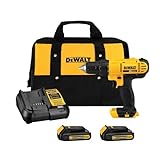


For a first purchase, a cordless drill/driver kit with two batteries is usually better value than buying the drill and battery separately. Avoid paying extra for a hammer-drill setting unless the recipient will drill occasional holes in brick or block. It does not turn a regular drill into a proper masonry tool.
The Best Affordable Tool Set
A drill, impact driver, and oscillating multi-tool cover a surprising amount of beginner work. Buy them individually if the prices are good, or choose a two- or three-tool kit from one battery platform. Combo kits can save money, but only when the included tools will actually be used. A kit with a flashlight and a small vacuum is not a bargain if it costs more than buying the drill and impact driver alone.
| Tool | Useful for | Reasonable budget | Main compromise |
|---|---|---|---|
| Drill/driver | Pilot holes, furniture assembly, drilling wood and metal | $70–$150 with battery | Slower and less convenient for repeated screw driving |
| Impact driver | Deck screws, long construction screws, stubborn fasteners | $80–$170 with battery | Noisy; can strip screws or damage soft wood |
| Oscillating multi-tool | Flush cuts, grout removal, trim fitting, sanding corners | $90–$180 with battery | Blades wear quickly and inexpensive blades can be poor |
| Circular saw | Breaking down plywood and dimensional lumber | $100–$200 with battery | Needs careful handling and a straightedge for accurate cuts |
An 18V or 20V impact driver kit is a strong second tool. It drives long screws with less wrist twisting than a drill, and its quick-change hex chuck makes bit changes fast. The trade-off is control: an impact driver can bury a screw head or split a cabinet panel in a fraction of a second. A beginner should start on the lowest speed or trigger setting and finish delicate work with a drill.
Comparing Budget and Premium Brands
Value depends on how often the tools will be used. Ryobi’s broad 18V range is often the easiest platform for homeowners because it has many affordable bare tools, from garden equipment to sanders. Its tools are generally adequate for repairs and weekend projects, though they may be larger, louder, or less refined than professional models.
Brands such as DeWalt, Milwaukee, and Makita typically offer better ergonomics, stronger brushless tools, and more durable high-use equipment. The price difference is harder to justify for a person who will drive a few hundred screws per year. It becomes easier to justify for someone building a deck, remodeling a room, or using tools every week.
Budget lines from store brands can be fine for light work. A cheaper drill is unlikely to fail simply because it costs less; the more common limitations are a weaker chuck, shorter runtime, slower charging, and less comfortable controls. The risk is greater with saws and grinders, where poor balance and weak power make accurate or safe work harder. For those tools, move up one quality tier rather than choosing the absolute lowest price.
When to Add a Saw or Sander
A circular saw is the right affordable upgrade for someone who plans to build shelves, planters, workbenches, or simple furniture. A corded model can cost $50 to $100 and will often outperform a low-cost cordless saw on long cuts. For occasional use near an outlet, corded is the better value. Cordless is more convenient, especially when cutting sheet goods outdoors, but a 4.0Ah or 5.0Ah battery is preferable; small batteries can run out after only a few dozen feet of plywood cutting.
For refinishing furniture, a 5-inch random-orbit sander is more useful than a detail sander. It removes finish faster and leaves fewer visible swirl marks when used with progressively finer abrasive discs. A corded random-orbit sander is often the cheapest sensible choice, usually around $40 to $90. Buy a cordless version only if portability matters or the recipient already owns compatible batteries.
Do not buy a jigsaw as the only saw. It is excellent for curved cuts and sink openings, but beginners often expect it to make straight cuts. The blade can wander in thick material, especially when pushing too quickly. A circular saw with a clamped straightedge produces better long cuts for less money.
Budget for Bits, Blades, and Safety
Tool kits frequently include mediocre accessories. Set aside $20 to $40 for a quality mixed drill-bit and driver-bit set, plus a magnetic bit holder. Cheap Phillips bits round over quickly, particularly in impact drivers. For wood projects, add a sharp set of brad-point bits; they start holes more accurately than general-purpose twist bits.
Accessories are consumables, not lifetime purchases. A circular-saw blade may cost $15 to $30, and a multi-tool blade can cost $8 to $20. Using a dull blade increases heat, slows the cut, and encourages unsafe force. Safety glasses are mandatory, and hearing protection is sensible for impact drivers, saws, and sanders. A dust mask is not a substitute for dust collection when sanding or cutting fiberboard.
The Best Time to Buy
Tool prices move with seasonal promotions. Watch for discounts around Memorial Day, Independence Day, Labor Day, Black Friday, and the weeks before Christmas. Spring sales are especially useful for cordless outdoor tools, while November promotions often produce the lowest prices on combo kits. Compare the kit’s included battery sizes rather than judging only by the tool count.
Holiday bundles can be excellent, but check whether the “free” tool is a useful bare tool or an unwanted accessory. If the recipient is starting from zero, a two-tool kit with two batteries is usually more practical than a five-tool kit with one small battery. Also check the warranty and return policy before buying an unfamiliar budget brand. A $40 saving is not worthwhile if replacement batteries disappear from stores after a year.