Best Affordable Tool Brand for a First-Time DIYer
What's inside
As an Amazon Associate I earn from qualifying purchases. This post may contain affiliate links at no extra cost to you.
A first tool purchase should solve the jobs you actually have, not lock you into a large battery system you may never use. For most new DIYers, Ryobi is the best affordable place to start: it has a broad range of homeowner tools, is widely sold, and offers enough compatible cordless options to build a useful kit over time. It is not the cheapest choice in every aisle, and a corded tool can be better value when you use it only occasionally.
Why Ryobi is a sensible first brand
Ryobi’s 18V ONE+ battery platform covers common home tasks, including drilling, driving screws, cutting wood, sanding, and yard work. That matters because batteries and chargers add cost: buying bare tools later can be cheaper than buying a separate battery kit for every job. Before committing, check that the particular tool you want is available in the platform and that its price makes sense with the battery included.
Ryobi tools are generally aimed at homeowners and light-duty use rather than daily construction work. That is a reasonable trade-off for hanging shelves, assembling furniture, building a planter, or making occasional repairs. A drill that sees a few hours of work each month does not need to survive the same workload as one used on a job site every day.
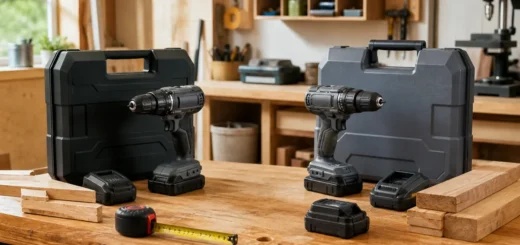
Start with a Ryobi 18V drill-driver kit if drilling holes and driving screws are your immediate needs. A kit usually includes a battery and charger, while a bare tool does not. Compare the full kit price with the bare-tool price plus a compatible battery before choosing.
How the affordable brands compare
Brand value depends on what you will buy next, not just the price of the first drill. Prices change with promotions, so treat these as broad positioning rather than fixed price rankings.
| Brand | Typical value | Good fit for | Trade-off |
|---|---|---|---|
| Ryobi | Broad homeowner range, frequent kit deals | Occasional repairs and varied household projects | Not the strongest choice for sustained heavy use |
| Craftsman | Often competitive for basic cordless kits | Buyers who find a good local or online bundle | Check availability of the specific future tools you want |
| Skil | Can offer strong value on selected tools and kits | People choosing a small set around a particular job | Its range may not suit every planned expansion |
| Harbor Freight brands | Low entry price, especially for occasional-use tools | One-off jobs where replacement cost matters most | Platform choice and tool availability vary by brand |
| DeWalt, Milwaukee, Makita | More options for demanding or frequent use | Trade work or a planned professional-level system | Higher initial cost can be hard to justify for light home use |
For a first-time DIYer, do not pay extra for a professional brand just because it is familiar. If a drill will be used twice a month, a well-priced homeowner kit is usually adequate. If you expect to build decks, remodel rooms, or use tools for work, durability, runtime, and the depth of the tool range start to matter more.
Buy for the first three jobs
Write down the next three projects before shopping. A drill-driver is the most versatile starting point for furniture assembly, pilot holes, and ordinary screws. An impact driver is useful for driving many long fasteners, but it is not a substitute for a drill when you need clean holes. If you are unsure, buy the drill first and add an impact driver only when a project calls for one.
A Ryobi 18V impact driver can be a practical second tool if you already own a compatible battery. Expect more noise and a greater chance of stripping a screw or damaging soft wood if you lean hard on the trigger. Use a matching driver bit, set the speed low, and finish delicate fasteners by hand.
For occasional indoor cutting, a corded circular saw can be cheaper than buying another cordless tool and battery. It also avoids running out of charge midway through a cut. The trade-off is managing the cord and working near an outlet. For a corded circular saw, check that the blade size matches the saw and buy a blade suited to the material; a dull or unsuitable blade can make a cut rough and force the motor to work harder.
Count the whole kit cost
A low sticker price can hide the expense of batteries, chargers, and accessories. Compare like with like: one battery, one charger, and the tool itself. A second battery is convenient for longer sessions, but a beginner doing a short shelf project may not need it. Spend first on decent drill bits and screwdriver bits, since poor accessories can slip, break, or leave rough holes even when the tool is fine.
Look at the battery capacity as well as the voltage. A compact battery is lighter and usually sufficient for short indoor jobs; a larger battery can run longer but adds weight and cost. For drilling many large holes or repeated cutting, runtime becomes more important. Do not buy a large multi-tool bundle just to get a battery unless you have a real use for most of the included tools.
When to buy, and when to wait
Promotions commonly appear around major shopping holidays and seasonal home-improvement periods, but there is no guarantee that a specific kit will be cheapest on a particular date. Track the price of the exact kit for a few weeks if the project is not urgent. Compare retailer bundles carefully: a free bare tool is useful only if you need it, and some advertised savings are less compelling once you account for the battery and charger you already own.
Buy before the job if waiting would lead to a rushed choice or a poor substitute. For an occasional task, renting or borrowing a specialty tool may cost less than buying one that will sit unused. A sensible first setup is one reliable drill kit, appropriate bits, eye protection, and a tape measure—not a full workshop in a bundle.
Avoid the common first-buy mistakes
Do not choose a tool solely by its maximum voltage or a large number printed on the box. For basic home jobs, fit, control, battery compatibility, and price matter more. Read the kit contents and confirm whether it includes a battery and charger. Check the return policy too: a tool that feels awkward in your hand is a poor buy, even at a discount.
Finally, treat safety gear as part of the cost. Wear eye protection when drilling, cutting, or sanding; secure work so it cannot shift; and keep hands clear of the cutting path. A cheaper tool is fine when it suits the workload, but no discount makes a rushed cut or an unsecured workpiece worth the risk.