Best Budget Cordless Finish Nailer for Installing Door Trim
What's inside
As an Amazon Associate I earn from qualifying purchases. This post may contain affiliate links at no extra cost to you.
A cordless finish nailer can save time when you’re fitting door casing, especially if you’re working room to room without dragging a compressor and hose. For a budget buy, the important question is not simply which tool costs least. It’s whether the full setup—nailer, battery, charger and nails—will make clean holes in your trim without adding much to the job’s cost.
As an Amazon Associate we earn from qualifying purchases at no extra cost to you.


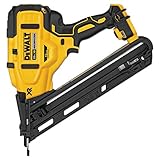
Choose a 16-gauge nailer for most door trim
A 16-gauge straight finish nailer is a practical choice for typical door casing. Its nails are stout enough to hold casing to the jamb and framing, but leave smaller holes than framing nails. Use nails around 2 to 2½ inches long when you need to pass through casing and drywall into framing; shorter nails may be suitable for thin trim or fastening to the jamb. Check the trim thickness and what lies behind it before settling on a length.
An 18-gauge brad nailer costs less and leaves smaller holes, but its thinner nails have less holding power. It can work for lightweight casing attached to a solid jamb, small trim details, or a homeowner’s occasional repair. For standard casing that needs to bridge a drywall gap and bite into framing, a 16-gauge nailer is the safer general-purpose purchase.
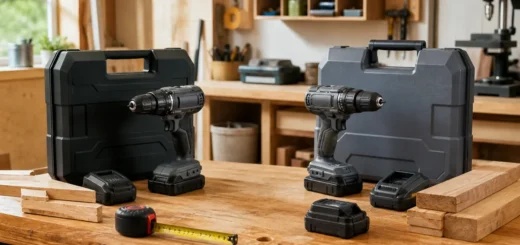
Compare cordless 16-gauge finish nailers with cordless 18-gauge brad nailers before buying. Don’t assume the lowest bare-tool price is the lowest-cost setup: a battery, charger and case can add substantially to the total if you don’t already own compatible gear.
Compare the complete setup, not just the tool
| Option | Best for | Cost trade-off | Door-trim limitation |
|---|---|---|---|
| Budget 18-gauge cordless brad nailer | Light trim, small repairs, occasional use | Often the lower entry price, especially as a kit | Less holding power for thick casing or fastening into framing across a gap |
| 16-gauge cordless finish nailer | Typical door casing and general finish work | Higher tool or battery cost, but broader usefulness | Larger nail holes need more filling and careful touch-up |
| Air-powered finish nailer and compressor | Several rooms or frequent trim work | Can be cheaper if you own a compressor; otherwise the package cost and setup add up | Hose can snag, and the compressor needs a power source |
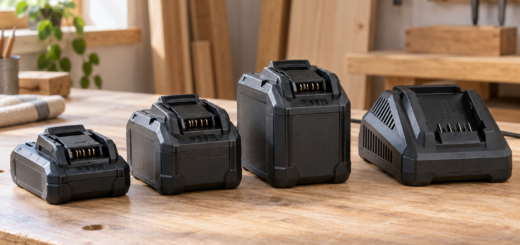
Brand value often comes down to batteries. If you already own batteries and a charger from a tool platform, a compatible bare tool can be the budget choice even when its shelf price is not the lowest. Starting from scratch, compare a complete kit and confirm what is included. Some listings are bare tools; others include a small battery, charger and bag. A smaller battery keeps the tool lighter but may run down sooner during a long installation.
Features worth paying for—and those you can skip
For door trim, prioritize consistent depth adjustment, a comfortable grip, a clear jam-release procedure and a nose that lets you reach near corners. A belt hook is handy on a ladder, while a work light helps in dim hallways. Tool-free depth adjustment is useful when casing thickness changes, but it matters less if you install the same trim throughout the house.
Dry-fire lockout helps prevent firing when the magazine is empty, which can otherwise leave marks or damage the work. A contact-trip setting that supports bump firing may speed up repetitive work, but controlled single shots are easier for beginners and safer near finished surfaces. Avoid paying extra for a feature you won’t use; do pay attention to the nail range. Confirm that the gun takes common straight finish nails in the gauge and length you need, rather than assuming every 16-gauge nailer accepts the same fasteners.
Avoid the common installation problems
Test the nailer on scrap casing of the same thickness before working on the door. Set the depth so the nail head sits just below the surface, not so deep that it crushes the wood. A nail that stands proud can be set with a nail punch; a deeply buried nail leaves a larger repair. Adjust in small steps and test again whenever you change material.
Place nails near the casing edges only when there is enough wood to prevent splitting, and angle paired nails slightly when you need a stronger hold. Don’t fire blindly near the door’s edge: a long nail can emerge from the side of the jamb or hit wiring hidden behind the wall. If the casing is pulling away from a bowed wall, a nailer alone may not draw it tight. Press it into position, add a shim where appropriate, and fasten into solid backing.
Misfires and jams happen, particularly with bent nails, poor-quality fasteners or a magazine loaded incorrectly. Disconnect the battery before clearing a jam, and follow the tool’s instructions. If the nailer repeatedly leaves nails proud even at maximum depth, check the nail type, material hardness and battery charge before assuming the tool is defective. A cordless nailer also adds motor weight at the nose; after a full day of overhead work, that can matter more than it does during one doorway.
When to buy and when the cheaper option is enough
For one doorway, renting or borrowing a finish nailer may cost less than buying a cordless kit. If you already own a compatible battery platform and expect to install casing in several rooms, a bare 16-gauge tool can be better value. Watch for seasonal promotions around major holiday sales and spring renovation periods, but compare the kit contents and regular prices: a discount on a bare tool is no bargain if the battery and charger are still needed.
Choose the cheaper 18-gauge option if your casing is lightweight, your fastening is mostly into a solid jamb, and smaller holes matter more than extra holding power. Choose a 16-gauge cordless finish nailer if you want one tool for ordinary door casing and expect to use it again. The best budget choice is the one that fits the work and the battery system you already have—not necessarily the cheapest price on the shelf.