Best Monitors for Work From Home
What's inside
As an Amazon Associate I earn from qualifying purchases. This post may contain affiliate links at no extra cost to you.
Working from home means staring at a screen for eight or more hours a day, and the single upgrade that changes comfort, productivity, and long-term eye health the fastest is a proper monitor. The problem most buyers face is not finding a screen—it is finding the right screen at the right size for the task without overpaying for features they will never use. A spreadsheet jockey needs resolution and eye comfort; a video editor needs color accuracy and size; a part-time remote worker needs something that will not cost more than a week of groceries.
What separates a good work-from-home monitor from a mediocre one in 2026 is straightforward: panel quality that reduces eye strain, a refresh rate smooth enough to feel responsive during everyday tasks, a physical design that respects your desk footprint, and a price that stays reasonable when you are outfitting a home office on your own dime. The options below range from under seventy dollars to just under a hundred, with one health-monitoring outlier that caught our attention for a different reason. Each product was compared on published specifications, listed prices, and aggregated owner feedback to identify where they genuinely excel and where they fall short.
As an Amazon Associate we earn from qualifying purchases at no extra cost to you.




Our Top Picks
 Philips 24 Inch Computer Monitor FHD 100Hz VA24 inch 100Hz8.7 x 21.3 x 16.4 Inches6.4 poundsCheck on Amazon
 Philips 22 Inch Computer Monitor FHD 100Hz VA22 inch 100Hz8.7 x 19.4 x 14.5 inches9.3 poundsCheck on Amazon
 Amazon Basics 23.8-inch 1080P Computer Monitor23.8 Inches7.3 x 21.3 x 16.4 Inches7 PoundsCheck on Amazon

Quick Picks
| Product | Best For | Price |
|---|---|---|
| Philips 24″ FHD 100Hz VA (241V8LB) | Balanced home office setup | $89.99 |
| Philips 22″ FHD 100Hz VA (221V8LB) | Tightest budgets | $64.99 |
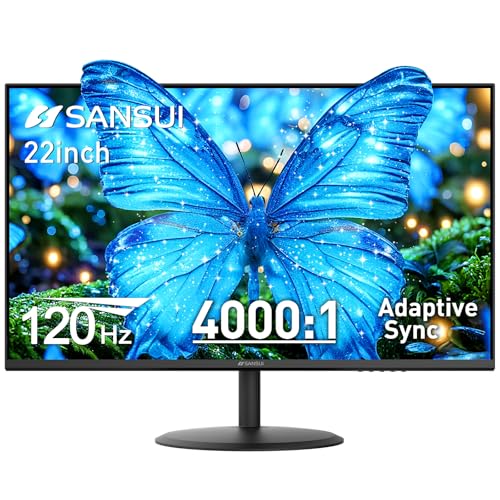
| SANSUI 22″ 120Hz FHD Eye Care | Higher refresh on a small desk | $69.98 |
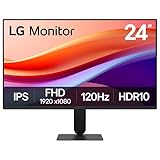
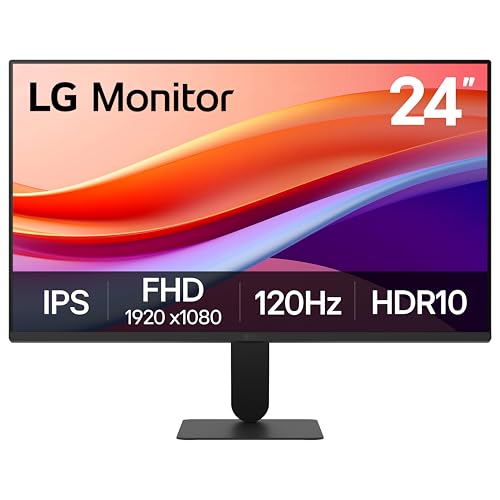
| LG 24U411A-B 24″ FHD IPS 120Hz HDR10 | IPS viewing angles and color | $89.99 |
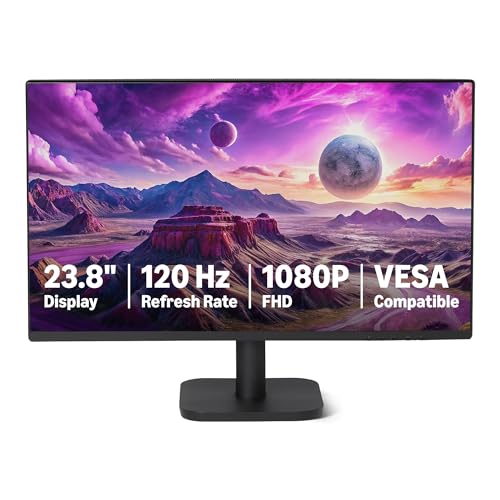
| Amazon Basics 23.8″ 1080P 120Hz | Maximum connectivity options | $80.99 |
| Philips 27″ FHD 100Hz VA (271V8LB) | Screen real estate under $100 | $99.99 |
| Oklar FDA Cleared Blood Pressure Monitor | Home office health tracking | $19.99 |
| ViewSonic VA1903H 19″ WXGA | Smallest desk spaces | $79.99 |
How We Picked
Four criteria drove our shortlist. First, panel and refresh specs that matter for extended reading and multitasking—Full HD resolution as a minimum floor, and a refresh rate of 100 Hz or higher because the difference over 60 Hz is immediately noticeable during scrolling and cursor movement. Second, eye-comfort features such as flicker-free backlights, blue-light reduction modes, and VA or IPS panels over cheaper TN options. Third, physical versatility: VESA mount compatibility matters for anyone using a monitor arm to free up desk space, and a slim stand helps in cramped quarters. Fourth, price-to-spec ratio—we prioritized models that deliver the most usable features per dollar rather than chasing premium brands with marginal gains.
The 8 Best Monitors For Work From Home in 2026
Philips 24″ FHD 100Hz VA (241V8LB)
This is the monitor for the remote worker who wants a no-drama, comfortable 24-inch screen without spending more than ninety dollars. The VA panel delivers strong contrast, which makes text on white backgrounds feel easier on the eyes over long sessions, and the 100 Hz refresh rate keeps window dragging and scrolling smooth. VESA mount support and a flicker-free backlight round out the practical features.
- Pro: High VA contrast ratio makes dark-on-light text crisp and reduces perceived glare.
- Pro: VESA compatible, so it pairs well with a monitor arm for adjustable positioning.
- Con: Narrower vertical viewing angle than IPS alternatives, so it is best viewed head-on.
Skip this one if you need wide-angle viewing for collaborative work or if your desk sits at an awkward angle to your line of sight.
Philips 22″ FHD 100Hz VA (221V8LB)
At sixty-five dollars, this is the cheapest path to a genuine 100 Hz, flicker-free Full HD experience. It suits students, part-time freelancers, or anyone setting up a secondary display for reference materials. The smaller footprint means it fits beside a laptop without crowding the desk.
- Pro: Lowest price on the list while still delivering 100 Hz and VA contrast.
- Pro: Compact enough for dorm rooms, shared desks, or dual-screen setups on tight budgets.
- Con: At 22 inches with 1080p, pixel density is lower than on the 24-inch model, making text slightly less sharp.
Skip if you spend the bulk of your day reading dense documents; the extra inch of the 24-inch model is worth the price gap for comfort.
SANSUI 22″ 120Hz FHD Eye Care
The SANSUI targets buyers who want the highest refresh rate at the lowest price. A 120 Hz panel on a 22-inch display feels noticeably fluid during scrolling and cursor movement, and the built-in eye-care mode filters blue light without a heavy yellow tint that would distort document colors.
- Pro: 120 Hz at under seventy dollars is hard to beat on raw spec-per-dollar.
- Pro: Eye-care mode offers a gentler color shift than many budget competitors.
- Con: Limited brand reputation and after-sales support compared to Philips or LG.
Skip if you value a well-established warranty process or if your work demands color-critical accuracy.
LG 24U411A-B 24″ FHD IPS 120Hz HDR10
LG brings an IPS panel to this price bracket, which means wide viewing angles and more faithful color reproduction than any VA option here. The 120 Hz refresh, HDR10 support, and dedicated Reader Mode make it a strong pick for anyone who alternates between spreadsheets, video calls, and occasional creative work.
- Pro: IPS panel eliminates color and contrast shifts when viewed off-angle.
- Pro: Reader Mode reduces blue light without washing out text contrast.
- Con: Slim stand base limits height adjustment; you may want a VESA arm, but the stand itself is non-VESA.
Skip if you already own a monitor arm and need VESA mounting; LG designed this for desk placement only.
Amazon Basics 23.8″ 1080P 120Hz
The connectivity panel on this Amazon Basics model is its standout feature: HDMI, DisplayPort, and VGA in one monitor means it will talk to nearly any computer, including older office towers still in service. The 120 Hz refresh and VESA compatibility make it a practical pick for IT-heavy home setups.
- Pro: Three video inputs (HDMI, DP, VGA) offer unmatched legacy-device flexibility.
- Pro: VESA mount compatible with a slim profile that suits monitor arms.
- Con: Panel quality is adequate but lacks the contrast punch of VA or the color range of IPS.
Skip if you are purely upgrading a modern laptop or desktop with digital-only output and do not need the legacy ports.
Philips 27″ FHD 100Hz VA (271V8LB)
Twenty-seven inches of Full HD for under a hundred dollars is the value proposition here. The extra screen real estate accommodates side-by-side windows, larger spreadsheets, and multitasking without feeling cramped. VA contrast and eye-care features match the smaller Philips siblings.
- Pro: Largest usable screen on the list while staying under $100.
- Pro: 100 Hz refresh and flicker-free backlight maintain comfort at the bigger size.
- Con: At 27 inches, 1080p results in visible pixel grid on close inspection; text is less sharp than on 24-inch models.
Skip if you sit close to your monitor (under 24 inches) and prioritize text sharpness over workspace size.
Oklar FDA Cleared Blood Pressure Monitor
This is not a display monitor, and we include it because “best monitors for work from home” searches occasionally surface health devices—and sedentary desk work is a genuine risk factor for elevated blood pressure. The Oklar offers FDA-cleared upper-arm measurement at twenty dollars, making it a practical health addition beside any of the screens above.
- Pro: FDA clearance gives clinical-grade accuracy reassurance at a consumer price.
- Pro: Compact, quiet operation suits a home office without drawing attention.
- Con: Not a computer display; include it as a supplementary purchase, not a replacement.
Skip entirely if you are shopping for a screen. This is for remote workers who also want a simple, affordable way to track cardiovascular health at their desk.
ViewSonic VA1903H 19″ WXGA
For the smallest desks—apartment kitchen counters, narrow nooks, or dual-monitor arms where space is at a premium—the ViewSonic 19-inch is the most compact option here. Custom ViewModes let you shift color profiles for reading or media, and the HDMI input keeps cabling simple.
- Pro: Smallest footprint on the list; fits virtually any workspace.
- Pro: Custom ViewModes offer quick profile switching without deep OSD navigation.
- Con: WXGA resolution (1440×900) is below Full HD, limiting screen real estate in native-pixel applications.
Skip if you routinely need two full-sized windows side by side; the resolution ceiling will frustrate you within a week.
Buying Guide
Panel Type: VA vs. IPS vs. TN
For text-heavy work, VA panels deliver the highest contrast, making black-on-white documents easier to read for hours. IPS panels win on viewing angle and color fidelity, which matters if your desk setup is not perfectly centered or if you touch up photos. TN panels—found in the lowest-budget screens—shift color and contrast at angles and should be avoided for anything beyond casual use. Among our picks, Philips and SANSUI models use VA; LG uses IPS; the Amazon Basics panel is a mid-range option that sits between the two.
Refresh Rate: Why 100 Hz and Above Matters
Standard office monitors run at 60 Hz, and the jump to 100 or 120 Hz is immediately visible during scrolling, window dragging, and cursor tracking. It reduces the micro-stutter that fatigues your brain over long sessions. Every screen on this list except the ViewSonic runs at 100 Hz or higher. If you are choosing between a 60 Hz and a 100 Hz panel at the same price, the higher refresh is the single best upgrade for comfort.
Size and Resolution: Matching Pixels to Inches
Full HD at 24 inches provides comfortable text sharpness for most users sitting at a normal desk distance. At 27 inches, 1080p begins to look soft unless you sit farther back (around 30 inches or more). Below 24 inches, you trade screen area for desk space. If you are pairing a monitor with a 14- or 15-inch laptop, a 22- to 24-inch screen is the sweet spot for extending without overwhelming your setup.
Our Verdict
Top pick: The LG 24U411A-B offers the best combination of panel quality, refresh rate, and eye-comfort features for the widest range of work-from-home tasks. IPS viewing angles and HDR10 support make it versatile without a price premium.
Budget pick: The Philips 22-inch (221V8LB) at $64.99 is the lowest-cost path to a flicker-free, 100 Hz, Full HD VA display with VESA compatibility. It is the monitor to buy when every dollar counts.
Alternative winner: If your priority is maximum screen area under $100, the Philips 27-inch (271V8LB) wins despite the lower pixel density. For multitaskers who sit an arm’s length back, the extra real estate outweighs the sharpness trade-off.
FAQ
Is 1080p enough for a work-from-home monitor in 2026?
At 22 to 24 inches, 1080p delivers adequate sharpness for documents, spreadsheets, video calls, and web-based applications. For 27 inches and larger, 1440p is preferable, though no option on this list offers that resolution. A 24-inch 1080p screen remains the best value in the sub-$100 bracket.
Do I need VESA mount compatibility for a home office?
VESA compatibility matters if you want to use a monitor arm to free up desk space, adjust height frequently, or set up a dual-screen configuration without stacking stands. If your desk is fixed and you never plan to reposition your screen, a well-designed built-in stand is sufficient.
Will a higher refresh rate help my eyes during long work sessions?
A 100 or 120 Hz refresh rate reduces perceived flicker and makes motion on screen smoother, which lowers the cognitive load during scrolling and window management. Combined with a flicker-free backlight, the result is measurably less eye fatigue over an eight-hour day compared to a 60 Hz panel.
Are budget monitors reliable enough for daily professional use?
The Philips, LG, Amazon Basics, and ViewSonic models listed here all come from established manufacturers with standard warranty coverage. Budget does not mean unreliable in this category; it means fewer premium features like height-adjustable stands or factory color calibration, not inferior build quality.