Worx vs Black+Decker Tools: Which Brand Is a Better Buy for Home Repairs?
What's inside
As an Amazon Associate I earn from qualifying purchases. This post may contain affiliate links at no extra cost to you.
Quick verdict
For occasional home repairs, Worx and Black+Decker are both sensible budget brands. Neither is a blanket winner: the better buy depends on whether you want one tool for a specific job or a battery platform you can build around.
Black+Decker is often the simpler choice for basic household tasks and widely available entry-level tools. Worx is worth a close look if you want a broader selection of cordless yard and home tools that share batteries. Compare the exact tool, battery, and kit contents before deciding—brand name alone won’t tell you which deal is better.
As an Amazon Associate we earn from qualifying purchases at no extra cost to you.



At a glance
| Consideration | Worx | Black+Decker |
|---|---|---|
| Best fit | Buyers interested in a shared cordless system across home and yard tasks | Buyers who need straightforward tools for occasional repairs |
| Typical advantage | Useful ecosystem if you plan to add compatible tools | Easy-to-find basic tools and kits |
| Watch for | Battery compatibility can vary by product line | Entry-level models may lack the power or features needed for repeated heavy work |
| Best buying check | Confirm the tool accepts batteries you already own | Check whether the price includes a battery and charger |
What matters for home repairs
Most household jobs don’t need professional-grade tools. Hanging shelves, assembling furniture, tightening loose hardware, and drilling small pilot holes are well within the reach of an affordable cordless drill. Bigger jobs—such as driving long structural screws, drilling large holes, or working through dense hardwood—put more strain on a small motor and battery.
For a drill, look for a clutch with multiple settings, two speed ranges, and a comfortable grip. The clutch helps avoid stripping screws or damaging soft material. A lower speed gives you more control when driving screws; a higher speed is useful for drilling. For repairs around the house, a compact drill is usually easier to handle than a heavy hammer drill. You only need hammer mode for masonry, and a budget hammer drill may still be slow in concrete.
Battery size matters, but more amp-hours do not automatically mean more power. A larger battery generally lets you work longer between charges and adds weight. If you’re doing a few short repairs, a smaller battery can be perfectly adequate. If the kit price looks unusually low, check whether it includes a battery and charger; a bare tool is not a complete cordless setup.
Choosing between the brands
Black+Decker makes sense if your needs are modest: occasional drilling, furniture assembly, or quick fixes around the home. It’s also a reasonable pick when you find a complete kit at a good price and don’t expect to buy several more cordless tools. Paying extra for a larger battery platform is hard to justify if the drill will come out twice a year.
Worx can offer better value if you expect to add compatible tools, especially for outdoor work. A shared battery can reduce the cost and clutter of buying a separate charger and battery with each tool. But don’t assume every Worx battery fits every Worx product. Check the tool’s product details and battery system before buying, especially when mixing tools from different lines.
In either brand, inspect the kit contents rather than comparing headline prices. A $50 tool-only offer can cost more than a $90 kit once you add a battery and charger. Also check the return period and warranty terms for the specific product. Warranty coverage is useful, but it does not prevent downtime if you need a replacement tool for a job in progress.
Which tools are worth buying?
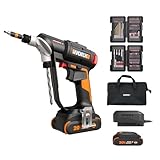
For most homeowners, a drill/driver is the first cordless tool to buy. If you’re starting from scratch, compare Worx cordless drill/driver kits with Black+Decker cordless drill/driver kits. Match battery voltage, included battery capacity, charger, and accessories; a large assortment of cheap bits is less useful than a reliable battery and a decent set of common driver bits.
A separate impact driver is useful if you regularly drive long screws or build decks and outdoor structures. It is not essential for putting together flat-pack furniture or hanging a few pictures. For frequent drilling into brick or concrete, consider a corded hammer drill or a stronger cordless option rather than expecting an entry-level drill to power through quickly.
For cutting and sanding, buy only when you have a specific job in mind. A compact oscillating tool can trim a door casing or remove old grout, but blades are a recurring expense and cheap blades can dull quickly. A random-orbit sander is handy for small repairs, though dust control and sandpaper availability matter as much as the brand. Don’t buy a bundle of tools simply because the per-tool price looks low if most will sit unused.
Common failure modes to avoid
The most common problem with budget cordless tools is asking too much of them continuously. A small drill can overheat or drain its battery quickly when driving repeated long screws. Let the tool cool between demanding runs, use the right bit, and drill a pilot hole in dense wood. If the drill stalls often, step up to a more capable tool rather than forcing it.
Cheap or worn bits cause stripped screw heads and cam-out, which can make a simple repair frustrating. Keep the bit square to the screw, apply steady pressure, and stop when the clutch clicks. For delicate work, start with a low clutch setting and increase it gradually. If a screw head is already damaged, continuing to drive it usually makes removal harder.
Finally, don’t leave lithium-ion batteries in a hot car or store them fully depleted for long periods. Heat and deep discharge can shorten battery life. Store batteries indoors and follow the manufacturer’s charging instructions.
The better buy depends on your next few jobs
Choose Black+Decker if you want an affordable, complete tool for occasional basic repairs and have no real plan to expand a cordless collection. Choose Worx when a compatible shared-battery system could save money across several tools you’ll actually use. In both cases, the best value is usually the kit that includes the right battery and charger—not the lowest advertised tool price.
Before checkout, write down the jobs you expect to tackle in the next year, then compare kits against those jobs. If they amount to a few holes and a handful of screws, buy the less expensive complete drill kit that feels comfortable in your hand. If you’ll use multiple tools regularly, price the batteries and bare tools together; that is where a platform decision can make a real difference.