Porter-Cable vs Skil Drills: Which Entry-Level Brand Is the Better Value?
What's inside
As an Amazon Associate I earn from qualifying purchases. This post may contain affiliate links at no extra cost to you.
Porter-Cable and Skil both target shoppers who want a cordless drill without paying professional-tool prices. The cheaper option is often good enough for shelves, furniture assembly, drywall anchors, and occasional repairs. The harder choice is deciding which battery platform, charger, and level of support will still feel worthwhile after the first few projects.
In general, Skil offers the stronger value for a new buyer who wants a current cordless kit with a brushless motor and a modern battery system. Porter-Cable can still make sense when its drill kit is heavily discounted, when you already own Porter-Cable batteries, or when you want a simple tool for light-duty work.
As an Amazon Associate we earn from qualifying purchases at no extra cost to you.


Porter-Cable vs Skil at a glance
| Factor | Porter-Cable | Skil |
|---|---|---|
| Typical buyer | Occasional DIY user and existing battery-platform owner | New DIY buyer wanting more features per dollar |
| Common kit pricing | Often around $60-$120, with sales varying widely | Often around $70-$150, especially for brushless kits |
| Motor choices | Brushed and brushless models, depending on the kit | Brushed and brushless models, with brushless options common in value bundles |
| Battery advantage | Useful if you already have compatible 20V MAX batteries | Useful if starting a newer 20V platform with compact lithium-ion packs |
| Best use | Driving screws, drilling wood, and light household maintenance | Household projects, repeated assembly, and occasional larger holes |
| Main drawback | Some older or inexpensive kits feel less refined | Battery and accessory costs can reduce the initial savings |
Performance and durability
For basic drilling, both brands can handle pine, plywood, softwood studs, and ordinary screwdriving. A typical two-speed drill in this class gives you a slower setting for driving screws and a faster setting for drilling. The clutch matters more than headline torque: a clutch with roughly 15 to 20 positions makes it easier to avoid stripping cabinet screws or burying fasteners in soft wood.
Brushless motors are the more important dividing line than the logo on the side. They usually run cooler, use battery energy more efficiently, and tolerate repeated work better than brushed motors. That does not make a budget brushless drill a professional tool, but it is a sensible upgrade if you expect to drill dozens of holes in one session. For assembling one bookcase or hanging a few pictures, a brushed drill is normally adequate.
Porter-Cable’s inexpensive drills can feel perfectly capable at first but may show their limits under continuous load. A common failure mode is heat buildup when drilling large holes or driving long structural screws. The clutch may also feel less precise on low-cost models. Skil’s better current kits tend to offer a more polished package, but the lowest-priced versions still have plastic-heavy housings and are not intended for daily construction work.
Neither brand should be your first choice for regular masonry drilling, heavy deck building, or large hole saws. Use a hammer drill for concrete and masonry. For those jobs, consider a brushless hammer drill kit from a more established professional platform.
Battery and kit value
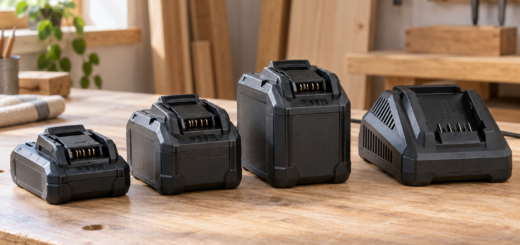
The drill is only part of the purchase. Check whether the kit includes one battery, two batteries, a charger, and a case. A single compact battery may be enough for light use, but a second pack prevents charging interruptions. A 1.5Ah or 2.0Ah battery keeps the drill light; a 4.0Ah or larger pack lasts longer but adds noticeable weight when working overhead.
Battery compatibility is the strongest reason to choose Porter-Cable over Skil. If you already own several Porter-Cable 20V MAX tools, buying a bare drill can be cheaper than starting a second system. The same logic applies to Skil’s 20V line. Do not assume batteries from different brands will interchange just because both labels say “20V.” The physical mounts, electronics, and chargers are different.
Look at the replacement battery price before buying a bargain kit. A drill that costs $70 may stop looking cheap if an additional battery costs $50 or more. If you expect to add a reciprocating saw, impact driver, or light later, choose the platform with the tools you are likely to use—not simply the kit with the lowest checkout price.
Which brand should you buy?
Choose Skil if you are starting from zero and can find a brushless drill kit within about $20 of a comparable Porter-Cable kit. That small premium is usually worthwhile for the more efficient motor and better long-term usefulness. A Skil 20V brushless drill kit is a sensible general-purpose choice for homeowners who expect occasional projects rather than daily trade work.
Choose Porter-Cable when the price is substantially lower—roughly $25 to $40 less for similar batteries and features—or when you already own compatible batteries. Its basic drills are fine for assembling furniture, drilling pilot holes, installing curtain hardware, and driving ordinary wood screws. A Porter-Cable 20V drill kit becomes especially attractive during clearance sales, provided the kit includes a current battery and the retailer has a workable return policy.
For frequent screwdriving, a drill-and-impact-driver combo can be more useful than a premium drill alone. The impact driver handles long screws with less wrist strain, while the drill provides clutch control for delicate work. Compare the included battery sizes carefully; some cheap combo kits include two very small packs that charge often.
When to buy and what to check
Tool prices commonly fall around major holiday sales, Father’s Day promotions, Black Friday, and end-of-year clearance. The best deal is not always the lowest advertised number. Compare the exact contents, because retailers may use similar packaging for a tool-only item, a one-battery kit, and a two-battery kit.
Before ordering, check the chuck size, battery capacity, warranty terms, and whether the charger is included. A 1/2-inch chuck is useful for a wider range of bits, but a 3/8-inch chuck is sufficient for most household work. Also inspect the return window. Budget drills can arrive with a faulty charger, a battery that will not seat properly, or a chuck that runs noticeably out of true.
For the average homeowner, Skil is the better all-around value when prices are close. Porter-Cable is the better bargain when discounted deeply or when its battery platform already fits your tools. Either is reasonable for light DIY; neither is a substitute for a contractor-grade system if the drill will run every day.