Best Value Combination Square for Woodworking and Layout Work
What's inside
As an Amazon Associate I earn from qualifying purchases. This post may contain affiliate links at no extra cost to you.
What Makes a Combination Square Good Value?
A combination square earns its place in a woodworking toolbox by doing several jobs with one tool: checking and marking 90-degree and 45-degree lines, measuring depth, setting out joinery, and checking the edges of boards. The best value is not always the cheapest square. It is the tool that stays accurate, locks securely, and remains readable after years of shop use.
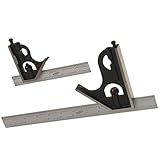
For most woodworkers, a 6-inch or 12-inch combination square is the practical choice. A 6-inch square is easier to control on small parts and fits conveniently beside a miter saw. A 12-inch square reaches across wider boards and is more useful for cabinet panels, casework, and construction layout. If you can buy only one, a 12-inch model is more versatile, although a compact 6-inch square is often the better everyday marking tool.
As an Amazon Associate we earn from qualifying purchases at no extra cost to you.


Best Value Picks by Budget
| Type | Typical street price | Best use | Main compromise |
|---|---|---|---|
| Basic cast-metal 12-inch square | $10–$20 | General woodworking and home repair | Rougher finish, less refined lock |
| Midrange steel or aluminum square | $20–$45 | Frequent shop use and accurate layout | Costs more without laboratory-level accuracy |
| Premium machined square | $60–$130+ | Fine furniture, instrument work, professional use | High price and greater concern about damage |
For a budget purchase, look at 12-inch combination squares for woodworking from established tool brands rather than the absolute cheapest unbranded listing. A low-cost square can be perfectly serviceable if its blade is straight and the head locks without movement. The risk is inconsistent quality: two apparently identical budget squares may not be equally accurate.
A midrange model is usually the best value for someone who uses layout tools every week. It should have a rigid blade, a clear etched or deeply stamped scale, and a head that tightens with a positive thumb screw. These details matter more than a polished finish. A well-made midrange square can last decades if it is kept dry and not thrown into a drawer with heavy steel tools.
Premium squares from specialist manufacturers are worthwhile when repeatable accuracy is central to the work. Their blades and heads are generally machined more carefully, and the fit between the parts is smoother. That does not make them immune to damage. A fall onto a concrete floor can bend or nick any square, and a premium tool is expensive to replace.
Features That Affect Accuracy
The head should slide smoothly but have very little side-to-side play. A loose head can shift while you mark a line, producing a visible error at the far edge of a board. On a 12-inch blade, only 0.5 degrees of error moves the line by roughly 0.10 inch. That is enough to spoil a cabinet part or create a poor-fitting joint.
Check the locking mechanism before buying. A simple thumb screw is easy to repair and usually dependable. Some squares use a spring-loaded or quick-lock design that is faster to adjust, but these mechanisms can develop play or become difficult to clean. The lock should hold the head firmly with moderate hand pressure; if you must overtighten it, the design or fit is suspect.
Blade material is another trade-off. Stainless steel resists rust and is a good choice in an unheated garage, but thinner stainless blades can flex. Hardened steel is stiff and durable but needs a light coat of rust inhibitor in damp conditions. Aluminum heads keep weight down, while cast iron or steel heads feel more stable but can damage a finished workpiece if dragged across it.
Make sure the blade has a scribe or marking notch if you plan to mark directly from the scale. A notch lets you place a pencil or knife point at an exact measurement without guessing between printed graduations. For furniture work, 1/16-inch graduations are useful; for rough construction, 1/8-inch markings are usually sufficient.
Brand Value and Common Failures
Brand name matters mainly because quality control, replacement parts, and return support vary. A recognized budget brand can offer better value than a premium name if the square arrives accurate and remains stable. Conversely, a famous brand is not automatically a bargain when a simpler midrange tool meets your needs.
Before using a new square, test it. Place the head against a straight board and draw a line. Flip the square over so the same edge of the head references the board, then draw a second line from the same starting point. If the lines do not overlap, the square is out of square. Test both the 90-degree and 45-degree faces, and check the blade against a known straightedge.
Common failures include a bent blade, a head that rocks on its casting, scale markings that are difficult to read, and a locking screw that bottoms out before securing the blade. Some inexpensive squares also have a casting burr that prevents the head from sitting flush against a board. These are reasons to buy from a seller with a straightforward return policy.
Which Size Should You Buy?
Choose a 6-inch square for drawer parts, small boxes, trim, and machine setup. It is less likely to catch on the work and is comfortable for marking narrow stock. Choose a 12-inch square for sheet goods, doors, framing, and checking the ends of wide boards. A 16-inch model can be helpful for cabinet work, but it takes more storage space and is easier to bump out of position.
If your work spans both small and large parts, a two-square setup is often better value than one oversized premium tool. Buy a dependable 12-inch square first, then add a budget 6-inch square when a sale appears. A 6-inch woodworking combination square is inexpensive enough to keep at a bench or with a portable tool kit.
When to Buy and What to Pay
Combination squares are commonly discounted during spring home-improvement sales, Father’s Day promotions, and November shopping events. The largest percentage discounts often apply to multi-tool sets, but buying a set is only good value if you need the included center finder, depth gauge, or protractor head. Extra heads add flexibility but also create more parts to lose and more surfaces that can develop play.
For ordinary woodworking, aim for roughly $15–$30 for a sound budget or midrange 12-inch square. Spend $50 or more when you need tighter fit, smoother adjustment, and better long-term quality control. If a basic square passes the flip test, locks firmly, and has a readable scale, the cheaper option is fine for shelves, trim, shop fixtures, and most home projects.
For high-precision furniture or daily professional layout, compare premium machinist combination squares by blade thickness, head fit, and return policy rather than price alone. Accuracy you can verify is more valuable than a brand badge you cannot test.