Best Value Cordless Ratchet for Tight Automotive Repair Spaces
What's inside
As an Amazon Associate I earn from qualifying purchases. This post may contain affiliate links at no extra cost to you.
What matters in tight spaces
A cordless ratchet saves time when you have repeated fasteners to remove, but it is not a powered impact wrench. Its motor turns the head; it does not deliver impact blows. That makes it useful for engine bays, interior work, and under-dash repairs where a compact tool can reach a nut but a drill or impact gun cannot. You still need to loosen stubborn fasteners by hand and finish tightening with a hand ratchet or torque wrench.
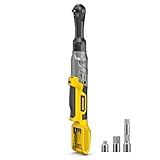
For automotive work, compare the tool’s head height and length before comparing voltage. A low-profile head may fit between a bracket and the body where a more powerful, bulkier ratchet will not. Check the clearance around the fastener, including room for the battery and your hand to move. A 3/8-inch drive is the practical all-round choice for many car repairs; 1/4-inch drive is smaller for light-duty fasteners, while 1/2-inch tools tend to be larger and less suited to cramped access.
As an Amazon Associate we earn from qualifying purchases at no extra cost to you.


How much power is enough?
For routine work on small fasteners, a compact 12-volt ratchet is usually adequate. Published maximum torque figures vary by brand and test method, so treat them as a rough comparison rather than a promise that the tool will break loose a rusted suspension bolt. A sensible approach is to crack the fastener loose with a hand ratchet, then use the cordless tool to spin it off. Reverse the process for installation, stopping before the fastener is fully tight.
Motor speed affects how quickly the tool runs a loose fastener out, but speed is not a substitute for access or control. A variable-speed trigger helps near wiring, plastic clips, and small threads. A lock-off switch also matters: a trigger pressed inside a crowded engine bay can start the tool unexpectedly. Look for a head that accepts common sockets, a forward/reverse control you can operate with one hand, and a battery that does not make the grip awkward.
Value comparison: which type fits the job?
| Type | Best fit | Value trade-off |
|---|---|---|
| Compact 12V, 1/4-inch drive | Small fasteners, interior panels, light engine-bay work | Often easier to fit and less costly; limited leverage and socket range |
| Compact 12V, 3/8-inch drive | General automotive repairs and repeated medium-duty fasteners | Best balance for many DIY users; head size still determines access |
| Higher-output 12V, 3/8-inch drive | Frequent shop use and faster work on more resistant fasteners | Costs more and may be heavier; still not a replacement for a breaker bar |
| Low-profile or extended-reach ratchet | Deep, obstructed fasteners behind brackets or components | Solves a specific access problem, but can cost more and be less convenient elsewhere |
Compare kit prices carefully. A bare tool can look like a bargain until you add a battery and charger. If you already own batteries from a cordless-tool platform, buying a compatible bare ratchet may be the better value. If you are starting from scratch, compare the complete kit price and check whether the battery is a small-capacity pack that will need frequent charging during a long job.
The best-value buying choice
For most home mechanics, the value sweet spot is a compact 12V, 3/8-inch ratchet from a battery platform you already use. It covers common socket sizes without pushing you into a larger tool, and shared batteries lower the cost of adding it to your kit. Compare the current 12V 3/8-inch cordless ratchet options by head dimensions, included battery, and warranty—not just advertised torque.
Choose an extended-reach model only if you regularly work on fasteners set deep behind components. Its longer neck can reach where a standard ratchet cannot, but it may be less maneuverable in a shallow gap. If access is the real problem, measure the clearance and compare tool dimensions against it. Buying extra power will not help if the head physically cannot get onto the fastener.
A cheaper compact ratchet is perfectly reasonable for occasional oil-pan, bracket, or interior work, provided you accept slower operation and use hand tools for breakaway torque. It is a poor economy to buy the cheapest tool available if its head is too tall for the job or replacement batteries are hard to find. Look at platform battery availability and the cost of a replacement pack as part of the purchase price.
When to spend more—and when not to
Pay more for a stronger tool if you use it frequently, value faster run-down, or need a better trigger and more durable construction for regular shop work. Pay for a specialized low-profile or extended-reach design when your repairs repeatedly involve the same awkward access. If the tool will come out a few times a year, the extra cost of a premium kit is unlikely to pay back. A basic ratchet plus a good hand ratchet can cover occasional jobs at lower cost.
Do not use a cordless ratchet to torque wheel nuts, brake fasteners, or other safety-critical hardware to specification. The tool is intended to speed up turning, not replace a torque wrench. Overrunning a small bolt can strip aluminum threads or break a fastener before you react; running a nut down at high speed can also cross-thread it. Start threads by hand, keep fingers clear of moving sockets, and stop the motor before the fastener seats.
Seasonal buying and job tips
Battery platforms and tool kits often go on sale around major shopping periods and during seasonal promotions. Compare the sale kit against the usual bare-tool price plus battery and charger, and check whether the included battery is compatible with other tools you own. A bundle is not a saving if it includes batteries you will not use. Also check return terms: a tool that feels balanced in a store may be awkward when its battery is squeezed between a fender and an engine.
Before buying, identify one or two repairs you expect to do and test the required socket path. Leave room to place the socket squarely on the fastener and operate the direction switch. On the job, use a hand tool to break loose corroded fasteners, then let the cordless ratchet do the repetitive turning. If the tool stalls, stop rather than holding the trigger; repeated stalls create heat and can shorten battery life. For a budget-minded buyer who wants a compact general-purpose tool, a compact 12V cordless ratchet kit is a sensible starting point when its head fits the work and the battery system suits the rest of the garage.