Best Value Loppers for Pruning Small and Medium Branches
What's inside
As an Amazon Associate I earn from qualifying purchases. This post may contain affiliate links at no extra cost to you.
What makes a lopper a good value?
For pruning small and medium branches, the best-value lopper is not necessarily the cheapest one on the shelf. A useful pair should make clean cuts without excessive hand force, hold its adjustment, and survive contact with real wood. For most homeowners, that means a bypass lopper with a cutting capacity of about 1 to 1.5 inches, or a ratcheting bypass lopper when hand strength is limited.
Bypass blades work like scissors. They are the right choice for live branches because they leave a cleaner cut and cause less crushing. Anvil loppers have one cutting blade that closes against a flat surface. They are useful for dead, hard, or already-damaged wood, but they can crush green stems if the blade is dull or the cut is made at an angle.
As an Amazon Associate we earn from qualifying purchases at no extra cost to you.


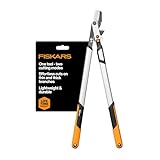
Look for forged or hardened steel blades, comfortable non-slip grips, and a blade bolt that can be tightened or replaced. Telescoping handles add reach, but they also add weight and create another point that can loosen or fail. Fixed handles are usually the better bargain for routine pruning.
The best-value lopper types
A basic bypass lopper is the sensible default for most yards. It is quick, relatively light, and usually the least expensive option. A budget pair is fine if you prune only a few times per year and stay within its rated capacity. Expect to pay roughly $20 to $40 for a decent basic pair, with cheaper examples sometimes suitable for soft, green branches.
Ratcheting loppers use a mechanism that lets you close the handles in stages. They reduce peak hand force, which helps with dense hardwood, larger cuts, or arthritis. The trade-off is slower cutting and more parts to jam with sap or grit. A ratchet is worthwhile if a standard lopper flexes in your hands or you regularly approach the tool’s maximum capacity. Search for ratcheting bypass loppers when comparing prices.
Compound-action loppers use multiple pivots to increase leverage. They can cut effectively, but their linkages collect dirt and may develop play over time. They are a reasonable middle ground when you want more power without the repeated steps of a ratchet.
Telescoping loppers are convenient for reaching branches without a ladder. However, their extended handles can make the tool awkward and increase the load on the blade joint. If you mainly prune shrubs and small trees from ground level, fixed-handle loppers usually deliver better value. For occasional high branches, a pole pruner is safer than stretching sideways with long loppers.
Value comparison by job
| Type | Typical useful capacity | Best use | Main drawback | Value verdict |
|---|---|---|---|---|
| Basic bypass | Up to 1 inch | Green branches and routine shrub work | Requires more hand force near its limit | Best cheap choice for light pruning |
| Heavy-duty bypass | About 1.25 to 1.5 inches | Fruit trees and established shrubs | Heavier and more expensive | Best general-purpose upgrade |
| Ratcheting bypass | About 1 to 1.5 inches, in stages | Hardwood or limited hand strength | Slower; mechanism needs cleaning | Worth paying for easier cuts |
| Anvil lopper | About 1 to 1.5 inches | Dead or very hard wood | Can crush live stems | Good specialist, poor all-rounder |
| Telescoping lopper | Varies by model | Occasional extra reach | More weight and joint flex | Buy only if reach solves a real problem |
Brand value and price tiers
At the low end, store-brand loppers can be perfectly adequate for seasonal trimming. The cheaper option is fine when the branches are under ¾ inch, the wood is mostly green, and you do not mind sharpening or replacing the tool after a few years. The common failure modes are a blade that bends, a pivot that loosens, and handles that flex enough to waste your effort.
Mid-priced garden-tool brands generally offer better blade steel, replacement parts, and more consistent alignment. This tier often provides the best value for homeowners who prune every spring and fall. You are paying less for a dramatic increase in cutting capacity than for longer service life and a smoother pivot.
Premium loppers make sense for frequent pruning, orchard work, or users who depend on available replacement blades and hardware. They are not automatically better for occasional work. A $70 pair used twice a year may deliver less value than a $30 pair that is cleaned, sharpened, and stored properly.
When checking heavy-duty bypass loppers, compare the actual blade capacity, closed-handle length, weight, and replacement-blade availability. Marketing terms such as “professional” matter less than those specifications. A 1.5-inch rating is also not a promise that every user can cut 1.5-inch oak comfortably; ratings usually assume sharp blades, good leverage, and suitable wood.
How to get clean cuts and avoid damage
Do not force loppers through wood that is clearly too large. If the handles spread so far that you cannot maintain control, switch to a pruning saw. For branches over roughly 1.5 inches, a folding or curved pruning saw is usually faster and safer. Using loppers beyond their rating can bend the blade or twist the pivot.
Place the branch deep in the blade’s throat, close to the pivot, where leverage is greatest. Keep the bypass blade on the side of the branch that will remain attached, and cut just outside the branch collar. Do not twist the handles after the cut starts. Twisting is a common cause of chipped blades and loose pivots.
Clean sap from the blades after use and apply a light tool oil to the pivot. Sharpen the bevel with a fine file or sharpening stone, following the existing angle. Never grind away the flat side of a bypass blade; that can ruin alignment. If the lopper still crushes stems after sharpening and adjustment, replacement is usually cheaper than trying to rescue a bent blade.
When to buy loppers
Prices and selection are usually strongest before spring pruning season, when retailers stock garden tools. Late spring and early summer can bring discounts after the initial rush, but popular sizes may sell out. Fall clearance is often the best time for a basic pair if you can wait, although packaging may be damaged and premium models may not be restocked until the following year.
Buy before the job rather than during it. A rushed purchase often leads to choosing an anvil or telescoping model for work that needs a simple bypass lopper. For most homeowners, a fixed-handle bypass pair rated around 1 to 1.5 inches is the safest value. If hand force is the limiting factor, spend the extra money on a ratcheting design rather than simply buying longer, heavier handles.