Best Value Tools for Building a Compact Potting Bench
What's inside
As an Amazon Associate I earn from qualifying purchases. This post may contain affiliate links at no extra cost to you.
A compact potting bench does not need a full cabinet shop behind it. A sturdy 24-by-48-inch bench can be built with a circular saw, drill/driver, tape measure and a way to make square cuts. The best value comes from buying tools that do more than one job—and avoiding upgrades that save only a few minutes on this one project.
Tools the build really needs
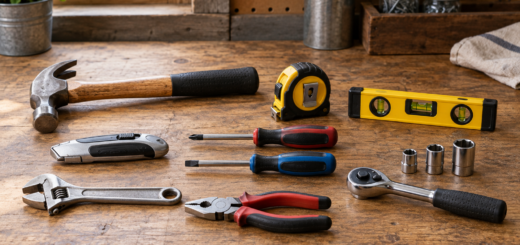
For a simple bench made from 2-by-4s and exterior-grade plywood, the core kit is a drill/driver, circular saw, tape measure, pencil, square and clamps. A handsaw can replace the circular saw if the lumberyard cuts the large panels and you are willing to work more slowly. A level is useful for setting the bench on an uneven patio, but a straight board and a careful check can do for a basic build.
Buy the tool that removes the main bottleneck. If you already own a drill, a saw is likely the next purchase. If you own neither, a corded drill is often cheaper than a cordless kit, but it ties you to an outlet and an extension cord. For outdoor work away from power, cordless is worth paying for.
Where the money goes
| Tool or approach | Typical budget range | Best use | Main trade-off |
|---|---|---|---|
| Entry-level cordless drill/driver kit | $70–$150 | Driving screws and occasional drilling | Lower battery capacity; check what is included |
| Corded circular saw | $50–$100 | Straight cuts in framing lumber and plywood | Needs an outlet and careful cord management |
| Clamps, tape and square | $25–$60 total | Holding parts and laying out repeatable cuts | Cheap squares may need checking for accuracy |
| Store-cut plywood plus handsaw | $10–$30 extra, depending on cuts | One-off bench build with few cuts | Store cuts may be rough or slightly off-size |
| Random-orbit sander | $40–$90 | Smoothing edges and bench surfaces | Useful finish upgrade, not essential for assembly |
These are broad U.S. retail ranges, not fixed prices; promotions and battery bundles shift them. Compare the kit contents, not just the headline price. A drill kit without a battery or charger may look cheap but cost more once completed. On the other hand, a large battery is unnecessary for driving a few dozen screws into a small bench.
Choose a drill for the fasteners
A basic 12-volt drill/driver has enough power for pilot holes and typical 2½- to 3-inch construction screws in sound lumber. An 18- or 20-volt platform gives more reserve and usually makes sense if you expect to build shelves, planters or raised beds later. Voltage labels are not a useful measure of runtime by themselves; battery amp-hours and the work involved matter too.
Look for a clutch, variable speed and a comfortable grip. Set the clutch low enough that screws do not bury themselves or split a narrow rail. Drill pilot holes near board ends: a ⅛-inch bit is a practical starting point for many construction screws, though the right size depends on the screw’s core and wood. If you already own batteries from a reputable platform, a bare tool can be the best-value buy. Otherwise, compare complete kits such as 12-volt cordless drill/driver kits before choosing a battery system.
Cut straight without overspending
A circular saw is the quickest practical way to cut framing lumber and plywood at home. A basic corded model is a sensible one-project purchase: its output does not depend on battery age, and you avoid buying another battery platform. Clamp a straightedge as a guide for plywood cuts. Support both sides of the cut so the offcut cannot pinch the blade, and keep the cord behind the saw.
For a single compact bench, ask the lumberyard to break a ¾-inch plywood sheet into the top and lower shelf sizes, then trim only small parts at home. Confirm dimensions before leaving; store equipment and operators vary, and a rough cut is not a precision edge. If you expect repeated outdoor projects or must work far from an outlet, a cordless circular saw is more convenient, but factor in battery and charger cost.
Do not skip a square. Check it by drawing a line along a board edge, flipping the square over and drawing again from the same point. If the lines diverge, it is not reliable for layout. A 6-inch speed square is handy for framing cuts; a 12-inch combination square is easier to use for checking small parts and marking consistent offsets.
Spend modestly on control and safety
Two 12-inch or 18-inch bar clamps help hold a frame while you drive screws and keep a rail flush with a leg. They are not mandatory if you have a helper, but a loose assembly is more likely to rack out of square. Inexpensive clamps are adequate for this light-duty work; avoid overtightening, which can bow thin stock.
A sander improves comfort more than strength. A quick pass with 80- or 120-grit paper knocks down splinters and sharp edges; finish with 150 grit if you want a smoother top. Skip buying a powered sander if the bench will be rough garden furniture. If you will sand several projects, compare 5-inch random-orbit sanders, and include sanding discs in the cost.
Wear eye protection when cutting or drilling, and use hearing protection with a circular saw. Secure the workpiece rather than holding it near the blade. A saw that binds, pulls sideways or leaves a burning cut may be dull, misaligned or pinched—stop and correct the setup instead of forcing it.
When to buy and when to borrow
Spring and early summer bring gardening promotions, but tool deals are not automatically bargains. Compare the final kit price with the cost of the bare tool, battery and charger, and check whether a “free tool” offer is useful to you. Holiday sales can be better for bundled cordless kits, while basic corded saws often have modest price swings. If you only need a saw for this bench, borrowing one or paying for store cuts may beat buying a low-quality tool that sits unused.
Buy for the next few projects, not an imagined workshop. For one bench, a dependable drill, a borrowed or corded saw, a checked square and two clamps are enough. Put the savings into straight, dry lumber and exterior-rated screws; warped boards and rust-prone fasteners cause more trouble than a missing premium feature.