Black+Decker Angle Grinder: Specs, Disc Size, and Best Uses
What's inside
As an Amazon Associate I earn from qualifying purchases. This post may contain affiliate links at no extra cost to you.
The best Black+Decker angle grinder for most homeowners is the BDEG400 — a 6.5-amp corded model that spins a standard 4-1/2-inch disc at roughly 10,000 rpm for under $50. If you cut or grind for long stretches, step up to the 8.5-amp version, and if you work away from outlets, the 20V MAX cordless model (BCG720) is the sensible pick. Below is how those three differ on paper, what amps, disc diameter, the spindle lock and the guard actually mean in use, and which jobs each one handles — from wire-brushing rust off a fender to slicing rebar.
As an Amazon Associate we earn from qualifying purchases at no extra cost to you.

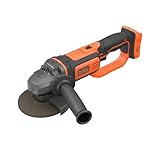
Black+Decker angle grinder lineup at a glance
Black+Decker keeps its grinder range narrow: consumer-duty tools built around the 4-1/2-inch disc standard (115mm in many markets). That simplifies buying — the real choice is power source and motor size.
| Model | Power | Disc diameter | No-load speed | Spindle | Weight (approx.) | Typical price band |
|---|---|---|---|---|---|---|
| BDEG400 (corded) | 6.5 amp | 4-1/2 in | ~10,000 rpm | 5/8″-11 | ~4.5 lb | $30–$45 |
| G950 (corded) | 8.5 amp | 4-1/2 in | ~10,000 rpm | 5/8″-11 | ~5 lb | $40–$60 |
| BCG720 (cordless) | 20V MAX | 4-1/2 in | ~8,500 rpm | 5/8″-11 | ~4 lb bare, ~5 lb with battery | $50–$110 (bare tool vs. kit) |
All three use a metal gear case, a three-position side handle and a spindle lock for wheel changes. The meaningful gap between them is how long they sustain speed under load — which is what decides what you can realistically do with one.
How to read the specs
Motor amps (and volts on the cordless)
Amp rating is input power — think of it as torque reserve. A 6.5-amp grinder cuts rebar and wire-brushes rust perfectly well in bursts, but lean on it during a long grinding pass and the disc slows, the motor heats, and the disc wears faster. The 8.5-amp model holds speed noticeably better under sustained load, which is the difference that matters for grinding welds flat or making twenty cuts instead of three. The 20V cordless trades outright power for mobility: roughly 8,500 rpm unloaded and lower torque, which is fine for a dozen cuts or sharpening a mower blade, but not for an afternoon of grinding.
Disc diameter and what it limits
A 4-1/2-inch disc gives you roughly one inch of usable cutting depth. That covers rebar up to about 1/2 inch, angle iron, bolts, tile and thin pavers. It will not reach through a 2-1/2-inch paver or a thick-walled pipe in one pass — you’d cut from both sides or move to a 7-inch tool, which Black+Decker simply doesn’t make. The upside of the smaller format is a light, one-handable tool with discs that are cheap and stocked everywhere.
Spindle lock
Every model has a spindle-lock button that freezes the shaft so a single spanner wrench loosens the flange nut — no second wrench needed. Two realities owners learn fast: the button only clicks in at one rotational position (turn the disc slowly until it engages), and it is not a brake — never press it while the wheel is still coasting, or you’ll chew up the gear it locks into.
Guard design
The stock guard is stamped steel sized for type-27 (depressed-center) wheels, and it rotates on a collar around the gear head so you can reposition it. The rule is simple: the closed half of the guard belongs between the disc and your body, and the spark stream should point away from you and anything flammable. Keep the collar screw snug — a loose guard can migrate mid-cut. Note that thin type-1 cutoff wheels technically call for a deeper type-1 guard; if you cut often, a clip-on cutoff guard is a worthwhile add-on. Never run the tool without a guard.
Which model handles which job
| Job / situation | Disc to fit | Best model | Why |
|---|---|---|---|
| Rust and paint removal on a car, gate or railing | Wire cup brush or 40–80 grit flap disc | BCG720 if no outlet; any corded otherwise | Light, intermittent load — mobility matters more than amps |
| A few rebar or bolt cuts for a weekend project | 1/16 in cutoff wheel | BDEG400 | 6.5 amps is plenty for short bursts |
| Cutting rebar, rod or bolts all afternoon | Cutoff wheel, buy in 10-packs | G950 8.5A | Holds rpm under load; less heat, longer disc life |
| Grinding welds smooth | 1/4 in grinding wheel, finish with flap disc | G950 8.5A preferred | Sustained pressure is where extra amps pay off |
| Sharpening mower blades, axes, hoes | Flap disc | BDEG400 or cordless | Short sessions, light pressure |
| Tile and paver cuts | Continuous-rim diamond blade (tile) / segmented (pavers) | Either corded | Steady speed; cordless drains fast on masonry |
| Fence-line, driveway or field repairs | Cutoff + wire wheel | BCG720 | No cord to drag or generator to start |
One honest boundary: if your daily work is heavy cutting, tuckpointing or anything calling for 5-inch-plus discs, any Black and Decker angle grinder is the wrong class of tool — that’s pro-grade 11-amp-plus territory.
What it actually costs to run
The grinder is the cheap part; discs are where the money goes. Rough numbers for 4-1/2-inch consumables:
- Cutoff wheels: $1–$2 each in multi-packs. Expect roughly 15–30 cuts through 3/8-inch rebar per wheel if you let the tool’s weight do the work — so cutting a dozen rebar stakes costs about a dollar. Twist or side-load the wheel and you can halve that (or shatter it).
- Grinding wheels: $3–$6 each, and they last months of hobby use because you only wear the edge.
- Flap discs: $2–$4 each; they wear like sandpaper — budget a disc per panel on serious rust removal.
- Wire cup brushes: $8–$15, but they outlast several flap discs on loose rust and paint.
- Diamond blades: $8–$20 for a dry-cut segmented blade that handles pavers and tile for many projects.
Cordless runtime math: a 20V 2.0Ah pack stores about 36 watt-hours. Under a cutting load the grinder draws roughly 300–400 watts, giving around 5–8 minutes of actual trigger time — in practice, 15–25 rebar cuts or one mower-blade sharpening per charge. For anything bigger, budget for a second battery or take the corded model.
What wears first — and how to keep it alive
- Carbon brushes go first on the corded models — usually after a few years of homeowner use. Symptom: intermittent power or heavy sparking through the vents. A pair costs a few dollars and swaps in through external caps in about ten minutes.
- Dust is the silent killer. Masonry and grinding dust get pulled through the motor; blow the vents out with compressed air after dusty work and the bearings will last far longer.
- Gear case: it’s metal, but if the head starts to growl louder than usual, the grease has dried — a re-grease is cheap insurance.
- Store discs flat and dry. Resin-bonded wheels absorb moisture and can delaminate; a cracked disc at 10,000 rpm is genuinely dangerous. Inspect each wheel before mounting.
- Common mistake that ruins discs: mounting the flange nut the wrong way. It has two faces — flat side out for thin cutoff wheels, recessed side out for thick grinding wheels. And snug it only: running torque self-tightens it.
FAQ
Can a Black+Decker grinder cut 1/2-inch rebar?
Yes — with a 1/16-inch cutoff wheel, a 4-1/2-inch grinder goes through 1/2-inch (#4) rebar in a few seconds per cut. It’s the standard DIY method; only switch to a chop saw or bandsaw when you’re making dozens of cuts a day.
What size discs fit?
4-1/2-inch diameter discs with a 7/8-inch center hole, on a 5/8″-11 threaded spindle. Check that the disc’s maximum rpm rating meets or exceeds the grinder’s ~10,000 rpm — virtually all quality 4-1/2-inch discs do. Don’t fit larger discs; the guard is sized for 4-1/2 inches.
Corded or cordless — how do I choose?
Use the 20-minute rule: if the job involves more than about 20 minutes of cumulative trigger time — weld grinding, a stack of paver cuts — go corded. For a handful of cuts or rust removal where the nearest outlet is a driveway away, the cordless earns its keep.
Is the spindle lock supposed to act as a brake?
No. It exists purely to hold the shaft still during wheel changes. Using it to stop a spinning disc damages the locking pin and gear — let the wheel coast down on its own.