The Best Budget Tool Combo Kits That Punch Above Their Price
Key takeaways
- A good combo kit is the cheapest way into a tool ecosystem. Here are the value kits that give you the most for the money.
What's inside
As an Amazon Associate I earn from qualifying purchases. This post may contain affiliate links at no extra cost to you.
If you’re starting from zero, a combo kit is almost always the smartest money you’ll spend — you get multiple tools plus batteries and a charger for far less than buying each piece separately. But not all kits are deals. Here’s how to spot the ones that are.
The kit shelf is designed to look like value, which is exactly why it rewards careful reading. The number on the box — two-tool, five-tool, seven-tool — is the marketing lever, and it is the least useful figure in the whole listing. The best budget tool combo kits are decided by three other things: the battery configuration, the quality tier of the two tools you will actually pick up every week, and whether the platform is one you will still want to buy into in five years.
As an Amazon Associate we earn from qualifying purchases at no extra cost to you.






Timing helps too. Combo kits see their deepest cuts from roughly October through mid-December, with smaller waves around Father’s Day and the July sale weekends. Outside those windows, judge a kit against what it normally sells for rather than against the crossed-out “was” price. If you are not in a hurry, pick your kit now and let the discount cycle come to you.

Why combo kits win on value
The batteries and charger are the expensive part of any cordless tool. A combo kit spreads that cost across several tools, so your effective price per tool drops dramatically. Two shared batteries can power a whole kit.
Do the arithmetic once and the logic is obvious. Price a bare drill, then price the same drill as a kit with two batteries and a charger. The gap between those two figures is roughly what the power system costs, and on budget gear it is a large share of the total. Put a second tool in the box and that cost splits two ways. Put a third in and it splits again. This is why a two-tool kit with good batteries regularly beats a five-tool kit with weak ones.
It also explains the rule that survives every sale: do not make a bare tool your first purchase. Bare tools are priced for people who already own packs. Start there and you end up buying a charger and batteries separately later, at full retail, which is the most expensive way into any system.
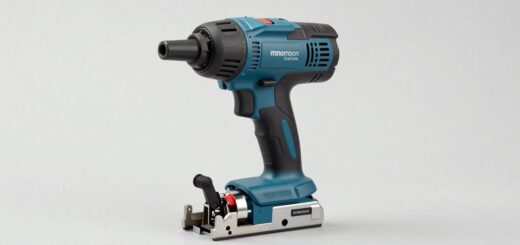
Cordless Combo Kit (Drill + Driver + More)
Drill, impact driver, batteries and charger in one box for less than buying two tools separately. The single cheapest way into a solid cordless ecosystem. Add tools on the same batteries later.
- ✔ Cheapest way to start
- ✔ Shared batteries save money
- ✔ Everything in one box
- ✔ Room to expand
- ✘ Bundled tools are mid-tier
- ✘ You pay for tools you may not need
Five checks, in the order they matter
Read every listing in the same sequence. If a kit fails one of the first two, nothing further down the list rescues it.
- Battery configuration. Two packs, ideally one compact plus one higher-capacity, is the target. A kit shipping a single compact pack is a demo, not a working kit — you will spend the afternoon waiting on the charger. Promo pricing often hides a capacity downgrade here while the tools stay identical, so compare the amp-hour rating on the included packs before you compare price.
- The drill and the impact driver. These two do the overwhelming majority of the work in any kit, so judge the whole box on them. A strong pair with two batteries beats a weak pair plus three tools you touch once a year.
- Motor type where it counts. Brushless matters most on the impact driver and on anything that cuts, because that is where heat and runtime bite. A brushed drill is perfectly reasonable for occasional household work.
- Charger, not chargers. Most budget kits include one, and usually the slow one. Two batteries and a slow single-port charger will still stall a long day. A rapid charger in the box is a real upgrade.
- What the extra tools actually are. A circular saw, a reciprocating saw or an oscillating tool adds capability. A work light, a radio and a second flashlight are padding that lets a brand advertise a bigger tool count.
When two kits land close on price, the tie-breakers run in that order: battery capacity first, motor type second, tool count last. Tool count is the cheapest thing for a manufacturer to inflate, which is precisely why it is printed largest.
What good and bad look like at each price band
The cheapest end of the shelf
Expect brushed motors, compact batteries and a drill-and-impact pairing in a soft bag. A good kit here is honest about that and still comes from a platform with a deep catalogue and standalone batteries you can buy without wincing. A bad one is a no-name system where a replacement pack costs nearly as much as the kit did, or a single-battery bundle padded out with a flashlight. Wobbly chucks and gearboxes that whine under load are the tells in this band, and no discount fixes them.
The middle of the range
This is where most people should buy. Look for brushless on the tools that need it, a higher-capacity pack alongside a compact one, a case or a bag with real structure, and a third tool that earns its place — usually a circular saw or a recip saw. The trap is a brushless badge on one tool while the rest stay brushed and the packs quietly shrink to two compacts. Read the battery specs and the per-tool descriptions, not the headline.
Large kits, five tools and up
These are good value only if you have genuine use for at least four of the tools inside. Otherwise the per-tool math is fiction and you are storing a radio you will never switch on. Where they do make sense — furnishing a first workshop, maintaining a rental yourself, a small side business — insist on strong batteries, a fast charger, and a tool mix you would have bought piece by piece anyway.
Mistakes that cost people money
- Buying tool count instead of tool quality. Five mediocre tools on weak packs is worse value than two good ones you keep for a decade.
- Missing the promo-season battery downgrade. Same tools, smaller packs, lower price, far less runtime.
- Committing to a thin platform. If the brand does not sell the tools you may want in three years, the kit is a dead end however cheap it was.
- Ending up in two ecosystems. Two chargers, two sets of packs, half of them flat in the wrong drawer.
- Treating a soft bag as storage. Bags sag and bits vanish, so never let the bag decide which kit you buy.
- Chasing the crossed-out price. Anchor on what that specific kit normally sells for, not on the discount percentage shown.
Who should buy one, and who should not
A combo kit is the right call if you own no cordless tools at all, if you are setting up a first house or apartment, or if you are buying for someone who needs a base to build on. It is also the cheapest sensible way to add a second capability — a drill plus a saw, say — while you are still working out how serious the hobby will get.
Skip it if you already run a platform with two healthy packs. From there, bare tools are nearly always the better buy, and a kit just means paying for duplicate batteries and another charger. Skip it too if you need one specific high-spec tool for a demanding job, because the version bundled into a budget kit is rarely the one you want. And for a single tool needed once, borrowing or renting still wins.
Buy the ecosystem, not the tool
Pick your battery platform carefully — you’ll buy tools on it for years. Once you’re in, watch for refurbished deals to expand cheaply. A combo kit is the door; the battery platform is the house.
Judge a platform on four things: how wide the tool catalogue is, whether standalone batteries sell at a sane price, whether packs stay compatible across tool generations, and whether the outdoor equipment you might want later runs on the same battery. A brand that ticks all four is worth a slightly worse kit price today, because you earn that difference back every time you add a tool bare.
FAQ
Is a bigger kit always better value?
No. The per-tool math only works on tools you will genuinely use. A two- or three-tool kit with strong batteries usually beats a padded larger one, and it costs less to store.
Brushed or brushless on a budget?
Put brushless where the work is hardest: the impact driver and anything that cuts. A brushed drill is fine for occasional use. If the choice is brushless tools with one small pack or brushed tools with two decent packs, take the batteries.
Can I mix batteries between brands?
Practically, no. Packs are platform-specific, and third-party adapters trade away safety and warranty for convenience. That is the reason to choose your platform before you choose your kit.
What about the tools in the kit I do not want?
Keep them, gift them or sell them, but never let them justify the price. Value a kit on the tools you will use plus the batteries. Anything else is a bonus, not a reason to buy.