DeWalt vs Ryobi: Which Gives You More Tool for Your Money?
Our Top Picks


What's inside
As an Amazon Associate I earn from qualifying purchases. This post may contain affiliate links at no extra cost to you.
DeWalt and Ryobi sit at different ends of the value spectrum, and the “better” brand depends entirely on how you will use the tools. Let’s break down where your money goes furthest. The mistake almost everyone makes with DeWalt vs Ryobi is comparing two drills sitting on a shelf. That is not really the purchase. The purchase is a battery platform you will still be feeding in five years, and the sticker price of the first tool tells you very little about what that platform will cost you.
The real cost is the platform, not the tool
A cordless tool is a motor, a gearbox and a trigger. The expensive, wear-prone, replaceable parts are the battery packs and the charger, and those are the parts that lock you in. Buy one brand’s drill and you have not really bought a drill. You have bought the right to add tools cheaply for as long as you stay put, and the obligation to pay twice for batteries if you ever leave. So the useful question is not which drill wins a head-to-head. It is which eight or ten tools you expect to own five years from now, and which brand sells all of them at a price you will actually pay.
As an Amazon Associate we earn from qualifying purchases at no extra cost to you.




Write that list down before you spend anything, because it usually answers the question for you. If the list is a drill, an impact driver, a circular saw and a sander, both brands cover you and the decision comes down to how hard you will run them. If it also includes a string trimmer, a blower, a pressure washer, a shop fan and an inflator, one brand covers far more of that list than the other. And if it includes a tool you will pick up every working day for years, durability starts to outweigh entry price no matter how good the entry price looks today.
Ryobi: unbeatable value for hobbyists
Ryobi’s ONE+ platform is the budget king — huge tool selection, cheap entry, and batteries that fit everything from drills to leaf blowers. For DIYers and homeowners, the value is hard to beat.
What makes it work is breadth. The platform reaches well past the drill-and-saw core into yard tools, cleaning tools, lights, fans, inflators and a long tail of single-purpose gadgets. All of them run on the pack you already own, so every additional tool costs you the bare-tool price and nothing more. For someone who adds two or three tools a year as projects come up, that compounding is the entire argument, and it is a strong one.
Ryobi suits you if tools are a means to an end: hanging shelves, building a workbench, assembling flat-pack furniture, keeping the yard under control, one weekend at a time. You should skip it if you are on a site every day running the same tool for hours, or if the specialty tool your trade depends on only exists in the pro catalogues. The ceiling is real. Under sustained heavy load you will find it, though a hobbyist almost never does.
Ryobi ONE+ Starter Kit
A massive, affordable ecosystem where one battery runs dozens of tools. For homeowners and weekend projects, you simply get more stuff for your dollar. Unbeatable entry price.
How to tell a good budget kit from a padded one
Value shopping goes wrong at the bottom of the range, because the easiest way to hit an attractive price is to downgrade the parts that are not printed on the front of the box.
- Read the amp-hour rating on the included packs, not the pack count. Two of the smallest compact batteries is a worse kit than one compact plus one higher-capacity pack, even though “2 batteries” reads better on the listing.
- Buy the brushless version of the tool you will use most. Both brands sell brushed and brushless side by side. Brushed is perfectly fine for tools you touch occasionally; spend up on the drill and impact driver you will reach for constantly.
- Count only the tools you would have bought anyway. A six-piece kit padded with a flashlight and a tool you will never charge is not a better deal than a two-piece kit with better batteries.
- Check which charger is in the box. A slow standard charger is a genuine daily annoyance when you only own two packs.
DeWalt: pay more, last longer
DeWalt costs more but delivers pro-grade durability, more power, and better runtime under heavy use. If tools are how you make a living, the higher price buys reliability that pays back.
The premium shows up in the places that fail first: gearboxes and clutches under repeated load, trigger and switch life, housings and boots that survive a drop from a ladder onto concrete, chucks that still hold a bit true after a hard year, and heat management that lets the tool keep working through a long run instead of shutting down to cool off. None of that matters much across ten weekends a year. It matters enormously across ten hours a day.
The other half of the premium is everything around the tool: a deep bare-tool catalogue, availability wherever trades actually shop, service and spare parts you can find without a hunt, and a used market that holds value if you ever change platforms. Skip DeWalt if you are a light homeowner user who will never approach the top of the tool’s capability, because you will pay a durability premium you never get to cash in.
Where the premium is worth paying
Spend up where load and duty cycle are highest, and stay plain everywhere else. The drill, the impact driver and whatever saw you cut with daily deserve the brushless motor and the higher-capacity packs, because that is where runtime and heat decide whether you stop working. A work light, a vacuum or a tool that comes out once a month does not need the flagship version. Buy the expensive tools as part of a combo during the promo-heavy stretches of the year, add the cheap ones bare the rest of the time, and ignore the crossed-out “was” price completely. Judge any deal against what that kit has typically sold for, not against a number the listing made up.
- ✔ Ryobi = most value for DIY
- ✔ DeWalt = pro durability
- ✔ Both have huge lineups
- ✘ Ryobi less rugged for daily pro use
- ✘ DeWalt costs more upfront
What each price band actually buys
- Entry band. Brushed motors, compact batteries, plastic-heavy housings, a slow charger. A good entry pick is honest about what it is and still gives you a usable pack; a bad one inflates the tool count and ships the smallest battery in the lineup. Right for a homeowner, wrong for anyone who will lean on it.
- Middle band. Where both brands get genuinely interesting and where most people should be buying: brushless motors on the core tools, a mid-capacity pack or a sensible pair of mismatched packs, better clutches and chucks. A good middle-band buy is a two- or three-tool combo of things you will use every month. A bad one is the same money spread across five tools you will not.
- Upper band. High-capacity packs, fast chargers, the strongest version of each tool. Worth it when the tool is how you earn, or when you are cutting and driving in material that punishes mid-range gear. The classic upper-band mistake is buying a flagship kit on the theory that you will grow into it. Most people do not grow into it; they just own an expensive battery.
Mistakes that quietly cost you money
- Ending up on two platforms by accident. One irresistible bare-tool deal from the other brand, and now you own two chargers, two sets of packs, and no spare that fits anything. Pick one and let the other brand’s sales go by without you.
- Buying a bare tool before you own batteries. The price looks unbelievable because it is not the whole product.
- Treating the badge as a spec. A brushed budget tool with a compact pack does not become a pro tool because of the name on it, and a brushed pro-brand tool is not automatically better than the other brand’s brushless equivalent.
- Buying the same tool twice. If you already know you will use something daily, starting with the cheap version is the most expensive possible route to the good one.
- Owning one battery. Two packs is the working minimum on either platform. A single pack turns every job into a waiting game and shortens that pack’s life through constant cycling.
The verdict
Homeowner or hobbyist? Ryobi stretches your dollar furthest. Full-time trade work? DeWalt’s durability is worth the premium. Either way, start with a combo kit to get the best price per tool.
If you are honestly stuck between them, buy for the work you do most weeks rather than the hardest job you can picture yourself doing someday. The occasional heavy task is what tool rental exists for, and the money you save by not over-buying pays for several more tools on the platform you chose.
FAQ
Can I use Ryobi batteries in DeWalt tools, or the other way around?
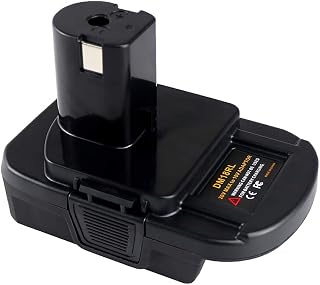
No. The platforms are not cross-compatible, and third-party adapters are a poor trade even when they physically work. You give up the communication between pack and tool that protects both from overheating and over-discharge, and you can expect warranty trouble if something fails. Choose one platform and buy into it properly.
Does it ever make sense to run both brands?
In one common situation, yes: someone who needs pro-grade gear for paid work and also wants the inexpensive yard, cleaning and household tools at home. Those are two different jobs with two different budgets, and the second platform earns its keep. For everyone else, a second charger and a second set of packs is just a tax on impulse buying.
What matters more, the brand or brushless?
For the tools you use most, brushless usually matters more than the badge. It buys you better runtime from the same battery, less heat, and more torque in a smaller body. The brand premium buys survivability over years of abuse. If your budget only stretches to one upgrade, take brushless on the drill and impact driver first.
What happens if I outgrow Ryobi?
Nothing catastrophic, and it is worth planning for rather than fearing. The usual path is to move the tools you use hardest onto the pro platform and keep the budget platform for the yard tools, the lights, the inflator and the vacuum, where the packs you already own keep earning. That is not wasted money, it is a second-tier fleet that keeps working while your main kit gets better.