Best Flush Cut Jigsaw Blades for Precise Trimming
What's inside
As an Amazon Associate I earn from qualifying purchases. This post may contain affiliate links at no extra cost to you.
For a flush cut jigsaw blade that trims close without gouging, choose a narrow, flexible blade with a fine 10–20 TPI tooth pattern; use reverse teeth for finished flooring and laminated edges, and use a standard fine-cut blade only when the blade can remain nearly vertical.
As an Amazon Associate we earn from qualifying purchases at no extra cost to you.
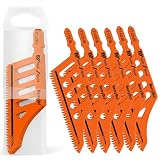
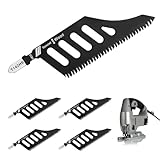
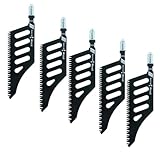

Best Flush Cut Jigsaw Blades by Trimming Job
| Job | Blade design to look for | Useful specification | Best choice for |
|---|---|---|---|
| Trimming wooden dowels and plugs | Narrow, flexible high-carbon steel blade with milled or precision-ground teeth | 10–14 TPI, 3–4 in. cutting length, 0.040–0.050 in. blade thickness | Softwood, hardwood, plywood, and exposed dowel ends |
| Cutting laminate or vinyl flooring around an edge | Reverse-tooth, down-cut blade | 10–20 TPI, 2–3 in. cutting length | Reducing splintering on the visible top surface |
| Trimming thin edge banding | Fine-tooth, narrow blade with low side set | 14–20 TPI, approximately 0.040 in. thick | Wood veneer, plastic laminate, and thin composite edging |
| Fast rough trimming | Standard up-cut wood blade | 6–10 TPI, 3–4 in. cutting length | Hidden edges where speed matters more than finish quality |
| Metal edge material | Bi-metal blade with a fine, variable tooth pattern | 18–24 TPI, short exposed cutting length | Thin aluminum, sheet steel, and light-gauge trim |
What Makes a Blade Suitable for Flush Cutting?
A flush cutting jigsaw blade is not a separate universal blade category in the same way as a standard wood or metal blade. The useful combination is a flexible blade, a narrow body, and teeth that do not aggressively pull the tool into the work. The blade must bend slightly to follow a surface while its teeth remove material at the edge.
Blade flexibility matters when trimming a dowel that stands slightly proud of a panel. A stiff blade tends to dig into the panel as the jigsaw shoe approaches the surface. A flexible blade can be deflected so the side of the blade rides near the panel, although this technique demands slow feed pressure and a firm grip.
Tooth set is equally important. Teeth set widely to alternating sides cut quickly but can scratch or gouge adjacent material. A low-set fine blade leaves a narrower kerf and is easier to control. It may cut more slowly, but it gives you a better chance of preserving a finished edge.
Reverse-Tooth Versus Standard-Tooth Blades
Reverse-tooth blades for flooring and finished faces
Reverse-tooth blades cut on the downstroke rather than pulling the work upward in the usual direction. This makes them useful for laminate flooring, veneered panels, and other materials where the visible top surface must remain clean. A Bosch T101BR is a familiar example of this type, and comparable reverse-tooth blades are available from other major blade manufacturers.
The trade-off is control. Because the teeth push against the material and can lift the jigsaw shoe, the tool should be held flat with moderate downward pressure. Start at a low speed, support the offcut, and do not force the blade. Reverse teeth are excellent for preventing top-face splintering, but they are not automatically the best choice for trimming a dowel flush against a panel.
Standard up-cut blades for dowels and rough edges
A conventional straight cut jigsaw blade cuts on the upstroke and usually clears chips efficiently. A fine 10–14 TPI wood blade is practical for dowels, plugs, and exposed edge material when the cut face is accessible and minor cleanup with a sharp chisel or sanding block is acceptable.
For the cleanest result, keep the shoe supported on a sacrificial pad or a piece of thin scrap rather than allowing the shoe to rock on the edge. If the blade must be bent to reach flush, use the lowest practical orbital setting—or turn orbital action off—because aggressive orbital movement increases side-to-side tooth contact.
Recommended Choices by Situation
- Occasional home repair: Buy a small mixed pack containing fine wood blades, a reverse-tooth blade, and a bi-metal blade. This costs roughly $10–$25 and avoids using a coarse blade on a visible edge.
- Frequent cabinet or furniture work: Keep narrow 14–20 TPI blades for veneer and edge banding, plus a separate set of flexible 10–14 TPI blades for dowels and plugs. Replace them before the teeth become visibly rounded.
- Flooring installation: Prioritize reverse-tooth blades in the 10–20 TPI range. A short cutting length improves control around corners and reduces the chance of bending the blade into the subfloor.
- Hardwood dowels: Use a sharp fine-tooth blade with minimal orbital action. Hardwood creates more heat, so pause between cuts instead of forcing the tool.
- Metal edge trim: Use a bi-metal blade with at least 18 TPI and lubricate the cut when the material allows it. A wood blade can overheat, dull rapidly, and leave a ragged edge.
How to Make a Flush Trim Without Gouging
- Mark the waste side. Draw the cut line and identify the surface that must not be touched. Leave a small amount of waste if the edge will receive final trimming.
- Choose the shortest blade that reaches through the material. Excess exposed blade flexes and wanders. For material about 1/2 inch thick, a 2–3 inch cutting length is usually easier to control than a 4 inch blade.
- Disable or reduce orbital action. Orbital motion improves speed on ordinary cuts but makes a flush cutting jigsaw blade move more aggressively sideways.
- Set a moderate speed. Begin around the middle of the tool’s speed range. Slow down for laminate, thin plastic, and metal, and listen for chatter rather than pressing harder.
- Support the shoe and the workpiece. Clamp the panel or flooring and keep the shoe flat. A moving workpiece is a major cause of accidental gouges.
- Use light feed pressure. Let the teeth cut. If the blade bends sharply, heats up, or produces a burning smell, stop and fit a sharper or coarser blade appropriate to the material.
- Finish the last fraction of an inch separately. For a premium edge, stop just short of the surface and use a flush-trim bit, chisel, block plane, or sanding block where appropriate.
Blade Materials and Tooth Patterns
High-carbon steel blades are economical and flexible, making them suitable for softwood, plywood, and occasional dowel trimming. They dull faster in hardwood, abrasive flooring, and laminate.
High-speed-steel teeth tolerate more heat and are useful for certain plastics and thin metals, but the blade body can be less forgiving if bent sharply. Bi-metal blades combine a flexible alloy body with harder teeth. They cost more—often about $3–$8 per blade—but are the better ownership choice when the same jigsaw is used for wood, plastic, and metal trim.
Tooth count changes both finish and cutting speed. Coarse 6–10 TPI blades clear wood chips quickly but can tear veneer. Fine 14–20 TPI blades produce a cleaner edge, though they need a slower feed and can clog in thick softwood. Variable-pitch teeth reduce rhythmic vibration and are useful when the material changes thickness along the cut.
Common Mistakes and Ownership Costs
The teeth usually wear before the blade body does. Signs include increased pushing force, burn marks, wandering, and a cut that is no longer square. Continuing with a dull blade can cost more than replacing it because heat damages laminates and makes the jigsaw harder to control.
Do not twist the tool to make a straight cut turn flush. Twisting loads the blade sideways and can widen the kerf or snap the blade at the shank. Do not use a reverse-tooth blade with excessive downward pressure either; it can stall in thick material and leave a rough underside.
For a simple cost-per-use comparison, a $15 pack containing five specialized blades costs $3 per blade. If each blade gives 20 clean trimming cuts before dulling, the consumable cost is about $0.15 per cut. A cheaper coarse blade that ruins one $30 finished panel is not economical, even if its purchase price is lower.
Bottom Line
For dowels, select a narrow flexible fine-tooth blade and reduce orbital action. For flooring and finished laminate faces, choose a reverse-tooth flush cutting jigsaw blade. For mixed materials, a bi-metal fine or variable-tooth blade offers the longest useful life. The blade alone cannot prevent damage: short exposed length, firm support, low side pressure, and a slow controlled feed are what let it trim close without gouging the surrounding surface.