
What's inside
- Top Picks at a Glance
- Quick Comparison Table
- Sidewinder vs Worm Drive: What the Difference Means
- Which Saw for Which Job
- 1. DEWALT DWE575: Best Overall
- 2. SKILSAW SPT77WML: Best for Framing
- 3. Makita 5007MG: Best Premium Build
- 4. Bosch CS10: Best Value
- 5. Ryobi CSB135L: Best for Weekend Projects
- 6. SKIL 5280-01: Best Budget
- Also Consider
- Corded vs Cordless Skill Saws: Where Each Fits
- How We Chose
- Buying Guide
- Setting Up a Clean, Accurate Cut
- Common Mistakes to Avoid
- More Picks Worth Considering
- Frequently Asked Questions
- Which One Should You Buy?
- Sources
As an Amazon Associate I earn from qualifying purchases. This post may contain affiliate links at no extra cost to you.
For most people shopping for a corded electric circular saw, the DEWALT DWE575 is the safest all-round choice: a 15-amp motor, a light body, and a bevel range that reaches 57 degrees. The runner-up is the SKILSAW lightweight worm drive for carpenters who frame, cut thick lumber, and want a saw that holds its line through wet or knotty stock. This guide covers the best electric circular saws that plug into a wall, explains the difference between sidewinder and worm drive designs, and also touches on where cordless skill saws fit if you are weighing the two.
Our site already has a general circular saw guide and a few cordless-only roundups, so this article takes a narrower angle: corded saws only, compared by motor layout, blade size, bevel capacity and weight. If you are hunting for the best deal on corded circular saws, the practical move is to decide which design suits your work first, then compare the listed models below. We did not personally use these products; this guide is research-based, drawing on manufacturer spec sheets, retailer listings and published owner feedback.
Our Top Picks
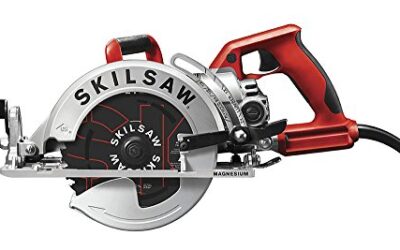
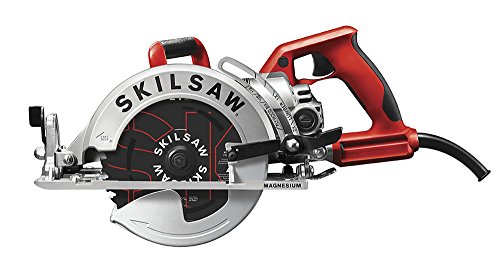 SKILSAW SPT77WML-01 15-Amp 7-1/4-Inch Lightweight Worm Drive CircularOne Size20.5 x 7.75 x 8.75 inches11.5 poundsCheck on Amazon
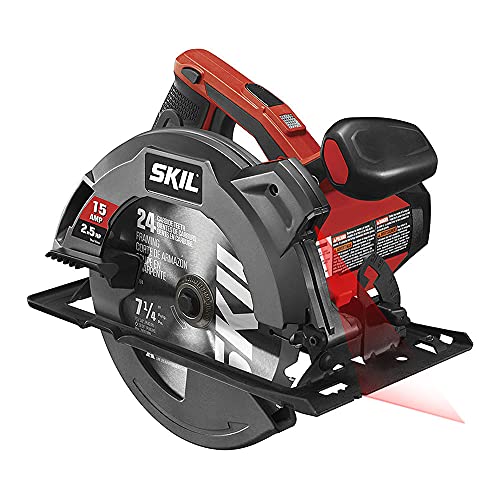 SKIL 15 Amp 7-1/4 Inch Circular Saw with7-1/4 Inch (Pack of 1)14.2 x 9.8 x 8.5 inches8.7 poundsCheck on Amazon


Top Picks at a Glance
- Best Overall: DEWALT DWE575, a lightweight 7-1/4 inch sidewinder with a 15-amp motor.
- Best for Framing: SKILSAW SPT77WML, the lightweight worm drive.
- Best Premium Build: Makita 5007MG, a magnesium-bodied 7-1/4 inch saw.
- Best Value: Bosch CS10, a simple, dependable 7-1/4 inch saw.
- Best for Weekend Projects: Ryobi CSB135L with an onboard laser line.
- Best Budget: SKIL 5280-01, a 15-amp saw with a single-beam laser guide.
Quick Comparison Table
| Product | Best for | Key specs | Watch for | Price tier |
|---|---|---|---|---|
| DEWALT DWE575 | All-round carpentry | 15 A, 7-1/4 in blade, 57 degree bevel, about 8.8 lb | No electric brake listed | Mid-range |
| SKILSAW SPT77WML | Framing, thick lumber | 15 A, 7-1/4 in blade, worm drive | Heavier, longer body | Premium |
| Makita 5007MG | Daily professional use | 7-1/4 in blade, magnesium components | Amperage not stated in the listing title | Mid-range to premium |
| Bosch CS10 | Value-minded DIYers | 7-1/4 in blade, corded | Few specs in the listing | Mid-range |
| Ryobi CSB135L | Home projects | 14 A, 7-1/4 in blade, laser line | Laser is an aid, not a substitute for a marked line | Budget |
| SKIL 5280-01 | Entry-level work | 15 A, 7-1/4 in blade, single-beam laser | Lighter-duty build expected at this tier | Budget |
Sidewinder vs Worm Drive: What the Difference Means
A sidewinder, also called an inline saw, mounts the motor beside the blade and drives it directly through a gear set. The result is a compact, relatively light saw. Most corded saws you see in big-box stores are sidewinders, including the DEWALT, Bosch, Ryobi and SKIL listings here.
A worm drive places the motor behind the blade, so the saw is longer and narrower, and the gear set runs the blade at a lower speed with more torque. Carpenters who frame houses often prefer them because the extra torque helps with wet pressure-treated lumber and because many models put the blade on the left side, which gives right-handed users a clear view of the cut line. The trade-off is weight and length. If you mostly cut sheet goods and dimensional lumber on sawhorses, a sidewinder is usually easier to live with. If you cut thick beams all day, a worm drive earns its place.
Neither type is inherently more accurate. Accuracy depends on the shoe being flat, the blade being sharp and square to the base, and your hands being steady. Choose by how you work, not by which type sounds more professional.
Which Saw for Which Job
| Your situation | Pick | Why |
|---|---|---|
| Build a deck or shed a few times a year | Bosch CS10 or Ryobi CSB135L | Standard 7-1/4 inch capacity without paying for pro features |
| Frame walls or cut 4x lumber weekly | SKILSAW SPT77WML | Worm drive torque and a narrow body |
| Make bevelled and compound cuts | DEWALT DWE575 | 57 degree bevel capacity |
| Rip long sheets of plywood | Makita 5007MG | Rigid magnesium shoe helps hold a straight line |
| Stretch a tight budget | SKIL 5280-01 | 15 A motor and a laser guide at the lowest price tier |
1. DEWALT DWE575: Best Overall
- Motor: 15 amp, with about 1,950 watts listed by retailers
- Blade: 7-1/4 inch with a 5/8 inch arbor
- Speed: 5,200 RPM
- Bevel: up to 57 degrees, with stops at 45 and 22.5 degrees
- Depth of cut: about 2.55 inches at 90 degrees
- Weight: about 8.8 pounds per retailer listings
Best for: homeowners and tradespeople who want one corded saw for decking, plywood, framing and trim rough-ins. Skip if: you need a worm drive’s torque for constant beam work, or you want an electric brake, which retailers do not list for this model.
The standout number here is the 57-degree bevel. Many 7-1/4 inch saws stop at 45 or 50 degrees, so the extra range helps when you are cutting compound angles on rafters or cleaning up a bevelled edge. At roughly 8.8 pounds, it is also noticeably lighter than traditional magnesium or worm drive saws, which matters when you are making repeated overhead or vertical cuts.
The 2.55 inch cut depth at 90 degrees clears a standard 2x lumber piece in a single pass, and the depth at 45 degrees (retailers list about 1.9 to 2 inches) is enough for most 2×4 and 2×6 miters. Because the saw is a corded sidewinder, you get sustained power without a battery fading mid-cut, which is the central advantage of corded saws in general.
A DWE575SB variant also appears in the store, described as a pivoting-shoe saw with up to 57 degrees of bevel. If you are comparing both, check which accessories and case your listing includes before you decide.
Pros: light for its power class; wide bevel range; fast 5,200 RPM blade speed; straightforward controls; easy-to-find replacement blades. Cons: no electric brake listed; cord length varies by listing, so check before you buy; a sidewinder, so less low-end torque than a worm drive.
2. SKILSAW SPT77WML: Best for Framing
- Motor: 15 amp, worm drive layout
- Blade: 7-1/4 inch
- Design: lightweight worm drive, as the model description states
- Bevel, depth and weight figures: not listed in the store title, so confirm on the SKILSAW page
Best for: framers, deck builders and anyone cutting thick or wet lumber for hours. Skip if: you mainly cut plywood and trim, or you are sensitive to tool length and weight.
The SKILSAW worm drive is the classic American framing saw, and this model is the lighter-weight iteration of that design. The long body places the motor behind the blade, which gives a slim profile that fits between studs. Because the blade is geared down, it holds torque better when it bites into dense or damp material, which is why many crews keep one on site even if they also own a sidewinder.
If you have never used a worm drive, expect the saw to feel longer and more front-heavy than a sidewinder. It takes a few cuts to find a comfortable stance. Oil level in the gear case is also a maintenance item with this style, so read the owner’s manual and follow the maker’s service intervals.
Pros: strong low-speed torque; trusted framing design; narrow profile; suits long production days. Cons: higher cost than sidewinders; longer and heavier to handle; gear case needs periodic lubrication checks.
3. Makita 5007MG: Best Premium Build
- Blade: 7-1/4 inch
- Build: magnesium components, per the model name
- Type: corded
- Amperage, bevel range and weight: not listed in the store title, so confirm on the Makita spec sheet
Best for: users who want a durable, stiff-shoed saw. Skip if: you want to compare specs line by line from the store listing alone, since the title leaves out the numbers.
Magnesium parts are used to cut weight while keeping rigidity, particularly in the shoe and upper guard. A stiffer base means the blade is more likely to stay square to the cut even when you lean on the saw. For anyone who makes many long rips in sheet material, that rigidity is the feature that pays back over time.
Because the listing does not name an amp rating, we are not going to guess. Check the Makita specification sheet for motor current, no-load speed, bevel capacity and weight, and compare those figures to the DEWALT above before deciding.
Pros: premium construction; rigid shoe; widely available blades and parts. Cons: price tier above budget saws; specifications must be confirmed elsewhere; fewer convenience features than laser-equipped budget saws.
4. Bosch CS10: Best Value
- Blade: 7-1/4 inch
- Type: corded
- Amperage, bevel and weight: not listed in the store title
Best for: DIYers and occasional builders who want a reputable brand without paying for a pro-level feature list. Skip if: you need a wide bevel range or worm drive torque.
The CS10 is a no-frills saw from a company with a long record in precision tools. In practice, a plain 7-1/4 inch saw handles most jobs a homeowner will tackle: cutting sheathing, building a shed, trimming deck boards or ripping a sheet of plywood for shelving. If your cutting demand is a few projects a year, simple is often better than loaded with accessories you rarely use.
Pros: uncomplicated; well-known brand; standard blade size; easy to resell or hand down. Cons: limited published numbers in the store listing; fewer comfort features than some premium models.
5. Ryobi CSB135L: Best for Weekend Projects
- Motor: 14 amp
- Blade: 7-1/4 inch, adjustable
- Extras: onboard laser line, called Exactline in the listing
Best for: homeowners who build occasionally and appreciate a visual cut guide. Skip if: you cut all day or need heavy-duty construction.
A laser line helps beginners who struggle to align the blade with a pencil mark. Used well, it shows where the kerf will fall in front of the blade. Treat it as an aid, not a replacement for careful marking: laser lines can drift out of alignment after knocks, so verify it with a trial cut on scrap wood before trusting it.
The 14-amp motor is a step down from 15-amp saws, though in real use the difference matters less than blade quality. A good thin-kerf blade often makes more difference to cutting speed and clean edges than a 1-amp motor gap.
Pros: approachable price tier; helpful laser guide; common blade size; good for light to medium DIY. Cons: 14-amp motor; lighter-duty feel; laser needs alignment checks.
6. SKIL 5280-01: Best Budget
- Motor: 15 amp
- Blade: 7-1/4 inch
- Extras: single-beam laser guide
Best for: first-time buyers and occasional users on a tight budget. Skip if: you cut for hours at a time.
The 15-amp rating is competitive on paper, which makes this an easy entry-level recommendation. As with every budget saw, the shoe and guard are likely to flex more than on premium models, so check that the shoe is flat and the blade is square before your first project. If you decide to upgrade the blade, a quality 24-tooth framing blade or 40-tooth general-purpose blade can improve the saw’s performance noticeably.
Pros: low cost of entry; 15-amp motor; laser guide; standard blade size. Cons: lighter build; shorter expected lifespan under heavy use; the included blade is usually basic.
Also Consider
SKIL 5080-01 (13 amp)
A step down in power from the 5280-01 at an even lower price tier. Good for light garage work, less suitable for wet or thick lumber.
SKILSAW SPT67WL (15 amp sidewinder)
The sidewinder counterpart to the worm drive above. If you like the brand’s build quality and want a shorter saw, this is the one to look at next.
Enventor 11A circular saw
An entry-level corded saw whose listing mentions two blades, a laser guide, a bevel range of 0 to 45 degrees and a maximum cut depth of 2-7/16 inches. A fair choice for occasional use, though its brand record is shorter than the established names.
DEWALT DWE575SB
The pivoting-shoe variant of the DWE575 with up to 57 degrees of bevel capacity. Worth checking if you want that range in a different kit configuration.
Corded vs Cordless Skill Saws: Where Each Fits
Cordless saws have improved quickly, and many people searching for the best cordless skill saws are really asking whether they can drop the cord. For a quick view, the store carries compact cordless options such as the Milwaukee M12 Fuel 5-3/8 inch circular saw and the DEWALT DCS566 20V brushless 6.5 inch saw, which is sold as a bare tool, so you must supply the battery and charger.
| Factor | Corded 7-1/4 inch | Compact cordless |
|---|---|---|
| Runtime | Unlimited while plugged in | Limited by battery capacity |
| Blade size | 7-1/4 inch standard | 5-3/8 to 6-1/2 inch in the models above |
| Cut depth | Clears 2x lumber at 90 degrees | Shallower, check the maker’s figure |
| Mobility | Needs an outlet or generator | Go anywhere |
| Ongoing cost | Cord only | Batteries and chargers |
If you work on a roof, in a field or at a site without power, cordless wins. If you work in a garage or workshop, a corded saw gives full power at every cut without battery upkeep. For dedicated cordless picks, see the cordless circular saw guides elsewhere on this site; this article stays focused on corded models.
How We Chose
This guide is research-based. We reviewed manufacturer spec sheets where available, retailer listing details, and owner feedback published by independent tool reviewers. We did not personally use these products. Where a listing did not state a number, such as amperage, weight or bevel range, we wrote that it is not listed instead of estimating.
The criteria were practical: motor design (sidewinder or worm drive), motor current, blade size, bevel capacity, weight, and whether the saw includes a safety or alignment feature. We limited the list to a maximum of two models per brand so the guide is not dominated by one manufacturer. Pricing is described only by tier words so the information does not go stale.
Buying Guide
Motor Amperage and Real Power
For a 7-1/4 inch corded saw, 15 amps is the common ceiling on a standard household circuit and a good target for framing or cutting wet lumber. A 13- or 14-amp saw handles most DIY work. Below about 12 amps, you are more likely to feel the saw bog down in dense stock. Amperage is only part of the story: gearing, blade sharpness and kerf thickness all influence how easily the saw cuts.
Blade Size and Cut Depth
The 7-1/4 inch size is the standard. It cuts through a nominal 2x lumber piece at 90 degrees in a single pass and, on most models, around 1.9 to 2 inches at 45 degrees. Smaller 5-3/8 and 6-1/2 inch saws exist, but they are generally cordless and give up depth. Choose 7-1/4 if you build decks, frame walls or cut thick stock.
Bevel Capacity
A 45-degree bevel is a baseline. Saws that tilt to 50 or 57 degrees help with compound cuts and rafter work. Check that the bevel scale is easy to read and that the lock lever holds firmly; a loose bevel setting is a quiet source of crooked cuts.
Weight and Balance
A sidewinder around 8 to 9 pounds is comfortable for most users over a long day. Magnesium shoes can reduce weight without losing stiffness. Worm drives are typically heavier. If you will cut overhead or on a ladder, prefer the lighter option, and consider whether a cordless saw would be safer for work at height.
Safety Features
Look for a working lower blade guard that snaps back freely, a trigger lock or switch that prevents accidental starts, and an electric brake if you value shorter blade coast-down. Always unplug the saw before changing a blade, wear eye and hearing protection, keep both hands on the saw, and follow the manual’s instructions for supporting the workpiece.
Setting Up a Clean, Accurate Cut
A good saw still needs good technique. Support the board so the cut-off piece cannot drop and pinch the blade. Set the blade depth so it extends only about a quarter inch below the material; deeper settings expose more blade and raise the risk of kickback. Mark the cut line, align the shoe notch with it, let the blade reach full speed before it touches the wood, and push steadily without forcing the saw.
For long rips, clamp a straightedge guide to the workpiece and run the shoe along it. For crosscuts on narrow stock, a speed square held against the board edge works as a quick fence. Always keep the cord clear of the blade path, and let the blade stop completely before setting the saw down.
Common Mistakes to Avoid
- Buying on amp rating alone and ignoring blade quality. A sharp, thin-kerf blade often matters more.
- Cutting with the workpiece unsupported so the kerf closes and pinches the blade, which risks kickback.
- Setting the blade depth far below the material.
- Trusting a laser guide without checking it against a scrap cut.
- Using a long, thin extension cord, which can reduce power and heat up the cord.
More Picks Worth Considering
A few more corded circular saws from the comparison are listed below for readers who want to shop by saw design and blade size.
DEWALT 7-1/4-Inch Circular Saw, Lightweight, Corded (DWE575)
As an Amazon Associate we earn from qualifying purchases at no extra cost to you.

A lightweight corded 7-1/4 inch saw, model DWE575. A related listing for this saw mentions a pivoting shoe with up to 57 degrees of bevel. Amp rating and weight are not listed in this title, so check the maker’s specs before buying.
SKILSAW SPT77WML-01 15-Amp 7-1/4-Inch Lightweight Worm Drive Circular Saw
A 15 amp, 7-1/4 inch lightweight worm drive saw. The worm drive layout is the one framers and carpenters tend to prefer for thick or wet lumber. Weight and bevel range are not listed.
Makita 5007Mg Magnesium 7-1/4-Inch Circular Saw

A 7-1/4 inch saw with a magnesium build, which is a premium material choice for durability. Motor amperage, weight and bevel capacity are not listed in the title, so confirm them before you decide.
Bosch CS10 7-1/4 In. Circular Saw

A straightforward 7-1/4 inch corded saw from Bosch, model CS10. The listing gives few extra details, so motor rating, weight and bevel range are not listed and are worth checking against the maker’s sheet.
SKIL 15 Amp 7-1/4 Inch Circular Saw with Single Beam Laser Guide – 5280-01

A 15 amp, 7-1/4 inch saw that adds a single beam laser guide to help follow a cut line. It suits occasional projects and weekend work. Weight and bevel range are not listed.
Frequently Asked Questions
Are corded circular saws better than cordless?
Corded saws are better for sustained power and long jobs because there is no battery to run down. Cordless saws are better for mobility and quick jobs away from outlets. The best choice depends on where and how long you cut.
What is the best electric circular saw for a beginner?
A lightweight 7-1/4 inch sidewinder such as the DEWALT DWE575 or the Bosch CS10 is a comfortable starting point. Budget buyers can consider the SKIL or Ryobi saws with laser guides, provided they check alignment on scrap wood first.
Is a worm drive worth it?
A worm drive is worth it if you cut thick or wet lumber frequently and are comfortable with a longer, heavier saw. For plywood, trim and occasional building, a sidewinder is lighter and easier to handle.
What size blade should I buy?
7-1/4 inch is the standard for corded saws and covers most framing and deck work. Smaller blades are used on compact cordless saws with less cut depth.
How much bevel do I need?
45 degrees covers most miters. A saw that reaches 50 to 57 degrees, like the DWE575, adds flexibility for compound and rafter cuts.
Can I use a corded saw with an extension cord?
Yes, but use a cord with a gauge rated for the saw’s amperage and the cord length, and keep it as short as practical. Thin cords can reduce power and overheat.
How often should I replace the blade?
Replace or sharpen the blade when cuts slow, the saw burns the wood, or you notice rough tear-out. There is no fixed hour count; it depends on the material cut.
Which One Should You Buy?
If you want one dependable saw for general building, choose the DEWALT DWE575. If you frame or cut thick lumber regularly, go with the SKILSAW worm drive. If build quality matters most and you are willing to confirm specs on the maker’s page, the Makita 5007MG is a strong candidate. If you need a straightforward saw for occasional projects, the Bosch CS10 is a sensible value pick, while the Ryobi CSB135L and SKIL 5280-01 are the entry-level options when budget leads. Whichever you choose, pair it with a quality blade and follow the manufacturer’s safety instructions.
Sources
- DEWALT DWE575 product specification page and retailer listings
- SKILSAW product pages for the SPT77WML and SPT67WL
- Makita 5007MG product page
- Bosch Power Tools CS10 product page
- Ryobi CSB135L product page
- Tool Box Buzz DEWALT DWE575 review
Last updated: October 2026
Related guides
More from Amazon
Programs that pair well with the guide above. Offers and eligibility are set by Amazon and may change.
A free business account with business pricing and bulk-buying tools for work, shop or home office.
Create a business accountFree shipping on eligible items, Prime Video and more. Eligible new members can start with a free trial.
Start a Prime free trialAudiobooks and podcasts to listen to on the go. Eligible new members can start with a free trial.
Try Audible freeAd-free music streaming. Eligible new subscribers can start with a free trial.
Try Music Unlimited freeAs an Amazon Associate we earn from qualifying purchases.
Write Your Review
No reviews yet. Be the first to share your experience!