DeWalt 20V vs Craftsman V20: Comparing Starter Kit and Expansion Costs
What's inside
As an Amazon Associate I earn from qualifying purchases. This post may contain affiliate links at no extra cost to you.
DeWalt 20V MAX and Craftsman V20 use the same basic buying strategy: start with a kit, then add bare tools as your projects expand. The important difference is not the voltage label. It is the price of the starter kit, the cost and availability of extra batteries, and how much you are likely to spend replacing tools over several years.
For occasional repairs, furniture assembly, and light yard work, Craftsman V20 can be the better value. DeWalt usually costs more up front, but its broader tool selection, stronger contractor support, and easier battery ecosystem make the premium more defensible for frequent users.
As an Amazon Associate we earn from qualifying purchases at no extra cost to you.


Starter kit costs
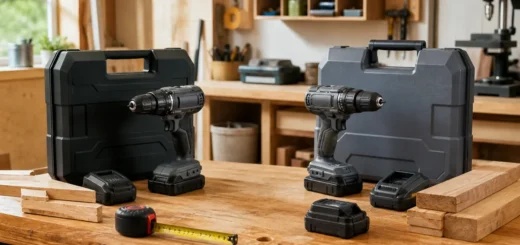
Typical sale pricing changes throughout the year, but a useful comparison is a two-tool kit with a drill/driver, impact driver, charger, and two batteries. Craftsman kits commonly land around $100 to $180 on sale, while comparable DeWalt 20V MAX kits are often about $150 to $250. Brushless versions of either brand cost more.
Kit contents matter more than the tool count printed on the box. A kit with two compact batteries may be cheaper but less useful than one with a 4.0Ah battery. A 1.5Ah or 2.0Ah battery is light and adequate for driving screws, but it runs down faster during drilling, sanding, or cutting. A 4.0Ah battery usually adds useful working time without becoming excessively heavy.
| Cost factor | Craftsman V20 | DeWalt 20V MAX |
|---|---|---|
| Two-tool starter kit, typical sale range | $100–$180 | $150–$250 |
| Basic compact battery replacement | About $40–$70 | About $50–$90 |
| 4.0Ah-class battery replacement | About $70–$120 | About $90–$150 |
| Tool-only pricing | Usually lower | Usually higher |
| Platform breadth | Good for household and light-duty tools | Much broader, including heavy-duty options |
These are working price ranges, not permanent list prices. Battery bundles and holiday promotions can move the value considerably. Before buying, compare the kit against the cost of the same battery and charger purchased separately. Some apparently cheap “tool-only” deals become expensive once you add power.
Battery and expansion costs
Expansion is where the original price gap can either shrink or grow. If you buy one starter kit and add four or five tools, Craftsman generally keeps the total lower. Tool-only Craftsman products are often discounted heavily, and the platform is sufficient for drills, impact drivers, lights, small saws, inflators, and basic outdoor equipment.
DeWalt’s higher prices buy more choices. The 20V MAX range includes compact tools for home use and substantially stronger options for framing, concrete drilling, cutting, and jobsite work. DeWalt also offers more battery sizes and performance tiers. That is useful if your needs change, but it creates more opportunities to overspend.
Do not assume every high-capacity battery is a good value. A large 8.0Ah or 10.0Ah pack can cost more than an entry-level bare tool. It makes sense for a reciprocating saw, grinder, blower, or long cutting session; it is unnecessary weight for a drill used to hang shelves. For most homeowners, one compact battery and one 4.0Ah battery cover more jobs than two large packs.
Battery compatibility is brand-specific. A Craftsman V20 battery does not run a DeWalt 20V tool, even though both systems are nominally 20 volts. Avoid cheap third-party packs unless you accept shorter life, uncertain electronics, and possible warranty problems. The savings are not worthwhile if a pack overheats, refuses to charge, or fails after a few months.
Which platform fits the job?
Choose Craftsman V20 when the likely workload is occasional. It is a sensible choice for assembling furniture, drilling pilot holes, driving deck screws a few times a year, installing shelves, and handling routine home maintenance. If a lower-cost tool eventually wears out after light use, the replacement cost is less painful. Start with a Craftsman V20 drill and impact driver kit if those are your first cordless tools.
Choose DeWalt when you expect regular use, want to buy into a long-term system, or may add demanding tools later. A DeWalt drill is not automatically twice as productive as a Craftsman drill, but the wider selection makes it less likely that you will need a second battery platform. Contractors and serious DIY users also benefit from more service options and a larger supply of replacement parts and accessories.
For a single job, neither platform may be the cheapest answer. If you need a reciprocating saw to remove one old fence or a grinder for one metal-cutting project, renting can cost less than buying a tool, battery, and charger. If you will use the tool three or four times a year for five years, ownership usually becomes easier to justify.
Hidden costs and failure modes
The most common purchasing mistake is buying a small kit and then adding batteries one at a time at full retail. A second starter kit can be cheaper than a battery alone, especially around major sales. The drawback is duplicate chargers and tools. Sell or keep the duplicate only if the bundle price still works after assigning a realistic value to the extra tool.
Another failure mode is buying into a platform without checking the particular tool’s performance. A compact cordless circular saw may be convenient but slow in thick lumber. An entry-level oscillating tool may work for trim cuts but struggle with long flush cuts. Read the specifications for brushless motors, maximum cutting capacity, included batteries, and tool-only status rather than comparing brand names alone.
Battery storage also affects value. Leaving lithium-ion batteries in a hot vehicle can shorten their life. Store them indoors, avoid draining them completely when possible, and remove them from chargers after they are full. A battery that lasts five years changes the economics far more than a $20 difference in the starter kit.
When to buy
Shop hardest during Black Friday, early December, Father’s Day promotions, and seasonal spring sales. The best offers often bundle a free tool with a battery kit rather than simply reducing the sticker price. DeWalt commonly runs promotions on larger kits, while Craftsman frequently competes with lower-priced multi-tool bundles.
Compare the final package: number and size of batteries, brushless or brushed tools, charger type, warranty terms, and whether the tools are genuinely useful to you. A four-tool kit with two tiny batteries is not automatically better than a two-tool kit with one compact and one 4.0Ah pack. For a budget-conscious homeowner, Craftsman V20 is fine and often the rational choice. For a user building a serious cordless collection, DeWalt’s higher entry cost can prevent an expensive platform switch later.
If you choose DeWalt, compare current DeWalt 20V MAX brushless combo kits rather than buying separate tools. For either system, add a battery and charger kit only when the bundle price beats a comparable starter package.