How to Compare Tool Discounts Across Retailer Loyalty Programs
What's inside
- Compare the final price, not the advertised discount
- Separate instant savings from future rewards
- A practical comparison
- Read the terms before building a basket
- Price the tool system, not just the bare tool
- Use seasonal sales without assuming every sale is a bargain
- Choose the offer that fits your buying habits
- Compare the final price, not the advertised discount
- Separate instant savings from future rewards
- A practical comparison
- Read the terms before building a basket
- Price the tool system, not just the bare tool
- Use seasonal sales without assuming every sale is a bargain
- Choose the offer that fits your buying habits
As an Amazon Associate I earn from qualifying purchases. This post may contain affiliate links at no extra cost to you.
Compare the final price, not the advertised discount
A “20% off” banner does not tell you whether a tool is cheaper than it was last week. Retailer loyalty programs can add real savings through member prices, points, coupons, or sale-event offers, but each works differently. Compare what you will actually pay for the tool and any required battery or charger, after discounts and shipping, and before tax.
Start with the same item and configuration at each retailer. A bare cordless tool is not equivalent to a kit with a battery and charger. Write down the shelf price, automatic sale price, member price, coupon, shipping fee, and any reward you can realistically use. For example, a $200 tool with 20% off costs $160. If a competitor sells it for $170 and awards $20 in points, the first retailer is still $10 cheaper upfront. The second only wins if those points are worth $20 to you and you would spend them anyway.
Separate instant savings from future rewards
An instant discount lowers today’s bill. Points, store credit, and certificates usually lower a later purchase, and may come with a minimum spend, expiration date, or product exclusion. Value them at what you can reliably redeem—not their headline face value. If a retailer gives $15 in credit that expires in 30 days and you have no planned purchase, it may be worth little or nothing.
Check whether rewards apply to the item you want next. Tool promotions often exclude clearance items, gift cards, certain brands, or sale-priced products. Some programs also calculate points after coupons rather than on the original price. If your $250 purchase earns 5% after a $50 coupon, that is $10 in points, not $12.50.
A practical comparison
| Offer type | What to count | Common catch |
|---|---|---|
| Member price | Immediate reduction from the regular price | Requires an account; compare the regular price against competitors |
| Coupon or promo code | Discount that applies at checkout | May exclude brands, bundles, or already discounted tools |
| Points or store credit | Expected value of a future purchase you already need | Expiration, minimum spend, and limited eligible items |
| Spend-threshold reward | Reward minus extra spending needed to qualify | Buying an unnecessary accessory can erase the benefit |
| Free battery or tool | Value of the item only if it suits your platform and workload | Battery size, model, or redemption deadline may limit usefulness |
Use this simple calculation: effective cost = checkout price + required fees − usable future reward. Keep the checkout price visible beside the result. A reward-adjusted figure can make one offer look best while hiding that it requires more cash today or leaves you with credit you may not redeem.
Read the terms before building a basket
Threshold offers are a frequent trap. Suppose a retailer offers a $25 reward when you spend $250, but your tool costs $235. Adding a $20 accessory gets you over the threshold, yet you have spent $20 to receive a reward of $25. The deal is only worthwhile if the accessory is useful and the reward can be spent without further unnecessary purchases.
Look for restrictions on combining offers. A member price may not stack with a percentage coupon, while a manufacturer rebate may require buying from an authorized seller and submitting proof of purchase. Check redemption dates and whether rewards are issued immediately or weeks later. Also verify return terms: returning part of a qualifying bundle can reduce or cancel the reward, and some retailers deduct its value from your refund.
Price the tool system, not just the bare tool
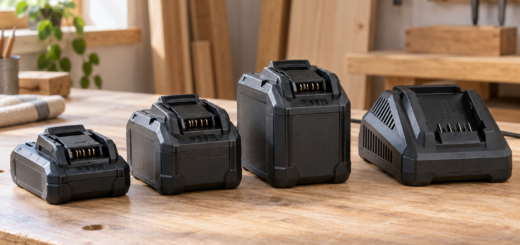
For cordless tools, a low bare-tool price can be a poor deal if you do not own a compatible battery. Compare the cost of the tool, a battery with enough capacity for the job, and a charger. A homeowner who already has two batteries in a platform may sensibly choose a bare tool; a first-time buyer should compare kits instead. Battery compatibility across a brand’s product line can make a modestly priced tool a better long-term buy than a cheaper one-off platform.
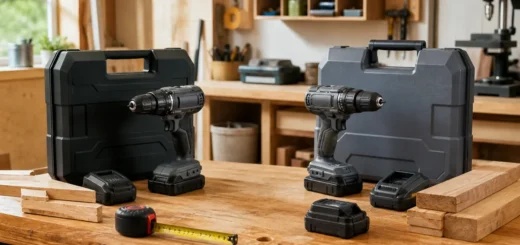
For occasional drilling, assembly, or light yard work, a budget tool can be entirely adequate. Spending more is easier to justify when you expect sustained use, need faster charging, or rely on the tool for paid work. If you are still choosing a category, compare cordless drill-driver kits by included battery capacity, charger, and warranty—not just the discount badge. For regular cutting work, a cordless circular saw kit should be judged on the same basis.
Use seasonal sales without assuming every sale is a bargain
Major holiday weekends, spring promotions, and end-of-year clearances can bring useful tool discounts, particularly on kits and bundles. But a seasonal tag does not establish a good price. Record the price at two or three retailers before the event, then check whether the sale price is genuinely lower. If you can wait, a price history or saved-item alert can help distinguish a real drop from a temporary “regular price” reset.
Bundles are harder to compare because included batteries and accessories vary. Assign value only to items you would otherwise buy. A kit that costs $40 more but includes a battery you need may be the better buy; a bundle padded with accessories that will sit unused is not. Compare the standalone prices only as a reference, since bundle components may not be sold separately at those listed prices.
Choose the offer that fits your buying habits
Rewards work best for shoppers who already make repeat purchases at that retailer and can use credit before it expires. A straightforward coupon is often better for a one-time buyer, especially when the immediate savings are clear. Avoid opening a store card solely for a one-off tool discount unless you understand the interest rate, fees, and payment terms; interest can overwhelm a small saving quickly.
Before checkout, confirm the exact item number, included batteries, seller, delivery cost, coupon eligibility, reward rules, and return window. Then compare the final cash price with the realistic value of any future credit. That check takes a few minutes and helps separate a useful tool deal from a promotion that mainly encourages you to spend more.