How to Compare Tool Prices When Accessories Are Included
What's inside
As an Amazon Associate I earn from qualifying purchases. This post may contain affiliate links at no extra cost to you.
Comparing tool prices gets harder when one package includes batteries, chargers, blades, bits, cases, or other accessories. A $99 kit can look cheaper than a $129 bare tool, yet the second purchase may be the better value if it includes a battery you actually need. The reverse is also common: a “loaded” kit may contain low-value accessories you would not otherwise buy.
The useful comparison is not the package price. It is the cost of getting the tool, power source, and job-ready accessories you will actually use.
Start With the Complete Cost
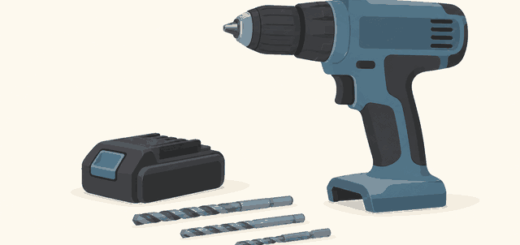
Write down what you need before comparing listings. For a cordless drill, that may mean the tool, one battery, a charger, and a bit set. For a circular saw, it may mean the saw, a battery, charger, and several suitable blades. For a nailer, add the battery, charger, and the correct nails or staples.
Then compare the cost of a complete working setup, not the number printed in the product title. A bare tool at $89 is not an $89 purchase if a battery and charger cost another $90. A $149 kit containing both may be the cheaper route even though its headline price is higher.
Check shipping and sales tax in the final step. Also check whether the package is sold by the manufacturer, an authorized retailer, or a marketplace seller. A low price on an open-box or imported package may have different warranty coverage.
Separate Essential and Incidental Accessories
Classify every included item into three groups:
- Essential: required to operate the tool, such as a battery and charger for many cordless platforms.
- Useful: likely to save a separate purchase, such as a quality blade or a dust bag.
- Filler: items that add to the count but have little practical value, such as a small mixed bit set or a soft case you will not use.
Do not assign full retail value to filler accessories. A 100-piece drill-bit kit may retail for $30, but if several bits are dull, undersized, or made for occasional light work, its real value to you may be $5 to $10. Likewise, a single general-purpose blade is not equivalent to a five-pack of blades matched to your material.
For common add-ons, current replacement prices are a useful reality check. A basic 2.0Ah battery may cost roughly $40 to $70 within a mainstream cordless platform. A charger may add $20 to $50. A quality specialty blade often costs $10 to $30, while a basic bit set may be worth $10 to $25 for household work.
Use Replacement Prices, Not Retail Claims
Manufacturers sometimes show a package as having “$200 of value.” Treat that figure as a ceiling, not a saving. Search for the exact replacement accessories and use prices from several established sellers. Avoid valuing an included item at its highest advertised price if it is frequently discounted.
| Package | What it includes | Headline price | Real comparison |
|---|---|---|---|
| Bare cordless tool | Tool only | $89 | Add battery and charger; often $150–$180 total |
| Tool kit | Tool, 2.0Ah battery, charger | $129 | Ready to work; best for a new platform user |
| Tool kit with accessories | Tool, battery, charger, case, bit set | $159 | Worth more only if the bits and case replace purchases |
| Tool plus premium battery | Tool, 5.0Ah battery, charger | $199 | Higher upfront cost; better for heavy or long jobs |
In this example, the $129 kit beats the $89 bare tool for a first-time buyer. The $159 package is not automatically better than the $129 kit. Its extra $30 is justified only if the case and bit set are worth at least that much to you.
Account for Battery Size and Performance
Battery capacity changes both runtime and handling. A 2.0Ah battery is usually lighter and adequate for drilling, assembling furniture, and short repair jobs. A 4.0Ah or 5.0Ah battery costs more but can reduce interruptions during deck work, framing, cutting, or grinding.
Do not compare amp-hour ratings across unrelated voltage systems as if they were identical. A battery’s watt-hours are a better rough guide: volts multiplied by amp-hours. A 20-volt 2.0Ah pack is about 40 watt-hours, while a 20-volt 5.0Ah pack is about 100 watt-hours. Actual runtime depends on load, tool efficiency, material, and battery age.
A large battery can also make a compact drill tiring or awkward. If you already own several batteries in a platform, a bare tool may be the smart budget choice. If you are entering a new platform, look for a kit with at least one battery and a charger rather than buying those items separately.
For a first cordless purchase, compare cordless drill kits with a battery and charger. For frequent cutting or sanding, consider the cost of an additional battery before choosing a tool platform.
Price Consumables Separately
Accessories that wear out deserve special attention. Blades, sanding discs, grinding wheels, driver bits, nails, staples, and filters can cost more over time than the original tool. A cheap saw with expensive proprietary blades may lose its advantage after several projects.
Look for the accessory size and attachment standard. A saw accepting common 6-1/2-inch blades gives you more price and quality choices than one requiring a less common format. A sander using standard hook-and-loop discs is generally cheaper to feed than one requiring brand-specific sheets.
When a kit includes ten blades, ask whether they are appropriate for your material. Wood blades, metal-cutting blades, and demolition blades have different tooth patterns and expected lifespans. Using the wrong blade can cause slow cuts, burning, kickback, or premature wear.
When the Cheaper Package Is Fine
The lower-priced option is often enough for occasional household work. A basic drill kit can handle curtain rods, flat-pack furniture, pilot holes, and light fastening. An inexpensive bit set is acceptable when you will drill only wood and plastic a few times per year. A small battery is fine if each job takes less than 20 or 30 minutes.
Pay more when the accessory affects safety, fit, or job speed. Spend extra for a suitable blade when cutting dense lumber or metal. Choose a larger battery for repeated outdoor work. Buy a better charger or a second battery when downtime will cost more than the upgrade. If the included accessory is likely to fail halfway through the job, its low price is not a saving.
For replacement blades, bits, and sanding supplies, compare power-tool blades and bits by size, material rating, and pack price rather than by the number of pieces.
Check Seasonal Pricing and Bundle Timing
Tool bundles are commonly discounted around major holiday sales, spring project season, Father’s Day, and the weeks before Christmas. Battery kits may receive deeper discounts than bare tools because brands are trying to attract buyers to a cordless platform.
Track the price for two or three weeks if the job is not urgent. A bundle that appears to save $60 may be close to its normal price, while a genuine sale often drops 15% to 30% from the usual package price. Compare the same battery capacity and accessory contents; retailers sometimes change the included battery or blade count under nearly identical product names.
Finally, check the return policy before buying a kit. If the tool is acceptable but the included bits are poor, returning only part of a bundle may not be possible. The best deal is the one that delivers a reliable tool, a usable power source, and accessories you would have purchased anyway.