How to Compare Tool Prices When a Retailer Offers Store Credit
What's inside
As an Amazon Associate I earn from qualifying purchases. This post may contain affiliate links at no extra cost to you.
The real price is not the credit amount
A retailer offering store credit can make a tool look cheaper than it is. The key question is not how much credit the receipt advertises, but how much value you will actually get from it. A $300 tool with a $60 credit is not automatically a $240 purchase: you still pay $300 today, and the credit may require another purchase, expire, or be usable only at that retailer.
Compare the deal with the best price you can get elsewhere for the same tool, including tax, shipping, and any genuinely useful bundled items. Then value the credit separately. If you already planned to buy consumables or another tool from that retailer, the credit may be close to cash. If you have to spend extra to use it, it is worth less.
Calculate the effective cost
Start with the amount you pay at checkout. Subtract only the portion of the credit you expect to use on something you would have bought anyway. Do not subtract the full credit just because it appears on the receipt.
For example, suppose a drill costs $300 and earns $60 in store credit. Another retailer sells the same drill for $270. If you need $50 of bits and blades from the first retailer next month, and the credit covers those items without a minimum spend, the deal may be competitive. If the credit requires a $100 purchase and you spend $40 more than planned, its practical value is closer to $20 than $60.
A simple comparison is:
Effective cost = checkout price + extra spending required to use credit − value of planned purchases covered by credit.
Use this as a decision aid, not false precision. Tax rules, shipping, and excluded products can change the result. Also check whether the credit applies before or after tax and whether returns cancel or reduce it.
Compare the offers
Put the deal beside ordinary prices and account for what you would actually use. These example figures show why the advertised credit is not the same as a discount.
| Offer | Paid today | Credit conditions | Likely practical value |
|---|---|---|---|
| Retailer A: tool with $60 credit | $300 | $100 minimum purchase; 30-day expiry | Could be under $60 if you must add unplanned items or miss the deadline |
| Retailer B: same tool, lower price | $270 | No credit | $270, with no follow-up purchase required |
| Retailer C: tool with $40 credit | $280 | No minimum; credit usable on needed batteries | Near $240 if you will spend $40 there anyway |
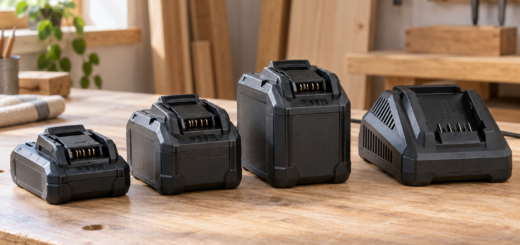
Check that the products are truly comparable. A bare tool is not equivalent to a kit with a battery and charger, and a smaller battery can make a cordless tool less useful for demanding work. Compare included battery capacity, charger, case, warranty, and return terms—not just the product name.
Read the credit rules before checkout
Look for the expiration date, minimum spend, eligible departments, and exclusions such as gift cards, clearance items, or the tool itself. Find out whether the credit arrives immediately or after shipping, and whether it is a coupon that can be used only once. If it expires in two weeks, value it at zero unless you know what you will buy in that period.
Returns are another common failure point. Some retailers deduct the credit from a refund, void it if you return the qualifying tool, or reduce it proportionally if you return part of a bundle. Keep the receipt and terms until the return window closes. If you may need to test a tool for a job, a generous return policy can be worth more than a small credit.
Match the purchase to your work
For occasional household repairs, a mid-priced corded drill or a basic cordless kit may be entirely adequate. Paying extra for a premium platform is hard to justify if you drill a few pilot holes each year. On the other hand, if you already own compatible batteries, buying a bare tool can save money—provided the credit applies to that item and the retailer’s price is competitive.
For regular framing, deck work, or shop use, compare battery platform cost as well as the tool. A cheap kit can become expensive if replacement batteries are costly or difficult to find. Consider whether a spare battery is essential: stopping work to recharge can matter more than a $20–$40 price difference. A cordless drill-driver kit is worth comparing when you need the tool, battery, and charger together; compare the included battery capacity before treating kits as equivalent.
For cutting or grinding, include the cost of consumables in your comparison. A credit that covers blades you already buy has clearer value than one that nudges you toward a more expensive tool. Still, do not buy a larger pack simply to use a coupon if the blades will sit unused or age out before the next job.
Seasonal deals and brand value
Promotions often cluster around major shopping periods, holiday weekends, and seasonal project launches. A store-credit event can be a good time to buy if you were already waiting for that tool. It is a weaker reason to buy a tool early, especially if the credit expires before your next project. Check recent prices if available, because a large credit attached to an inflated list price may still lose to an ordinary sale elsewhere.
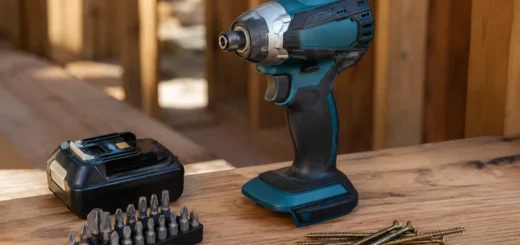
Brand value depends on more than the logo. For a tool used weekly, repair support, warranty service, battery availability, and the cost of adding compatible tools can justify a higher initial price. For a tool used twice a year, a reliable budget option may be the sensible choice. Search the exact specifications and included accessories, not just the brand name; a cordless impact driver sold as a bare tool is useful to compare when you already own batteries in that platform.
A quick buying check
Before committing, write down the lowest comparable price, the amount you will pay today, and the purchases you would make with the credit regardless of the promotion. Confirm the credit’s deadline and exclusions, then calculate the effective cost. If the deal only wins when you count credit you might never spend, choose the lower straightforward price instead.
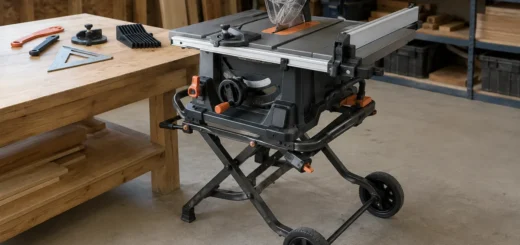
Finally, consider whether the tool is right for the job. A discounted saw with the wrong blade, a drill with an undersized battery, or a tool without the needed charger is not a bargain. Buy the setup that safely handles your workload; let store credit improve the price only when it reduces spending you already planned.