How to Decide Whether a Tool Bundle Is Better Value Than Buying Separately
What's inside
As an Amazon Associate I earn from qualifying purchases. This post may contain affiliate links at no extra cost to you.
A tool bundle can look like an easy win: one price for several tools, batteries and a charger. But the number on the box doesn’t tell you whether you’ll save money. A bundle is better value only when you’ll use most of what’s included, the batteries suit your jobs, and the kit doesn’t force you into low-capacity or lower-quality accessories you’d replace anyway.
As an Amazon Associate we earn from qualifying purchases at no extra cost to you.


Start with the tools you need
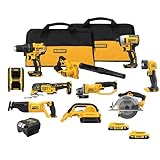
List the jobs you expect to do over the next year, then identify the tools they actually require. A drill and impact driver may earn regular use during a renovation. A reciprocating saw, work light or oscillating tool may sit unused if your projects are limited to assembling furniture and hanging shelves.
Price the essential tools separately first. Compare like with like: the same voltage platform, similar performance, battery capacity and warranty. A bare tool is cheaper because it excludes the battery and charger, so compare its price with the bundle only after accounting for the battery equipment you already own. If you have no compatible batteries, the separate-tool total must include them.
Compare the full cost, not the bundle discount
Use current prices rather than the bundle’s stated “value.” Retail prices fluctuate, and a kit’s claimed savings may compare against list prices few people pay. Include sales tax if you’re comparing checkout totals, and count only equipment you will keep and use. Don’t treat an unwanted tool as worth its full standalone price just because it appears in the package.
| Cost or benefit | Bundle | Separate purchases |
|---|---|---|
| Tools | May cost less per tool, but can include extras you don’t need | Pay only for the tools selected |
| Batteries and charger | Usually included; check battery capacity and charger type | Must be added if you don’t already have compatible gear |
| Future expansion | Can establish a battery platform at a lower starting cost | Lets you build the kit gradually |
| Unused equipment | Can erase apparent savings if tools go unused | Less likely when each purchase is planned |
For example, suppose a two-tool kit costs $300 and the same tools cost $150 each as bare tools. If you already own compatible batteries and a charger, buying separately costs $300 too; the kit only wins if its included extras are useful or valuable to you. If you need a $100 battery-and-charger set, separate purchases total $400, making the bundle a clearer deal—provided the included battery meets your needs.
Check batteries and charging
Battery count alone is a poor measure. Check amp-hours (Ah), which indicate capacity, and compare the included pack with the batteries available separately. A small pack can keep a drill light for overhead work, but it may need more frequent charging during long cuts or repeated driving. A larger pack adds runtime and weight. For sustained, demanding work, a kit with one small battery may be a worse buy than a less flashy bundle with two suitable packs.
Also check whether the tools share a battery platform and whether the included charger is adequate for your routine. Battery platforms can make future bare-tool purchases economical, but that advantage matters only if you expect to expand the collection. If you’re starting out, compare the cost of replacing a battery later; if you already own several compatible packs, paying again for batteries you won’t use may be wasteful.
Check kit quality and warranty
Bundled tools are not automatically inferior, but a model included in a promotion may have different features from a similarly named standalone version. Verify the exact product numbers and compare practical specifications: speed settings, torque control, cutting capacity, safety features and included accessories. For frequent jobsite work, a tool with the controls and durability you need is worth more than an extra tool that stays in its case.
Read the warranty terms for the tools and batteries, including registration deadlines and exclusions. Keep the receipt and packaging details until you have confirmed the purchase qualifies. A bundle can be inconvenient if one failed component requires sending back the whole kit or if the retailer’s return rules treat it as one set. Check those rules before opening the package, particularly if you plan to resell an unwanted tool.
When buying separately makes sense
Buy tools individually when you need a particular tool but not the rest of the kit, already own compatible batteries, or want a higher-spec version than the bundle includes. This is especially sensible for occasional home use: a basic drill and a suitable battery may cover furniture assembly, curtain rods and small repairs without paying for a saw you may use once.
For a small home repair kit, compare a cordless drill bare tool against a kit that includes a battery and charger. If you need batteries, search for drill kits with battery and charger and compare pack capacity, not just the number of pieces. A cordless impact driver kit can make sense for repeated screw driving, but it isn’t a substitute for a drill when you need controlled drilling into wood or metal.
Use sales without rushing
Seasonal promotions can make bundles attractive, but don’t buy on the deadline printed in an ad. Track the prices of the tools and batteries you want for a few weeks, or compare several major retailers on the same day. Holiday sales, spring renovation promotions and clearance periods can all produce good prices; none guarantees that a particular kit is the best value. Check whether the deal is new stock and whether the retailer has a practical return period.
Finally, account for tools you can borrow or rent. If a bundle’s extra saw would serve one short project, renting it may cost less than buying the kit. If you’ll use every included tool and the batteries fit your work, the bundle may save both money and shopping time. If even one expensive item is surplus, price the useful pieces separately before deciding.