Best Budget Circular Saw for Cutting Plywood and Framing Lumber
What's inside
As an Amazon Associate I earn from qualifying purchases. This post may contain affiliate links at no extra cost to you.
A good budget circular saw does not need to be expensive to cut plywood, dimensional lumber, and sheet goods accurately. The important specifications are a rigid base plate, a usable bevel scale, enough power to avoid bogging down, and a blade that matches the material. For most homeowners and occasional remodelers, a corded 7-1/4-inch saw offers the best value. It delivers full cutting capacity without the cost of batteries and chargers.
As an Amazon Associate we earn from qualifying purchases at no extra cost to you.


The best budget choice for most people
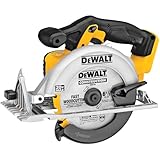
A basic 15-amp corded circular saw is the sensible starting point for framing lumber and plywood. Look for a saw with a 7-1/4-inch blade, a 2-1/2-inch cutting depth at 90 degrees, and a bevel range that reaches at least 45 degrees. These saws commonly cost about $50 to $90 when sold without a case or extra blades.
That capacity is enough for a 2×4 in one pass and a 2×6 when the blade is set correctly. It also handles 3/4-inch plywood with plenty of room. For a budget corded saw, the best value is usually found in established tool brands’ basic lines rather than in the cheapest unbranded listings. The difference may be only $15, but a better base, trigger, and blade guard can make the tool easier and safer to use.
Here is a practical comparison of the main options:
| Saw type | Typical price | Best use | Main drawback |
|---|---|---|---|
| Basic corded 7-1/4-inch | $50-$90 | Framing, plywood, general repairs | Needs an extension cord |
| Brushless cordless 7-1/4-inch | $130-$250 for a kit | Frequent site work and quick cuts | Battery and charger cost |
| Compact cordless 5-3/8 to 6-1/2-inch | $80-$180 for a kit | Trim work and thin sheet goods | Less depth and shorter runtime |
| Low-cost compact corded | $35-$60 | Occasional plywood and 2x material | More vibration and weaker adjustment hardware |
Corded versus cordless value
Choose a corded 7-1/4-inch circular saw if you are buying your first saw or do not already own batteries from a tool platform. A corded motor maintains power through long cuts in plywood and repeated cuts in framing lumber. There is no charging delay, and replacement batteries are not part of the long-term cost.
Cordless is worth paying for when you work where power is unavailable, move around a large framing project, or already own compatible batteries. A brushless cordless saw is generally more efficient and holds its speed better, but a battery-powered kit can cost two to three times as much as a basic corded tool. A 4.0Ah or larger battery is more useful for sheet goods than a small compact pack.
Do not compare a bare cordless saw with a corded saw on price. A bare tool may look inexpensive until you add a battery and charger. On the other hand, if you already have two batteries, a bare saw from that same platform can be a good buy.
Features that matter when cutting plywood
The shoe, or base plate, deserves more attention than flashy motor claims. A stamped steel shoe can work, but it is easier to bend or knock out of square. A thick aluminum shoe typically slides more smoothly against a guide and stays aligned after ordinary jobsite abuse. Check that the plate does not rock on a flat surface and that the bevel adjustment locks firmly.
A clear sight notch helps you follow a layout line. It should remain visible at both 90 and 45 degrees. A poorly marked or flexible bevel scale can turn a nominal 45-degree cut into an inaccurate joint. For plywood cabinetry or built-ins, consider a saw that accepts a guide rail or use a straightedge clamped to the sheet; the saw’s edge guide alone is rarely long enough for accurate sheet cuts.
For plywood, use a blade with about 40 to 60 teeth. A 24-tooth framing blade cuts faster through lumber but can leave a rough, splintered edge in veneer-faced plywood. Put the good face down when using a conventional blade, because the teeth enter from the underside and tend to chip the top surface less. Support the sheet on foam insulation or evenly spaced scrap strips so the offcut does not pinch the blade.
Features that matter for framing lumber
For framing, a 24-tooth carbide blade is usually the budget-friendly choice. It removes material quickly and does not punish the motor as much as a high-tooth-count blade. A saw rated around 15 amps is preferable for repeated cuts, but motor power alone does not guarantee performance. A dull blade, a pinched kerf, or forcing the saw sideways can stall a stronger tool.
Set the blade depth so the teeth extend roughly 1/8 to 1/4 inch below the material. Too much exposed blade increases friction and kickback risk. Keep both hands on the saw when possible, position your body to the side of the cut, and wait for the blade to stop before lifting the tool from the work.
Where cheap saws fail
The common failure points are not usually the motor. Budget saws can develop a loose bevel lock, a warped shoe, a stiff blade guard, or a fence that slips during a cut. These problems make straight cuts difficult and can create dangerous binding. Before buying, check recent owner feedback for complaints about the shoe staying square and the lower guard retracting smoothly.
A very cheap saw can be fine for cutting a few 2x4s during a weekend project. It is less attractive for a deck, shed, or remodel involving hundreds of cuts. The time spent correcting wandering cuts, replacing a poor blade, or dealing with overheating can erase the initial savings. Spending another $20 to $30 for better adjustment hardware is often worthwhile.
When to buy and what to spend
Prices are commonly strongest around spring home-improvement sales, Father’s Day promotions, and the November holiday period. Corded saws are often discounted less dramatically than cordless kits, but they also have fewer parts in the package to inflate the apparent deal. Watch for bundles that include a second blade or a basic carrying bag, provided the price is still close to the bare tool.
If you already own batteries, compare a brushless cordless circular saw bare tool with corded options. For everyone else, a corded saw in the $60 to $90 range plus a quality plywood blade is the strongest budget package. Add a straightedge, hearing protection, eye protection, and a spare blade before spending extra on cosmetic features.