Best Value Staple Gun for Insulation, Upholstery, and Light Construction
What's inside
As an Amazon Associate I earn from qualifying purchases. This post may contain affiliate links at no extra cost to you.
A good staple gun for insulation, upholstery, and light construction does not need to be expensive. The right choice depends more on the material, staple size, and amount of work than on the highest advertised driving power. A $20 manual gun can handle occasional fabric repairs, while a homeowner doing housewrap or insulation work will usually save time with a powered model.
The main mistake is buying one tool for jobs that need different staples. Upholstery typically uses fine-wire staples that leave smaller holes. Insulation and building felt often need longer, heavier staples. Light construction may require repeated shots into plywood or softwood, where a manual tool becomes tiring and inconsistent.
As an Amazon Associate we earn from qualifying purchases at no extra cost to you.


Best value by job
| Job | Best staple gun type | Typical staple range | What matters most |
|---|---|---|---|
| Occasional upholstery | Manual heavy-duty gun | 1/4 to 3/8 inch | Comfort, jam clearing, narrow nose |
| Batts, insulation fabric, and vapor barrier | Electric or cordless | 3/8 to 9/16 inch | Fast firing and reliable penetration |
| Housewrap and roofing felt | Electric, cordless, or pneumatic | 1/4 to 1/2 inch | Consistent depth and magazine capacity |
| Light wood assembly | Pneumatic or heavy-duty electric | 1/2 to 9/16 inch | Driving force and reduced hand fatigue |
Best budget choice: a manual heavy-duty staple gun
For small upholstery jobs, screen repair, craft projects, and occasional insulation work, a manual staple gun is the lowest-cost sensible option. Expect to spend roughly $15 to $30 for a decent tool. The cheapest models can work, but their handles are often stiff and their magazines develop alignment problems after repeated use.
Look for a tool that accepts common T50-style staples or another widely available format. Staple availability matters more than a fancy handle. A rear-loading magazine, jam-release mechanism, and adjustable power dial are useful features, but they should not replace a solid metal staple channel and a comfortable grip.
A manual gun is fine when you are installing a few dozen staples at a time. It becomes a poor value around several hundred shots, especially overhead. Hand fatigue causes incomplete drives, crooked staples, and damaged fabric. For occasional upholstery, compare heavy-duty manual staple guns for upholstery and budget for spare staples in the correct wire size.
When electric or cordless is worth the money
An electric staple gun is usually the best value for insulation and light construction around one house. Corded models often cost about $25 to $50 and avoid battery costs. They are a good choice in a workshop or room with convenient outlets. A 6- to 10-foot cord is manageable indoors but annoying on ladders, in attics, and around exterior sheathing.
Cordless models commonly cost $50 to $150 before or including the battery, depending on the battery platform. They are easier to use overhead and eliminate the cord snagging on framing. The catch is platform cost: a tool-only price looks attractive if you already own compatible batteries, but a new battery and charger can add $40 to $100.
For repeated insulation, housewrap, or felt installation, a cordless electric staple gun for insulation and housewrap is often worth the premium. Choose one with a contact or sequential firing option, a visible staple window, and enough magazine capacity for at least 100 staples. A tool that fires too aggressively can crush insulation facing or leave deep marks in fabric.
Pneumatic value for larger jobs
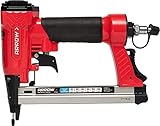
If you already own an air compressor, a pneumatic stapler can be the best-performing bargain. Basic models often cost $30 to $70, but you also need a compressor, hose, fittings, and hearing protection. Buying an entire air setup solely for stapling rarely makes sense for a one-time insulation project.
Pneumatic tools are lighter than many cordless models and maintain consistent driving force. They are especially useful for furniture production, repeated upholstery, and long runs of housewrap. Their drawbacks are noise, hose drag, compressor cycling, and the need to set air pressure correctly. Too much pressure can bury staples or damage soft material; too little leaves crowns standing proud.
| Type | Typical total cost | Best use | Main limitation |
|---|---|---|---|
| Manual | $15–$30 | Small repairs and occasional upholstery | Hand fatigue and inconsistent depth |
| Corded electric | $25–$50 | Home insulation and workshop tasks | Requires an outlet |
| Cordless electric | $50–$150 | Overhead and outdoor work | Battery cost and runtime |
| Pneumatic | $30–$70 tool-only | High-volume work with an existing compressor | Needs an air system |
Staple selection and common failures
Use the staple manufacturer’s recommended length instead of automatically choosing the longest staple. For fabric over plywood, 1/4 inch is often enough; thicker upholstery and hardwood may need 3/8 inch. For insulation facing or housewrap, 3/8 to 1/2 inch is common. A 9/16-inch staple can be useful in softwood but may punch through thin material or interfere with wiring and plumbing.
Match the staple crown and wire type to the tool. Narrow-crown construction staples are not interchangeable with fine upholstery staples. Mixing brands can also cause jams if the strip dimensions are slightly different. Keep the magazine clean, load the strip flat, and avoid forcing a staple gun when the nose is not fully seated against the work.
Common failures have straightforward causes. Staples that stand proud usually indicate insufficient power, excessive material thickness, poor contact pressure, or a clogged driver channel. Bent staples often mean the nose is tilted or the staple is too long for the material. Repeated double-firing points to a worn tool or a trigger being pulled before the nose is properly positioned.
When to buy for the best value
Manual and corded staple guns are usually easiest to find at low prices during spring home-improvement promotions and around major holiday sales. Cordless tools often see better discounts during Black Friday, Father’s Day, and brand-specific battery promotions. Watch the kit price rather than the tool-only price; a modest discount on a bare tool is not useful if you need a battery and charger.
For a single project, buy the least expensive tool that accepts readily available staples and has a return policy. For recurring work, spend more on comfort, jam resistance, and a compatible battery platform. The cheapest staple gun is a good value only when it finishes the job without damaged material, repeated jams, or enough hand fatigue to slow you down.