How to Identify a Fair Price for a Bare Cordless Tool
What's inside
As an Amazon Associate I earn from qualifying purchases. This post may contain affiliate links at no extra cost to you.
A bare cordless tool is sold without a battery or charger. That can make a $99 tool look like a bargain, but the fair price depends on the battery platform you already own, the tool’s real workload, and the cost of getting it ready to use. A bare tool is often excellent value for expanding an existing system. It is usually poor value as a first purchase.
Start With the Complete Cost
Compare the price of a usable setup, not just the price printed on the tool. Add the battery, charger, and any necessary accessories. A compact drill may work with a small 1.5Ah battery, while a cordless circular saw, grinder, or vacuum can require a larger 4Ah or 5Ah pack to perform properly.
For example, a $90 bare drill is not really a $90 purchase if you need a $60 battery and a $40 charger. The effective cost is $190. If a drill kit with the same battery and charger sells for $140 during a promotion, the kit is the better buy even though its advertised tool price appears higher.
Use this calculation:
Effective bare-tool price = tool price + battery cost + charger cost + required accessory cost
Include a blade, grinding wheel, jigsaw blade, or dust-collection adapter when the tool cannot do useful work without it. Do not count accessories you already own.
Typical Price Bands
Prices vary by brand and sales season, but these ranges are useful for judging ordinary deals in the U.S. They apply to mainstream consumer and prosumer platforms, not premium specialty tools or commercial systems.
| Tool category | Low fair price | Strong sale price | What affects value most |
|---|---|---|---|
| Drill or impact driver | $50–$90 | $40–$70 | Brushless motor, clutch quality, speed control |
| Oscillating multi-tool | $70–$130 | $60–$100 | Vibration, blade change system, trigger control |
| Jigsaw | $70–$140 | $60–$110 | Blade guidance, base adjustment, cut accuracy |
| Circular saw | $90–$180 | $80–$140 | Power under load, shoe rigidity, included blade |
| Angle grinder | $80–$170 | $70–$130 | Safety switch, braking, heat management |
| High-output saw or grinder | $150–$300 | $120–$240 | Battery demands, sustained power, electronics |
These are decision ranges, not hard rules. A $55 drill can be a smart choice for assembling furniture, drilling pilot holes, and driving small screws. It may be a false economy for repeated deck construction, where the motor, chuck, and battery runtime matter more.
Price the Battery Platform
The battery ecosystem is often worth more than the first tool. If you already own several compatible batteries and a charger, a bare tool may be fairly priced at nearly the same amount as the tool itself. Your marginal cost is low.
If you are starting from zero, compare the cost and range of the platform. A cheap starter kit is useful only if it includes the tools you will actually use. Some inexpensive systems have low battery prices but fewer saws, outdoor tools, and replacement parts. A slightly more expensive platform can be better value if it lets one battery system cover your drill, impact driver, lights, and yard equipment.
Battery capacity also changes the fair price. A 2Ah pack is light and suitable for a drill or light-duty driver. A 5Ah pack lasts much longer, but it adds weight and may cost $60 to $150 depending on the platform. For a cordless circular saw or grinder, budget for at least one larger pack. A small battery may shut down from overload before you finish a cut.
Compare Kits, Bare Tools, and Bundles
Retailers commonly discount kits more aggressively than individual bare tools. Check both before buying. A two-tool kit can occasionally cost less than one bare tool plus a battery, especially around major holiday sales, Father’s Day, and Black Friday.
Do not assume every bundle is a bargain. Some kits use older brushed tools, undersized batteries, or a charger that takes several hours. Look at the exact tool generation and battery capacity. A kit with a 1.5Ah battery may be less useful than a bare brushless tool you pair with a battery you already own.
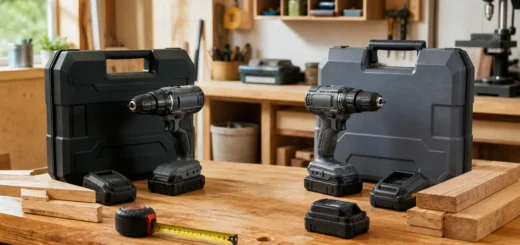
For a first purchase, search cordless drill kits with a battery and charger and compare the complete package against the bare-tool price. For an established platform, a bare cordless circular saw can make more sense because you avoid buying duplicate charging equipment.
Judge Quality Before Buying
Look beyond voltage labels. “20V” and “18V” systems are generally close in nominal voltage; the label does not prove that one tool is stronger. Check independent reviews for cutting speed, overheating, vibration, run time, and failure rates.
For drills and drivers, a metal chuck, a usable clutch, and low-speed control are more valuable than a high advertised torque number. For saws, a stiff shoe and a reliable blade guard prevent frustrating cuts. For grinders, braking and a sensible safety switch can justify paying more. Brushless motors usually improve efficiency and durability, but they do not automatically make a poorly designed tool good.
Watch for common failure modes: batteries that overheat under load, chucks that loosen, saw shoes that flex, switches that are difficult to operate with gloves, and tools that become uncomfortable after ten minutes. These problems can erase the savings from a low purchase price.
Use Sales Timing Carefully
Buy batteries and starter kits during major promotions, then buy bare tools when you need them or when a specific tool reaches a documented low price. Retail prices often rise before a sale, so compare the current price with several weeks of history rather than trusting a claimed percentage discount.
A practical target is 15% to 25% below the normal price for a bare tool, or a bundle that effectively gives you the battery and charger for less than their usual combined cost. If a tool is needed for one weekend job, renting may be cheaper than buying a $150 tool and $100 battery. If you expect to use it four or five times a year for several years, ownership usually wins—provided the battery platform already fits your needs.