How to Decide Which Tools to Buy Before Starting a Deck Project
What's inside
As an Amazon Associate I earn from qualifying purchases. This post may contain affiliate links at no extra cost to you.
A deck project can turn into an expensive tool-buying exercise before you purchase a single board. The right approach is to separate tools you will use for hours from tools needed for only one operation. Spend on accuracy, safety, and time savings first; rent or borrow the rest.
As an Amazon Associate we earn from qualifying purchases at no extra cost to you.


Start With the Deck Plan
List every operation before shopping: digging post holes, setting posts, cutting framing lumber, fastening joists, installing decking, trimming edges, and sealing the finished surface. Add the material sizes and approximate quantities. A small ground-level deck may need only a circular saw, drill/driver, impact driver, level, clamps, and hand tools. A raised deck with stairs creates more demand for layout and cutting tools.
Estimate cuts rather than buying based on a vague idea of “building a deck.” If you expect 150 repeated board cuts, a faster saw may pay for itself. If you need four angled cuts for stairs, renting a miter saw can make more sense than owning one. Tool value comes from repeated use, not just the sticker price.
Decide What to Buy, Rent, or Borrow
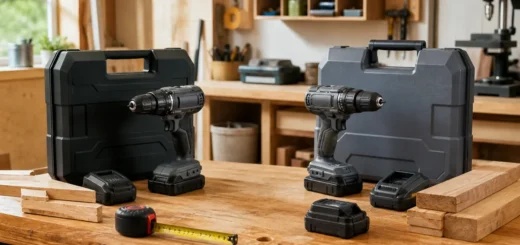
Buy tools that stay useful after the deck is finished. A reliable cordless drill and impact driver combo kit is usually a better first purchase than a specialized saw. The drill handles pilot holes and general work; the impact driver drives structural screws without putting as much strain on your wrist.
Rent large tools when they save substantial labor but have little future use. A post-hole auger, plate compactor, concrete mixer, or heavy-duty demolition saw often belongs in this category. Check rental rates for a half-day, full day, and weekend. A weekend rate can be worthwhile if weather or inspections may delay the job, but returning a tool late can erase the savings.
Borrowing is reasonable for a laser level, specialty clamps, or a miter saw you will use briefly. Inspect borrowed tools before accepting them. A dull blade, damaged cord, weak battery, or inaccurate fence can cost more in ruined lumber than a rental fee.
| Tool category | Budget choice | When to spend more | Typical best value |
|---|---|---|---|
| Cutting | Corded circular saw | Many repeated cuts or limited access to power | Buy a quality circular saw; rent a miter saw |
| Driving | 18V or 20V drill/impact kit | Heavy framing or daily professional use | One battery platform with two tools |
| Layout | 4-foot level, tape, string line | Long runs or difficult grade changes | Rent or borrow a laser level |
| Fastening | Manual screw setting and bit holder | Hundreds of deck screws | Impact driver with spare battery |
| Excavation | Post-hole digger and digging bar | Hard soil, deep holes, or many footings | Rent an auger after checking underground utilities |
Choose Corded or Cordless Carefully
Cordless tools are convenient around a deck, especially where the frame is far from an outlet. Their hidden cost is batteries. A kit with one small battery may look cheap, but a second battery and charger can add significantly to the final price. For a deck, look for a platform with batteries rated around 4.0 amp-hours or larger for saw use. Compact batteries are fine for drilling, but they run down quickly in a circular saw.
Corded saws remain a strong budget choice if you can use a properly rated outdoor extension cord and protect the connection from wet ground. They deliver steady power and avoid buying extra batteries. For occasional DIY work, a corded circular saw costing roughly $60 to $120 can be more sensible than a premium cordless setup.
If you already own batteries from a reputable platform, staying within that system often has the best value. Do not choose a brand solely because the bare tool is inexpensive; compare the price of batteries, chargers, replacement parts, and the tools you may need later.
Spend on Accuracy and Safety
A cheap tape measure is acceptable, but a warped level is not. A 4-foot level, chalk line, framing square, speed square, and a sharp pencil or marking knife are inexpensive tools that prevent expensive errors. Check a level by placing it on a flat surface, noting the bubble, then turning it end-for-end. If the reading changes, do not trust it.
Buy eye protection, hearing protection, work gloves, and a properly fitted dust mask or respirator where cutting treated lumber creates dust. Use fall protection and follow local requirements for elevated work. Never use a damaged extension cord, defeat a saw guard, or cut without confirming where your hands and the cord are located.
Plan for replacement blades and bits. A dull circular-saw blade can force the saw sideways, burn lumber, and increase kickback risk. For clean decking cuts, a carbide blade designed for finish or general wood cutting is usually worth the modest extra cost. Keep a separate blade for dirty demolition cuts so nails and grit do not ruin the blade used for visible work.
Compare Tool Quality by the Job
Brand prestige matters less on a tool used for two afternoons. A budget circular saw is fine if its base is flat, the bevel locks firmly, the guard moves freely, and the blade tracks straight. It is a poor choice if the shoe flexes or the depth adjustment slips.
For drills and impact drivers, evaluate the battery warranty, chuck quality, balance, and availability of replacement batteries. For saws, evaluate cut visibility, guard action, shoe rigidity, and whether blades are easy to find. A professional-grade tool may last longer, but it does not automatically make a deck straighter. Layout and technique still control the result.
Time Purchases Around the Season
Deck tools are often discounted during spring promotions, but spring is also when demand and rental prices can rise. Compare prices before the project starts rather than waiting for the first warm weekend. Cordless kits frequently see useful discounts around major holiday sales, Father’s Day, and late fall clearance periods. Outdoor power equipment and some seasonal rental inventory may be cheaper after peak summer demand.
Do not buy a large kit just to capture a discount. If it includes tools you will never use, the advertised savings are not real. A smaller kit plus a rented specialty tool often beats a large bundle in total project cost. Set a tool budget, reserve money for blades, bits, fasteners, and safety gear, then buy only what the deck plan requires.