How to Save on Workshop Tools Without Buying Low-Quality Knockoffs
What's inside
As an Amazon Associate I earn from qualifying purchases. This post may contain affiliate links at no extra cost to you.
Workshop tools get expensive quickly, but the cheapest tool on the shelf is not always the best bargain. A low price can mean soft metal, poor tolerances, weak batteries, or a design that makes simple jobs frustrating. The smarter approach is to spend money where failure costs you time or damages a project, then buy economically everywhere else.
As an Amazon Associate we earn from qualifying purchases at no extra cost to you.


Spend More Where Failure Matters
Start by separating tools into two groups. The first group affects safety, accuracy, or the condition of your workpiece. The second group mainly saves labor and convenience.
Good examples of tools worth buying carefully include torque wrenches, measuring tools, clamps used for glue-ups, saw blades, drill bits, and battery-powered tools used frequently. A torque wrench that is 10% inaccurate can cause real problems on automotive fasteners. A square that is visibly out of alignment can spoil every cut made against it. A cheap drill bit that wanders or snaps is less of a concern when drilling one hole in soft pine.
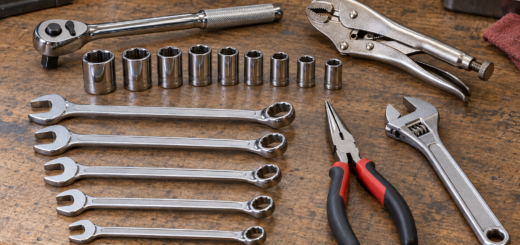
For occasional jobs, a budget [hand tool set](https://www.amazon.com/s?k=budget+hand+tool+set&tag=powertoolsdiy04-20) can be perfectly adequate. Look for forged or chrome-vanadium steel, clear size markings, and a return policy. You do not need a premium lifetime tool for assembling furniture twice a year.
Compare Cost Over Use, Not Shelf Price
A $30 tool used twice costs $15 per use. A $120 tool used 100 times costs $1.20 per use, before considering repairs or replacement. This does not automatically justify the expensive option, but it changes the calculation for tools that see regular work.
| Tool category | Budget option is usually fine when | Pay more when | Common cheap-tool failure |
|---|---|---|---|
| Socket and wrench set | Light automotive and household repairs | You use impact tools or work on seized fasteners | Rounded fasteners, cracked ratchet mechanism |
| Drill and driver | Short jobs in wood or drywall | You drill daily, use large bits, or need long runtime | Overheating, chuck wobble, weak battery |
| Clamps | Small assemblies and light gluing | You need even pressure across wide panels | Flexing bars, slipping jaws, uneven pressure |
| Measuring tools | Rough layout and non-critical cuts | You build cabinets, doors, or repeatable jigs | Loose hook, unreadable markings, inaccurate square |
| Cutting blades and bits | Softwood, demolition, and one-off work | You need clean edges or cut hard materials | Rapid dulling, burning, wandering cuts |
For Cordless Tools, Buy the Platform
Cordless tools are where false savings are most common. A low-cost drill may look attractive, but a battery and charger can cost nearly as much as the bare tool. Buying several unrelated brands can leave you with four chargers and batteries that fit only one product each.
Choose a battery platform based on the next three tools you are likely to buy, not just today’s drill. Compare the price of a kit, a replacement battery, and a charger. A two-battery kit priced at $150 may be better value than a $90 tool with one small battery if you later need a saw and impact driver.
Battery capacity is not the whole story. A 2.0Ah pack is lighter and often fine for screws and light drilling. A 4.0Ah or larger pack generally provides more runtime and may handle demanding tools better, but it adds weight. For overhead work, the smaller battery can be the better choice.
For occasional repairs, compare [cordless drill driver kits](https://www.amazon.com/s?k=cordless+drill+driver+kit&tag=powertoolsdiy04-20) by total kit cost and warranty. Avoid no-name batteries with vague capacity claims, missing safety information, or reviews describing swelling, charging failures, or sudden shutdowns.
Use Refurbished, Open-Box, and Older Models
Tool manufacturers often change colors, packaging, or minor features without changing the basic job performance. An older professional-grade drill or saw can be a better buy than a new entry-level version. Refurbished tools are worth considering when the seller provides a real warranty and a clear return window.
Inspect used corded tools for damaged insulation, a hot electrical smell, excessive bearing noise, and a switch that sticks. On used cordless tools, check for battery age and availability. A tool with a discontinued battery system is cheap only until the battery dies.
Open-box tools from reputable retailers can reduce the price by 10% to 30%. Confirm that accessories, blade guards, chargers, and manuals are included. Missing parts often erase the discount.
Save on Consumables Without Ruining the Job
Consumables are an easy place to cut costs, but buying the absolute cheapest pack is usually wasteful. A $5 pack of drill bits that becomes unusable after six holes costs more than a $15 pack that lasts through a project.
Buy specialized consumables only when the job requires them. For general workshop use, a modest set of quality twist bits, driver bits, utility blades, and sanding discs covers most work. Keep spare blades available, but do not stock five sizes you rarely use.
Match the accessory to the material. A general-purpose wood blade will not produce clean cuts in laminate or plywood veneer. A masonry bit used in concrete may need carbide construction and occasional cooling. Using the wrong accessory creates heat, burns the workpiece, and makes a cheap tool appear worse than it is.
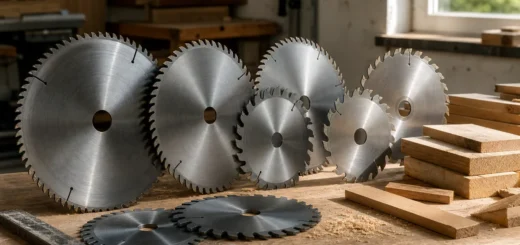
When clean edges matter, spend on [quality circular saw blades](https://www.amazon.com/s?k=quality+circular+saw+blades&tag=powertoolsdiy04-20) rather than replacing a dull bargain blade repeatedly. For rough framing or demolition, an inexpensive blade is often the sensible choice.
Time Purchases Around Sales
Major tool discounts commonly appear around Black Friday, Father’s Day, spring home-improvement promotions, and end-of-year clearance. Do not assume every “sale” is meaningful. Record the normal price for a month or use a price-history tool before buying.
Holiday bundles can be excellent if you need both the tool and the included accessories. They can also be poor value when the package contains a tiny battery, low-grade blades, or duplicate items. Compare the bundle against buying the bare tool and accessories separately.
Seasonal clearance is especially useful for corded tools, hand tools, storage, and outdoor equipment. Buy batteries cautiously during clearance because old stock may have spent years sitting unused.
Test Accuracy Before the Return Window Ends
Check every new measuring and cutting tool immediately. Verify a square against both edges of a straight board. Extend a tape measure and inspect whether the hook moves consistently. Run a drill at low and high speed, checking for chuck wobble and unusual heat after several minutes.
Keep receipts and packaging until the tool has completed a real job. A five-minute test may not reveal a battery that overheats after 20 minutes or a clamp that slips under sustained pressure. Return tools that fail basic checks; do not keep a bad bargain because the price was low.