Best Budget Electric Log Splitter for Occasional Firewood Preparation
What's inside
As an Amazon Associate I earn from qualifying purchases. This post may contain affiliate links at no extra cost to you.
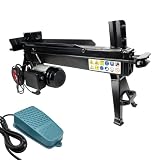
An electric log splitter makes sense when you prepare a modest pile of firewood near an outlet and want to avoid the noise and upkeep of a gas engine. For occasional use, the best budget choice is usually a horizontal 5- to 7-ton unit, not the most powerful splitter you can afford. It can handle straight-grained logs of manageable diameter, but knots, crotches, and oversized rounds will expose its limits quickly.
As an Amazon Associate we earn from qualifying purchases at no extra cost to you.



What “budget” means for this job
Small electric splitters are often rated between 5 and 7 tons. That figure is a useful comparison, not a guarantee that a machine will split every log of a given size. Wood species, dryness, grain, and knots all matter. A straight 10-inch round of softwood may split easily, while a smaller, knotty hardwood round can stop the ram or force you to reposition it.
For occasional firewood preparation—say, a few cords a year, or less—a compact unit can be good value if most of your rounds are under about 10 inches across and cut to the splitter’s specified length. Check that maximum length in the manual before buying; common compact designs accept rounds around 20 inches long, but specifications vary. If your supply regularly includes big hardwood rounds, a larger electric model or a different splitting method may cost less in frustration over time.
Compare current prices and specifications for 5-ton electric log splitters and 7-ton electric log splitters. Treat the tonnage as one factor; ram stroke, cycle time, maximum log length, warranty, and available replacement parts matter too.
Compare the main options
| Type | Best for | Main trade-off |
|---|---|---|
| 5-ton compact electric | Small batches, straight-grained rounds, limited storage space | More likely to stall on tough knots or dense hardwood |
| 6- to 7-ton electric | Regular home use and somewhat tougher rounds within the machine’s size limit | Costs more and still cannot replace a heavy-duty splitter on difficult wood |
| Gas splitter | Large piles, remote work, and demanding logs | Higher purchase and maintenance costs, more noise, and exhaust |
| Splitting maul or wedge | A few rounds, especially when power equipment is not worth storing | Requires more physical effort and suitable technique |
What to check before buying
Electrical supply: Most small splitters are intended for standard household power, but the exact voltage and amperage are model-specific. Use a properly grounded outlet and follow the manual’s extension-cord guidance. A long, undersized cord can cause voltage drop, sluggish operation, or overheating. Avoid sharing a circuit with high-draw equipment while splitting.
Cycle time and return: A faster cycle does not necessarily mean more force, but it can make a stack of easy rounds less tedious. Look for clear specifications, including whether the stated time covers the full out-and-back cycle. If the machine has a manual return, factor in the extra handling.
Work height and handling: Many low-cost models sit close to the ground. That is manageable for a few logs, but repeated lifting and bending can become the real drawback. Check the machine’s weight, whether it has wheels, and whether its stand is included or sold separately. A light splitter is easier to put away; a stand can make longer sessions more comfortable.
Warranty and parts: A low sticker price is less appealing if a hydraulic seal, control valve, or motor part is difficult to obtain. Before ordering, check the warranty length and who handles service. Keep the receipt and follow the break-in and hydraulic-fluid instructions; incorrect fluid or neglected maintenance can shorten the life of even a simple machine.
When the cheaper splitter is fine
A 5-ton machine is a reasonable buy if your wood is mostly straight, cut within the stated length limit, and not too large for the splitting bed. It is also a practical choice if you can reject the worst rounds and use a maul for the occasional knotty piece. Paying extra for tonnage you rarely need is poor value when the work is only a few sessions each season.
Expect occasional stalls on twisted grain or knots. Follow the manual’s instructions for relieving pressure and repositioning a round; do not hold a stalled ram against the wood or try to force it with improvised wedges. A compact splitter is not designed to handle every awkward piece. If a round repeatedly resists, set it aside for another method rather than risking damage or injury.
If your pile is mostly dense hardwood, or many rounds are wider than the machine’s recommended capacity, a 7-ton electric unit may be worth the extra cost—but it is not a cure-all. Compare 7-ton electric splitters with stands if working height is a concern, and verify whether the stand is part of the package. For frequent oversize rounds or several cords each year, price a gas splitter or local firewood processing before stretching a small electric machine beyond its intended use.
Work safely and avoid wasted effort
Read the manual, wear eye protection and sturdy footwear, and keep hands clear of the ram, wedge, and log supports. Use the splitter on stable, level ground, and keep other people—especially children—away from the work area. Never defeat two-handed controls or reach into the splitting area while the machine is powered.
Cut rounds to a consistent length within the stated limit and sort them by diameter. Split easier wood first to learn how the machine behaves, then tackle tougher pieces within its capacity. Dry, seasoned wood can split differently from fresh wood, but seasoning does not make knots disappear. Clear debris from the work area and let the machine cool if the manual calls for a duty cycle or rest period.
When to buy
Prices and availability often change with the season. Shopping before the first cold spell gives you time to compare specifications and test the splitter on your wood rather than choosing from whatever is left in stock. Spring and summer can be convenient buying windows, but a discount is only worthwhile if the model fits your log size, power supply, storage space, and expected workload.
For occasional home use, start with the rounds you actually split—not the biggest machine’s headline rating. A compact 5-ton electric splitter is the budget pick for easy, modest batches; step up to 6 or 7 tons when tougher wood is common and the added cost is justified. If most of your wood is oversized or heavily knotted, buying a larger machine or arranging processing is usually better value than repeatedly fighting a small one.