How to Verify Battery Health When Buying Used Cordless Tools
What's inside
As an Amazon Associate I earn from qualifying purchases. This post may contain affiliate links at no extra cost to you.
Battery condition is the biggest variable when buying used cordless tools. A drill with worn cosmetics may be a bargain, while a clean-looking saw with a tired battery can cost more than a new kit once replacement packs are added. The goal is not to prove that a used battery is “like new.” It is to determine how much useful work remains and price the tool accordingly.
As an Amazon Associate we earn from qualifying purchases at no extra cost to you.


Before You Meet the Seller
Find out exactly what is included: the tool, battery model and capacity, charger, case, and accessories. A bare tool is only a good deal if you already own compatible batteries. Otherwise, compare the total price with a new kit from the same battery platform. A used tool that is $40 cheaper but needs a $100 battery is not a bargain.
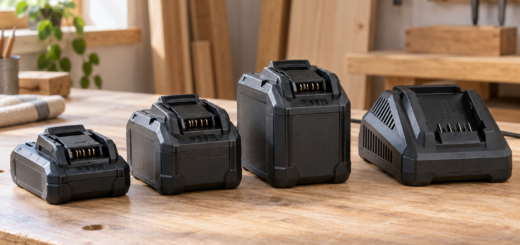
Check the battery’s voltage and amp-hour rating. A 20V Max and 18V pack are generally the same nominal class, but batteries are not interchangeable across brands. Capacity matters too. A compact 1.5Ah or 2.0Ah pack may be perfectly adequate for a drill used around the house, but it will run a circular saw or angle grinder for noticeably less time than a 4.0Ah or 5.0Ah pack.
For the widest selection of replacement packs, compare replacement cordless tool batteries before you make an offer. Stick with the tool manufacturer’s pack when possible. Cheap third-party batteries can work, but quality, cell matching, thermal protection, and warranty coverage vary.
Inspect the Battery Pack
Look closely at the case. Cracks, swelling, melted plastic, corrosion, and damaged terminals are reasons to reject the pack. A lithium-ion battery should not be used if its case is bulging or split. Do not attempt to open it, bypass the battery-management system, or charge it with an improvised adapter.
Check the contacts for heavy arcing or pitting. Light scuffing is normal, but blackened terminals can indicate repeated high-current use or a poor connection. Wiggle the battery in the tool and charger. Excessive looseness can cause intermittent power and heat, especially in saws and grinders.
Ask how the battery was stored. Packs left fully discharged for months may become difficult or impossible to charge. Long-term storage in a hot vehicle also accelerates capacity loss. A date code can help, but it is not a health report. A three-year-old pack used lightly may outperform a one-year-old pack that has been run flat every day.
Check Resting Voltage Carefully
A multimeter can identify an obviously dead or deeply discharged pack, but voltage alone cannot measure capacity. A fully charged lithium-ion pack will typically read about 20 to 21 volts for a 20V Max pack, about 40 to 42 volts for a 40V pack, and roughly 18 to 21 volts for an 18V nominal pack depending on its design and charge state.
Do not interpret a normal voltage reading as proof of a healthy battery. A worn pack can show full voltage with no load and then collapse quickly when the tool demands current. If the seller allows it, check voltage before and after a short tool test. A substantial, rapid drop followed by a protection shutdown suggests weak cells, although the tool’s electronic protection can also be the cause.
Never short the terminals with a wire or metal tool. If you use a meter, touch only the intended positive and negative contacts and avoid probing unfamiliar terminals. A proper battery tester is safer and more useful than trying to draw current with a homemade load.
Perform a Real-World Load Test
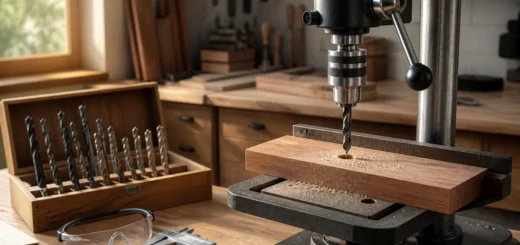
The best test is the job the tool is designed to do. Run a drill through a piece of construction lumber using a large bit. Drive several long screws. For an impact driver, drive fasteners into sound wood. For a circular saw, make repeated cuts in 2×4 stock. Run a grinder or blower long enough to reach normal operating temperature.
Watch for four failure modes:
- Immediate shutdown: The battery or tool may be triggering over-current or low-voltage protection.
- Sharp power loss: The tool starts strongly, then becomes weak within seconds. This often points to high internal resistance or badly unbalanced cells.
- Excessive heat: Warm is normal under load; a pack that becomes too hot to comfortably hold is not.
- Short runtime: The tool works normally but quits much sooner than expected. This is the clearest sign of reduced capacity.
Runtime depends on the job, so do not demand a precise minute figure. As a rough comparison, a healthy 2.0Ah pack used in a drill for intermittent screw driving may last through dozens of fasteners, while continuous cutting or grinding can drain it in minutes. Compare the used pack with a known-good battery of the same capacity if possible.
Test the Charger and Tool Too
Put the battery on the charger and watch the indicator. It should begin charging normally rather than flashing an error or remaining stuck at one stage. A charger that gets unusually hot, makes a sharp electrical smell, or repeatedly stops charging is a separate expense.
Operate the tool with the battery installed. Check the trigger, speed control, clutch, brake, chuck, blade guard, and battery release. Listen for grinding bearings and watch for excessive sparking at the motor vents. A battery can be healthy while the tool itself is near the end of its life.
For occasional household work, a replacement battery may still make a cheap used tool worthwhile. For daily trade use, buying a new pack and relying on an unknown used motor is usually false economy. If you need a complete, reliable setup, compare new cordless drill kits against the used price, including the charger.
Price the Battery Risk
| Observed condition | Reasonable buying approach | Value adjustment |
|---|---|---|
| Verified strong runtime, clean case, normal charging | Buy if the tool also passes its mechanical test | Small discount from comparable used kits |
| Works, but runtime is unknown | Buy only if the total price leaves room for a replacement pack | Subtract most of the battery’s replacement cost |
| Charges but shuts down under load | Treat the battery as failed | Value the tool as bare-tool only |
| Cracked, swollen, corroded, or noncharging | Walk away unless buying for parts | Zero battery value |
Used battery prices often rise during spring renovation season and before holiday gift buying. Patient buyers can find better value after holiday returns, during winter clearance, or when a manufacturer changes platforms. If you already own batteries, bare tools are often the best deal. If you are starting from scratch, a discounted new kit is usually safer because it bundles a warranty and a known-good battery.
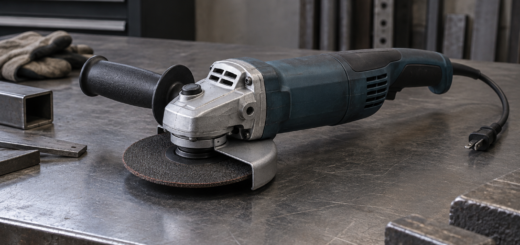
For high-drain tools such as cordless circular saws and grinders, be stricter: weak batteries reveal themselves quickly and replacement packs are expensive. For a drill used occasionally, accepting an older 2.0Ah pack can be reasonable if the price is low and a future battery purchase will still fit the platform.