Best Affordable Metal-Cutting Saw for Home Fabrication
What's inside
- What to look for in an affordable metal-cutting saw
- The best affordable saw types
- When an abrasive chop saw is the right bargain
- When to pay more for a carbide metal-cutting saw
- How to compare brands and real ownership cost
- When to buy and how to avoid a false bargain
- Safe setup matters more than a small price difference
- What to look for in an affordable metal-cutting saw
- The best affordable saw types
- When an abrasive chop saw is the right bargain
- When to pay more for a carbide metal-cutting saw
- How to compare brands and real ownership cost
- When to buy and how to avoid a false bargain
- Safe setup matters more than a small price difference
As an Amazon Associate I earn from qualifying purchases. This post may contain affiliate links at no extra cost to you.
What to look for in an affordable metal-cutting saw
For home fabrication, the best value is usually a 14-inch abrasive chop saw or a 5-inch metal-cutting circular saw, not a large cold saw. The right choice depends on what you cut most often. A chop saw is inexpensive and handles steel angle, square tube, rebar, and flat bar quickly. A metal-cutting circular saw makes cleaner cuts with less heat, but its blades cost more and it is less forgiving when cutting heavy stock.
Before buying, check four specifications: maximum cut capacity, blade or wheel cost, motor power, and the quality of the vise. A saw that claims a 4-1/2-inch square-tube capacity may only achieve that with the material held in a particular orientation. A weak vise can let the work move, producing angled cuts and damaged wheels. For occasional brackets and small frames, a basic saw is fine. For repeated production work, spend more on clamping and blade control rather than chasing the highest motor wattage.
As an Amazon Associate we earn from qualifying purchases at no extra cost to you.


The best affordable saw types
| Saw type | Typical street price | Best for | Main compromise |
|---|---|---|---|
| 14-inch abrasive chop saw | $100-$180 | Steel tube, angle, bar, and rebar | Heat, sparks, burrs, and abrasive-wheel wear |
| Metal-cutting circular saw | $150-$350 | Cleaner cuts in sheet, tube, and light plate | Higher blade cost and more demanding technique |
| Portable bandsaw | $150-$300 | Accurate cuts in tube and awkward stock | Usually requires a stand or careful two-handed use |
| Cold saw | $500 and up | Frequent, precise fabrication | Too expensive and bulky for many home shops |
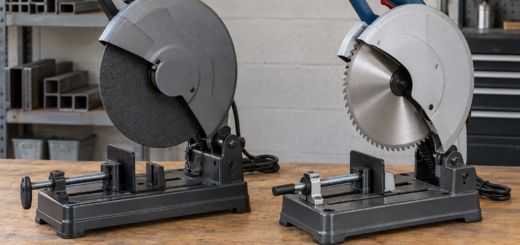
For the lowest purchase price, compare 14-inch abrasive metal-cutting chop saws. These are the sensible budget pick when a rough cut is acceptable and you will clean the ends with a grinder. Most use 14-inch wheels with a 1-inch arbor and cut roughly 4-1/2 inches of square tube or 5 inches of round stock, depending on the exact machine and material.
When an abrasive chop saw is the right bargain
An abrasive saw is hard to beat for a home welding table, trailer repairs, garden equipment, and general steel fabrication. Wheels are commonly available for about $3-$8 each, and the saw itself often costs less than one replacement carbide blade for a metal-cutting circular saw. The motor is simple, replacement parts are widely available, and the vise usually accepts common shapes without special accessories.
The trade-off is mess. An abrasive wheel removes material as grit, throws sparks, heats the work, and leaves a burr. Thin-wall tubing can discolor or distort at the cut. Expect to spend 10-20 seconds dressing each end with a flap disc or grinder. Never use an abrasive chop saw near sawdust, solvent, cardboard, or other flammable material; the spark stream can travel several feet.
Cheap machines often fail in predictable ways: the fence is not square, the vise flexes, or the pivot develops play. Check the cut with a combination square before fabricating a full frame. If the saw cuts 2 degrees out of square, a 24-inch frame can be several millimeters out of alignment. A better fence and a rigid work stand can matter more than a small difference in motor rating.
When to pay more for a carbide metal-cutting saw
If you cut visible furniture parts, shelving components, or many pieces of thin-wall tube, a metal-cutting circular saw is worth considering. Carbide-tooth blades produce a narrower kerf, less heat, and a more usable edge. They are also much quieter than abrasive saws and generally throw fewer sparks, although they are not spark-free.
The cost calculation is different. A quality blade may cost $40-$100, and hitting a hidden weld, hardened fastener, or dirty workpiece can damage it. These saws reward steady feed pressure and proper support. Twisting the saw in a cut can chip teeth or bind the blade. They are excellent for sheet and tube, but a budget abrasive saw is usually cheaper for thick solid bar or occasional rebar work.
A portable bandsaw is another useful middle ground. It is slower than a chop saw but produces controlled, relatively cool cuts and can reach stock that will not fit under a chop-saw guard. A bandsaw stand makes it more useful in a shop, but the stand adds cost. For one-off jobs, a basic portable unit held securely with both hands may be enough; do not improvise a stand that allows the trigger to lock on unattended.
How to compare brands and real ownership cost
At the budget end, brand differences often show up in the vise, pivot bearings, switch, and warranty rather than raw cutting power. A recognizable tool brand may cost $30-$70 more but offer a better fence and replacement parts. This is worthwhile if you expect to use the saw monthly. For a single railing repair or a few cuts each year, a cheaper saw can be perfectly adequate if you square the fence, clamp the material tightly, and inspect the wheel before use.
Look for a quick-adjust vise, a fence with positive angle stops, a steel base that does not rock, and a guard that returns smoothly. Avoid listings that emphasize an inflated no-load speed while omitting cut capacity or arbor size. Check whether the price includes a blade or wheel, because a seemingly cheaper tool may need an immediate replacement.
For abrasive saws, budget for a pack of wheels and a face shield. For carbide saws, budget for at least one spare blade. Add the cost of a stable stand, clamps, and a deburring wheel when comparing complete setups. A $120 saw that needs $80 in accessories can be more expensive than a $170 kit with a usable vise and stand.
When to buy and how to avoid a false bargain
Tool prices commonly dip around Memorial Day, July 4th, Labor Day, Black Friday, and the holiday period. Retailers also discount metal-cutting tools during spring garage and outdoor-project promotions. Compare the actual price history when possible; a “sale” price is not useful if the same saw was cheaper two months earlier.
Watch for bundles that include extra abrasive wheels, clamps, or a stand rather than low-value accessories. A factory-reconditioned saw from a reputable brand can be a strong buy, but confirm the return period and warranty. Skip used units with a cracked guard, bent base, loose pivot, damaged power cord, or a vise that will not hold square.
Safe setup matters more than a small price difference
Secure the saw to a noncombustible bench or stand, support long stock on both sides, and clamp the work close to the cut. Let the wheel reach full speed before feeding it gently; forcing the cut overheats the motor and can shatter a damaged wheel. Keep the offcut from pinching the blade, and wait for the wheel to stop before lifting the head.
Wear eye and hearing protection, long sleeves, and a face shield over safety glasses. With an abrasive model, direct sparks away from walls, vehicles, gas cylinders, and combustible debris. These precautions make an inexpensive saw useful without turning its low price into a false economy.