Best Affordable Moisture Meter for Home Renovation Checks
What's inside
As an Amazon Associate I earn from qualifying purchases. This post may contain affiliate links at no extra cost to you.
A moisture meter is a cheap form of insurance during a renovation. It can reveal a damp subfloor before new flooring goes down, identify a wet drywall patch after a plumbing leak, or show that framing lumber is not ready to close behind insulation. The best affordable moisture meter for most homeowners is a basic pin-type meter with a readable display and separate wood and building-material settings.
You do not need laboratory accuracy for ordinary renovation checks. You need repeatable readings, a way to compare a suspicious area with a known-dry area, and probes that reach beneath the surface. Spending $25 to $60 is usually enough. The right choice depends more on the material and job than on the highest percentage shown on the screen.
As an Amazon Associate we earn from qualifying purchases at no extra cost to you.


What a Moisture Meter Can and Cannot Tell You
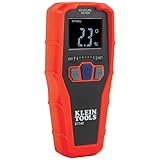
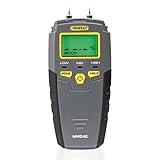
Pin meters measure electrical resistance between two metal probes. Wet material conducts electricity more easily than dry material, so the meter estimates moisture content. They are useful on lumber, drywall, plaster, subfloors, and some masonry, but the result is not a universal “percent wet” number.
Wood readings are generally the most meaningful. A framing board around 12% to 16% moisture is commonly suitable for indoor work, while readings above 20% deserve investigation before covering the material. Flooring manufacturers often specify limits around 12% to 14% for wood products, but always follow the flooring instructions.
Drywall and masonry meters use different scales or reference ranges. A reading of 25 on one meter may not equal 25 on another. Treat these readings as comparative: test the suspected wet area, then test several feet away or on a similar dry-looking surface. A sharp difference is more useful than an isolated number.
Pin Versus Pinless Meters
| Type | Best use | Advantages | Limitations |
|---|---|---|---|
| Pin | Drywall, lumber, trim, subfloors | Measures at probe points; inexpensive; better for locating a damp spot | Leaves small holes; probes may be short or fragile |
| Pinless | Fast scanning of walls and floors | No holes; covers a wider area quickly | Can be affected by metal, wiring, thickness, and surface conditions |
| Combination | Leak checks and renovation surveys | Scans quickly, then confirms with pins | Costs more; pinless readings still need careful interpretation |
For a first renovation meter, choose a pin moisture meter for wood and drywall. A pinless meter is more convenient when you are checking finished walls or a large floor, but it cannot distinguish moisture from every other material hidden behind the surface. A combination meter is worthwhile for repeated leak investigations, not essential for hanging one room of drywall.
Features Worth Paying For
Look for separate settings for wood and building materials. Even inexpensive meters often include both, and the setting matters. A wood scale used on plaster can produce a misleading number. Automatic shutoff, a backlit display, and a protective cap are useful but secondary.
Replaceable or reinforced pins are more valuable than Bluetooth, phone apps, or a long list of exotic material modes. The probes take abuse when pushed into old framing, painted surfaces, or construction debris. Some meters include pin extensions or a remote probe cable; that is helpful when checking insulation cavities or reaching behind cabinets.
Temperature compensation is a useful bonus for wood, particularly in an unheated garage. It does not make a low-cost meter laboratory-grade. Also check the measuring range. A wood range that stops at 40% or 50% is adequate for most work, but a meter that simply displays “high” above its limit is less informative after a major leak.
Consider buying replacement moisture-meter pins and probes if you expect to use the tool regularly. A $30 meter with replaceable probes can be a better long-term value than a slightly cheaper sealed unit.
Budget Picks by Job
For occasional checks before painting or installing trim, a basic pin meter costing roughly $20 to $35 is fine. Choose one with a clear display and wood/building-material modes. The cheaper option is also adequate for finding whether a drywall repair area is still wetter than the surrounding wall.
For flooring installation, spend closer to $35 to $60 and favor a meter with a stated wood range, calibration or reference instructions, and sturdy probes. Flooring failures are expensive: trapped moisture can cause cupping, buckling, adhesive failure, mold growth, or delamination. A basic meter is still useful, but do not use it as permission to install when the flooring manufacturer requires a specific test method.
For repeated leak tracing, a pinless moisture meter for walls and floors speeds up scanning. If the tool shows a suspicious area, confirm it with a pin meter or another diagnostic method. A pinless meter can react to metal studs, pipes, foil-backed insulation, and wiring, producing a high reading that is not simply “wet drywall.”
How to Get Useful Readings
Start with a dry reference. Test three to five nearby areas that appear normal, then test the suspect location. Record the readings and location. A wall reading of 18 may be unremarkable in one house and highly unusual in another, while a jump from 10 to 28 over a short distance is a strong clue.
Push both pins to the same depth and keep them aligned with the material. Surface paint, joint compound, dust, and metal fasteners can distort results. On drywall, test away from screws and corner bead. On wood, take readings across the grain when possible and avoid knots, end grain, and visibly damaged sections unless you are specifically investigating them.
Do not test immediately after cleaning, steaming, or applying primer. Wait for the surface to reach normal room conditions. Take readings at several heights around a suspected leak: moisture often rises from a wet floor or appears below a window, while plumbing leaks may create a concentrated vertical path.
When to Buy and When to Upgrade
Moisture meters are commonly discounted during spring renovation sales, summer home-improvement promotions, and November deal events. Prices often drop by 10% to 25%, but cheap meters are available year-round, so do not delay an urgent leak check for a sale. Compare the warranty, probe design, and included instructions rather than chasing the lowest price.
Upgrade when you repeatedly diagnose leaks, work with hardwood flooring, inspect basements, or need non-destructive scanning. Stay with a basic pin meter when you only need to compare wet and dry areas during small repairs. No affordable meter replaces fixing the water source, allowing materials to dry, or following flooring and paint manufacturers’ moisture limits.