Best Value Power Tool Brands: What You Really Give Up Going Cheaper
Our Top Picks
 DEWALT 20V MAX Cordless Drill and Impact DriverOne Size15.06 x 6.4 x 9.88 inches3.6 PoundsCheck on Amazon
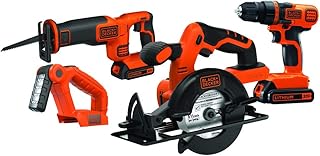
 BLACK+DECKER 20V MAX* POWERCONNECT Cordless Drill Driver KitDrill Project Kit15.5 x 5.6 x 14.4 inches6.1 poundsCheck on Amazon


What's inside
- What another tier of price actually buys
- The field at a glance
- Ryobi ONE+ is the value answer for homeowners
- Craftsman and Skil suit narrower cases
- Metabo HPT: the underrated mid-tier
- Where budget brands genuinely fall short
- Where they are absolutely fine
- The hybrid strategy
- Mistakes that cost the most
- FAQ
- Related Guides
- What another tier of price actually buys
- The field at a glance
- Ryobi ONE+ is the value answer for homeowners
- Craftsman and Skil suit narrower cases
- Metabo HPT: the underrated mid-tier
- Where budget brands genuinely fall short
- Where they are absolutely fine
- The hybrid strategy
- Mistakes that cost the most
- FAQ
- Related Guides
As an Amazon Associate I earn from qualifying purchases. This post may contain affiliate links at no extra cost to you.
Brand snobbery is expensive. Plenty of people buy professional-tier tools to hang shelves twice a year. But budget brands do have real limits, and knowing where those limits sit is how you spend well. The useful question was never which badge wins a spec-sheet argument. It is what you actually give up going cheaper, and whether you will ever be standing in a position to notice.
Read any list of the best value power tool brands as a map rather than a ranking. Every brand on the shelf has a wall somewhere. Ryobi’s is sustained heavy use, Craftsman’s is cordless range depth, Bosch’s is US cordless range, Milwaukee’s is price. Value means buying the brand whose wall sits comfortably past the way you actually work, and paying nothing for the distance beyond it.
As an Amazon Associate we earn from qualifying purchases at no extra cost to you.



What another tier of price actually buys
Nearly all of the difference between a budget tool and a premium one lands in four places. They are worth naming separately, because they do not matter equally, and they do not matter equally on every tool.
- Duty cycle. How long the tool keeps working hard before heat becomes the limiting factor. This is the biggest honest gap between tiers, and the one most homeowners never test.
- Precision and rigidity. Fence flatness, base stiffness, detent accuracy, bearing quality, how much the tool moves under load. It shows up in the cut, not on the box.
- Platform depth. How many tools run on batteries you already own, and how cheap spare packs are. This is the largest lever on lifetime cost for a homeowner, and it has little to do with tool quality.
- Service and parts. Year three onward: switches, triggers, brushes, cords, and whether you can still buy a pack that fits. Warranty text reads similar across tiers; turnaround and parts availability are where they separate.
Now weigh those against each other, which is the step most buying guides skip. Duty cycle only pays you back if you genuinely run tools hard for hours at a stretch. Precision pays back on any tool that establishes a reference edge or angle, which is why saws and routers deserve more of your budget than drills do. Platform depth pays back for every homeowner, always, because packs and chargers are the real cost of going cordless. Service matters most on tools you expect to still own in a decade.
The common mistake is applying one weighting to the entire shop. You do not need trade-grade duty cycle on a sander, and you should not accept a wobbly fence on a miter saw because the badge is premium. Choose per tool, not per garage.
The field at a glance
Here is the shape of the market, with each brand’s weak spot sitting next to its strength instead of buried under it.
| Brand | Price tier | Range | Best for | Weak spot |
|---|---|---|---|---|
| Ryobi ONE+ | Budget | Very large | Homeowners, yard + shop | Sustained heavy use |
| Craftsman | Budget | Moderate | Homeowners, hand tools | Cordless range depth |
| Skil | Budget | Moderate | Occasional DIY | Professional durability |
| Metabo HPT | Mid | Good | Nailers, saws | Brand awareness in US |
| Bosch | Mid–premium | Moderate | Routers, jigsaws | US cordless range |
| DeWalt | Premium | Largest | Everything | Warranty length |
| Milwaukee | Premium | Very large | Trades | Price |
Ryobi ONE+ is the value answer for homeowners
Over 300 tools on one battery, cheap packs, and coverage that extends to lawn mowers, blowers and inflators. For a homeowner maintaining a house and a yard, nothing else comes close on cost per tool. It is not built for eight-hour days — but most homeowners never ask it to be.
The reason it works is arithmetic more than engineering. Once the packs and charger are paid for, every tool after that is a bare-tool price, and the yard equipment rides on the same batteries as the shop tools. Premium platforms rarely match that, because premium outdoor equipment is priced like premium outdoor equipment.
Inside the range, good picks separate from bad ones on three things: brushless rather than brushed on anything that works hard, pack capacity rather than pack count in a kit, and whether the tool is a real design or a shape filling a gap in the lineup. Higher-capacity batteries do more for a budget tool than a premium one, because they run cooler at the same load. Skip Ryobi where you need a trustworthy fence, a long continuous run, or a trade-specific tool that is not made at this tier at all.
Ryobi ONE+ kits
One battery covers drills, saws, sanders, string trimmers, blowers and inflators. That breadth is the real value story.
Craftsman and Skil suit narrower cases
Craftsman is still a genuinely good hand tool brand, and the lifetime warranty on those pieces is one of the easiest value propositions in the aisle — a wrench that gets replaced when it breaks is cheap regardless of what you paid. The cordless side is thinner than the big three, so treat it as a reasonable platform for a homeowner who wants a drill, a driver, a sander and a couple of yard tools, and a weak bet if you expect the range to keep growing underneath you.
Skil is the occasional-DIY brand, and often the cheapest way to own a category at all. It is not built for professional durability, which means the failure mode is rarely a bad cut on day one — it is a tool that quits sooner than a better one would. If a category matters to you weekly, buy up. If it matters twice a year, this tier is the honest answer and the premium version is a donation.
Metabo HPT: the underrated mid-tier
Formerly Hitachi, still making excellent nailers and saws, and priced below the premium brands because the US brand awareness never fully transferred. If you can live without brand recognition, there is value here.
That gap between reputation and capability is where mid-tier value lives in general. You are paying for the tool instead of the badge, and the trade is thinner shelf presence, fewer promo bundles, and a range that does not cover every category. For a buyer who picks tools one at a time on merit, that is a good deal. For someone who wants one platform to buy everything from, it is a harder sell.
Bosch belongs in the same conversation
Bosch sits a notch higher and earns it in specific categories — routers and jigsaws especially, where base design and vibration control decide whether the cut is clean. Its weak spot in the US is cordless range: good tools, fewer of them. Buy Bosch as the category specialist that outperforms its price, not as the battery ecosystem you build a shop around.
Metabo HPT tools
Their nailers in particular have a strong reputation with framers who do not care about badge prestige.
Where budget brands genuinely fall short
- ✘ Sustained heavy load — motors and packs run hot
- ✘ Precision categories like miter saws where fence quality matters
- ✘ Trade-specific tools that simply are not made at this tier
- ✘ Service network and parts availability after three years
Three of those are performance limits and the last is the one that surprises people. Heat is the real constraint: hold a budget motor and pack at high load and output sags while the battery ages faster than you expected. Precision is the second, and it is concentrated exactly where cost gets cut. The service point is quieter — a tool shipped away for weeks is functionally a tool you no longer own, and parts for older budget models can vanish. If a tool is central to how you work, ask what year four looks like before you ask what today costs.
Where they are absolutely fine
- ✔ Sanders, shop vacs, work lights, inflators
- ✔ Occasional-use tools of any kind
- ✔ Outdoor power equipment for a normal yard
- ✔ Second tools that duplicate something you already own
The pattern there is low duty cycle, low precision demand, or low consequence when the tool eventually dies. A work light and a shop vac have almost no performance ceiling to hit. A sander is limited by the paper more than the motor. And a duplicate tool exists to save you a walk across the shop, not to do the hard work.
The hybrid strategy
Plenty of experienced people run a premium platform for the four tools they use constantly, and a budget platform for the twenty tools they use twice a year. It sounds undisciplined and it is actually the most cost-effective approach for a well-equipped home shop.
The trick is choosing the premium four honestly. They are the tools you reach for without thinking, the ones you run under load, and the ones where a bad result wastes material. For most people that means the drill and driver pair, whatever saw does the cutting, and one tool specific to the work they actually do. Lights, vacs, inflators, yard equipment and occasional specialty tools go on the cheap platform without guilt.
Two platforms is the limit worth accepting; three is how people end up with a shelf of orphan batteries. Keep the direction of travel one-way: start budget, notice what you keep grabbing, then upgrade only that. Replacing a tool you wore out is a decision backed by evidence. Buying premium first is a guess with a receipt.
Mistakes that cost the most
- Buying a tier by identity instead of by tool. “I’m a Milwaukee guy” is a spending plan, not a strategy.
- Judging a kit by the sticker instead of the contents. Pack capacity, charger speed and whether the case holds anything you need change the value more than the headline discount.
- Going cheap on the one tool you use every week. That is the single place where the duty cycle gap actually bills you.
- Going premium where there is no ceiling to reach. Nobody has ever outrun a work light.
- Ignoring what the tool consumes. Blades, paper, bits and specialty accessories can outspend the price difference between tiers within a year.
FAQ
Is Craftsman still good? Hand tools yes, and the lifetime warranty on those remains genuinely useful. Cordless range is thinner than the big three.
Do budget tools have worse warranties? Usually three years, comparable on paper. The difference shows in service turnaround.
Should a beginner buy budget? Yes. Learn what you use often, then upgrade only those tools.
Are DeWalt or Milwaukee worth the premium for a homeowner? For the two or three tools you use constantly, often yes. DeWalt has the largest range, so it is the easier all-in platform; Milwaukee is built around the trades and priced accordingly, which is why it makes more sense as a few chosen tools than as a whole-shop commitment.
Spend where the work is hard and the tolerances are tight. Save everywhere else, and let the cheap platform carry the tools that only need to start.
Compare brand prices →