Best Electric Pressure Washers for Small Homes
What's inside
As an Amazon Associate I earn from qualifying purchases. This post may contain affiliate links at no extra cost to you.
The best electric pressure washers for small homes are compact 1,700–2,000 PSI models with roughly 1.2–1.5 GPM, a hose of at least 20 feet, and a design that can be stored upright without sacrificing useful reach.
For most small properties, the best all-round choice is a compact corded washer in the 1,800–2,000 PSI class. It has enough practical cleaning power for patios, siding, cars, bins, steps, and garden furniture, while avoiding the bulk, noise, and storage demands of a large gas machine. The right model depends less on its maximum PSI figure than on hose length, water flow, nozzle control, and how easily you can move it around a small yard.
As an Amazon Associate we earn from qualifying purchases at no extra cost to you.
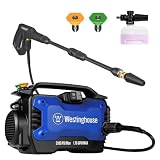

Quick picks by small-home situation
- Best all-rounder: A Greenworks 2,000 PSI electric pressure washer, typically offering around 1.2 GPM, is a useful balance of compact size, cleaning power, and general-purpose accessories.
- Best for mixed surfaces: The Sun Joe SPX3000 offers selectable pressure settings and multiple spray tips, making it practical when one machine must clean cars as well as concrete and siding.
- Best for easy storage: A compact 1,700–1,800 PSI washer from Ryobi or a similar established brand is usually easier to lift onto a shelf or store in a narrow utility space.
- Best for frequent patio cleaning: Choose a 2,000 PSI-class unit with a 1.3 GPM or higher flow rate and add a compatible surface cleaner rather than choosing a larger machine solely for a higher advertised PSI.
- Best budget approach: A basic 1,600–1,800 PSI corded washer is sufficient for cars, outdoor furniture, fencing, and light dirt. Expect general market prices of roughly $100–$180, depending on accessories and seasonal discounts.
What matters most in a small home
Storage footprint and portability
Measure the space where the washer will actually live, not just the space beside the front door where it may sit temporarily. Many compact machines occupy about 12–16 inches in width and 18–24 inches in depth, but hose reels, handles, and removable detergent bottles can add several inches.
Vertical storage is particularly valuable in a small shed or garage. Look for an upright frame, an integrated handle, onboard nozzle storage, and a hose reel or hooks. A machine weighing around 15–25 pounds is manageable for most people to carry between a utility room and a patio. Wheels help on level ground, but they do not make a bulky washer convenient on steps.
Hose reach is more important than a small PSI difference
A short high-pressure hose forces you to move the washer repeatedly, which is inconvenient around walls, parked cars, and planted borders. For a small home, a 20-foot hose is a practical minimum; 25 feet is more comfortable if you need to reach the far side of a patio or wash a vehicle without dragging the machine across the driveway.
Also consider the garden hose. A 25-foot pressure hose does not help if the water supply hose reaches only the nearest outdoor tap. A 25–50-foot, 5/8-inch garden hose can give much better positioning flexibility. Keep the electric pressure washer itself close enough to the outlet that you do not need a long chain of extension cords.
Water flow determines working speed
PSI describes pressure, while GPM describes water flow. PSI helps break dirt loose; GPM helps rinse it away. A compact washer producing 1.2 GPM at 1,800 PSI can be more useful for routine work than a machine advertising a very high peak PSI but delivering weak working flow.
For cars and siding, approximately 1.1–1.3 GPM is adequate. For patios, steps, and heavily soiled concrete, 1.3–1.6 GPM will usually reduce rinsing time. Do not assume that a larger flow rate is always better: it uses more water and requires a suitable household supply. A standard outdoor tap commonly supplies enough water for compact electric models, but a restricted or partially closed tap can make any washer perform poorly.
Compact electric pressure washer comparison
| Type or example | Working pressure | Water flow | Typical hose | Approx. weight | Best use |
|---|---|---|---|---|---|
| Basic compact corded washer | 1,600–1,800 PSI | 1.1–1.3 GPM | 20 ft | 15–20 lb | Cars, furniture, bins, light siding |
| Greenworks compact 2,000 PSI class | Up to 2,000 PSI | About 1.2 GPM | 20–25 ft | 20–25 lb | General small-home cleaning |
| Sun Joe SPX3000 | Up to 2,030 PSI | Up to 1.76 GPM | 20 ft | About 32 lb | Patios, vehicles, siding, varied nozzles |
| Compact Ryobi electric washer | Approximately 1,800 PSI | About 1.2 GPM | 20 ft | About 20–25 lb | Easy transport and routine maintenance |
| Heavy-duty electric class | 2,000–2,300 PSI | 1.5–1.8 GPM | 25 ft | 25–35 lb | Frequent concrete and larger paved areas |
Specifications can vary by model number, retailer package, and whether a figure refers to maximum or rated performance. Treat the table as a buying guide, then confirm the exact hose length, included tips, operating PSI, and operating GPM before ordering.
Which pressure washer fits each cleaning job?
Patios and concrete
Use a 25-degree nozzle for general dirt and a 15-degree nozzle for stubborn marks, keeping the tip moving continuously. A compact 1,800–2,000 PSI unit can handle a small patio, but a surface cleaner is often the biggest improvement. It keeps the spray height consistent, reduces striping, and limits splashback.
For a 100-square-foot patio, a realistic cleaning pace with a compact washer is roughly 10–20 minutes of active spraying, depending on soil and obstacles. Allow additional time for setup, detergent dwell time, and rinsing.
Siding and fences
Use a wider 40-degree spray or a low-pressure detergent nozzle. Start several feet away and increase the distance only if the surface remains undamaged. High pressure can force water behind siding, remove loose paint, or damage soft wood. Work from the bottom upward while applying detergent to reduce visible streaks, then rinse from the top downward.
Cars
A pressure washer around 1,200–1,800 PSI is usually sufficient for vehicle washing. Use a 40-degree nozzle or an adjustable low-pressure setting, keep the spray moving, and avoid directing water at damaged seals, electrical connectors, or loose trim. A foam or detergent attachment helps loosen traffic film, but it does not replace a clean wash mitt and separate rinse bucket when minimizing scratches matters.
Small yards and outdoor furniture
Compact electric washers are well suited to plastic furniture, planters, wheelie bins, grills after they have cooled completely, and garden tools. Use lower pressure near plants and painted surfaces. Cover delicate electrical components, move loose decorations, and avoid blasting soil out of beds or joints between pavers.
A practical decision matrix
| Your priority | Recommended specification | Why |
|---|---|---|
| Very limited storage | 15–20 lb upright unit, 20 ft hose, onboard tip storage | Easy to lift and less likely to become a storage obstacle |
| First pressure washer | 1,700–2,000 PSI, adjustable or 25/40-degree tips | Forgiving enough for cars and siding but capable on patios |
| Weekly or biweekly use | 1.3 GPM or higher, 20–25 ft hose, replaceable fittings | Better rinsing speed and less repositioning |
| Mostly car washing | 1,200–1,800 PSI with detergent pickup | Reduces the chance of paint and trim damage |
| Mostly concrete | 2,000 PSI class, 1.3–1.6 GPM, surface-cleaner compatibility | Improves productivity on flat hard surfaces |
| Lowest purchase cost | 1,600–1,800 PSI basic model | Enough for light dirt, but expect slower patio rinsing |
Setup and maintenance that protect performance
- Clear the inlet filter. Connect the garden hose and check its screen before switching on the motor. Sediment restricts flow and can damage the pump.
- Purge air from the system. Turn on the tap, hold the spray-gun trigger until water flows smoothly, and only then start the washer. This prevents the pump from running dry.
- Use the correct nozzle. Begin with the widest spray and a distant test area. Move closer only when the surface tolerates it.
- Rinse detergent passages. Run clean water through the detergent system after use. Dried soap can block the pickup tube and bottle connection.
- Drain before storage. Release pressure from the gun and hose, disconnect the water supply, and store the unit where it will not freeze. Frozen water can split pump and hose components.
- Inspect the first-wear parts. O-rings, quick-connect fittings, inlet screens, spray tips, and high-pressure hoses usually need attention before the motor does. Replace damaged seals rather than forcing leaking connections tight.
Common mistakes include using a zero-degree tip on painted surfaces, running the pump without water, leaving detergent in the machine, and assuming a longer extension cord is harmless. If an extension cord is unavoidable, use a heavy-duty outdoor-rated cord of the correct gauge, keep connections dry, and follow the washer’s manual. A nearby grounded outlet is safer and usually preserves performance better.
Bottom line
For most small homes, choose a compact corded pressure washer rated around 1,800–2,000 PSI with at least 1.2 GPM, a 20-foot or longer high-pressure hose, onboard storage, and a wide selection of nozzles. Select a lighter 1,600–1,800 PSI model when cars and furniture are the main jobs. Choose the higher-flow 2,000 PSI class when patio cleaning is frequent. The best electric pressure washesr for small homes is not the one with the largest headline number; it is the one you can store easily, position without constant hose changes, and operate gently enough for every surface you need to clean.