Best Budget Plasma Cutter for Light Metal Fabrication
What's inside
As an Amazon Associate I earn from qualifying purchases. This post may contain affiliate links at no extra cost to you.
A budget plasma cutter makes sense for light fabrication: cutting sheet-metal brackets, trimming rusty panels, or turning scrap plate into small parts. The purchase price is only part of the cost. A cutter also needs a suitable air supply, a circuit that can support it, and consumables you can replace without a long wait.
For occasional work on mild steel up to about 1/4 inch thick, a basic 30–40 amp machine is usually the value point. It can cost less and run on ordinary shop power, but it will cut more slowly and less cleanly than a larger machine. If your regular work is closer to 3/8 inch, compare higher-output units instead of expecting a budget cutter to perform at its advertised maximum all day.
As an Amazon Associate we earn from qualifying purchases at no extra cost to you.



What to buy for light fabrication
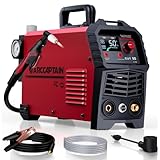
Look for a cutter with a clearly stated input voltage, output amperage, recommended cutting thickness, duty cycle, and air-pressure range. A claim such as “cuts up to 1/2 inch” often describes a slow separation cut, not a clean edge suitable for fitting parts. For everyday work, judge the machine by its rated clean-cut thickness and its duty cycle at the amperage you will actually use.
A non-pilot-arc machine can be a sensible low-cost choice if you cut clean, flat steel by touching the torch to the work. A pilot-arc design starts the arc without needing the tip to touch the metal, which is useful on painted, rusty, or expanded material. That feature typically costs more and adds complexity; it is not essential for clean sheet and plate in a home shop.
Compare 120V 30-amp plasma cutters if portability and access to standard outlets matter most. Consider dual-voltage 40-amp plasma cutters if you have a 240V circuit available and want more headroom for thicker steel. A dual-voltage label does not mean the unit delivers the same output on both supplies: check the manual’s amperage and cut ratings for each voltage.
Compare by the work you do
| Type | Best fit | Main trade-off |
|---|---|---|
| 120V, roughly 30 amps | Thin sheet, small repairs, portable work | Lower output; may trip a marginal circuit at high settings |
| Dual-voltage, roughly 40 amps | Mixed light fabrication and occasional thicker plate | Needs an appropriate 240V supply to reach its stronger output |
| Higher-output 240V unit | Frequent cutting or sustained work on thicker stock | Higher purchase cost and greater demands on the circuit and air supply |
These are broad categories, not guaranteed cut capacities. Actual results depend on alloy, surface condition, consumables, air quality, travel speed, and the machine’s rating. A cutter that can sever 1/2-inch plate may struggle to make a straight, clean cut through it.
Check air and power before ordering
Many low-cost cutters need a separate compressor. Check the tool’s specified air pressure and flow requirement, usually stated in PSI and cubic feet per minute (CFM). Match the requirement to the compressor’s delivered CFM at the stated pressure, not its tank size or an optimistic displacement figure. A small compressor may run the torch briefly, then fall behind; falling pressure can cause an unstable arc, rough edges, or frequent shutdowns.
Use a water separator and keep the air line dry. Moisture and oil shorten consumable life and can make the arc erratic. If you already own a compressor, verify it can sustain the required flow before buying the cutter. If you do not, price the compressor, regulator, and fittings into the budget rather than comparing machines on sticker price alone.
For electrical supply, read the manual and follow its requirements for breaker size, plug, and wiring. A 120V machine may be convenient but can be constrained by a shared 15-amp circuit. A 240V machine needs the right outlet and circuit; do not solve a mismatch with an improvised adapter or undersized extension cord. Long or undersized cords can cause voltage drop and poor performance.
The costs that show up after the purchase
Consumables are the recurring expense. Electrodes and nozzles wear faster if you drag the tip, use too much air pressure, cut dirty metal, or keep cutting after the electrode is spent. Before choosing a brand, search for replacement consumables for the exact torch included and check whether they are readily available. A cheap machine with hard-to-find tips can be a worse value than a slightly pricier unit with common parts.
Ask what is included: ground clamp, torch, air regulator or filter, starter consumables, and any transport case. Also check the warranty terms and service route. A longer warranty is less useful if the seller cannot supply parts or explain how to make a claim. For a basic unit, weigh those details against the cost of an entry-level replacement plasma-cutter consumables kit, and confirm that the kit matches the torch rather than relying on a look-alike.
When to spend more—and when not to
Buy the cheaper 120V option if you cut thin material occasionally, already have a suitable circuit and compressor, and can accept slower travel or some cleanup. For small brackets and repair patches, grinding a modest amount of dross off a cut edge may be perfectly reasonable. Paying for extra output does not help if your outlet or air supply cannot support it.
Spend more for a 240V dual-voltage or higher-output machine if you often cut near the unit’s maximum, need cleaner edges on thicker stock, or work long enough for duty cycle to matter. Duty cycle is the share of a ten-minute period the cutter can run at a stated output before it needs to cool. For example, a 40% duty cycle means four minutes of cutting and six minutes of cooling at that rating. A higher figure can matter more than a small increase in peak amperage during a long job.
For seasonal buying, compare the delivered price rather than the headline discount. Around major sales periods, check whether the machine’s normal price has changed, and include shipping, consumables, and any compressor or circuit work in the total. A practical budget cutter is the one that matches your actual material thickness and shop utilities—not the one with the largest number printed on the box.