Best Affordable Tool Set for a First-Time Homeowner
What's inside
As an Amazon Associate I earn from qualifying purchases. This post may contain affiliate links at no extra cost to you.
What a first-home tool set should include
A starter kit is for hanging shelves, assembling furniture, tightening loose hardware, and handling small repairs—not remodeling a kitchen. The best value is usually a compact, decent-quality core set plus a few inexpensive tools bought separately. Large boxed kits often look like a bargain because they contain dozens of bits and sockets you may never use.
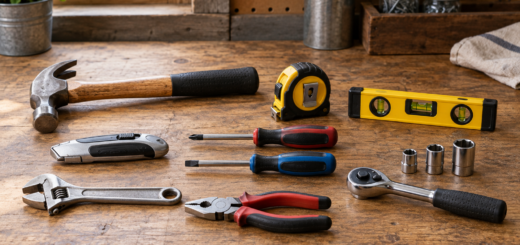
Start with a tape measure, utility knife, adjustable wrench, combination pliers, screwdrivers or a bit driver, a hammer, a level, and a small socket set. A cordless drill is useful, but it is not essential for every homeowner; for occasional picture hooks and flat-pack furniture, a hand screwdriver can do the job. If you expect to install blinds, curtain rods, or shelving, a drill is worth prioritizing.
As an Amazon Associate we earn from qualifying purchases at no extra cost to you.

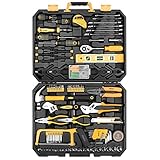

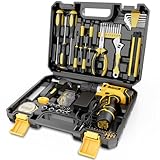
One practical first purchase is a homeowner hand-tool set. Check the actual tools in the case before buying. A set with 100 pieces may count every screwdriver bit separately, while omitting a useful tape measure or having pliers too small for common household tasks.
Where the money goes
Prices vary by brand, sale, and kit contents, so use these ranges as a buying guide rather than a promise of current pricing. A sensible starting budget is roughly $60–$150 for hand tools. Add about $70–$150 for a basic drill and battery, or more if you choose a higher-capacity battery or a kit that includes extra accessories.
| Purchase | Typical budget range | Good value when | Common compromise |
|---|---|---|---|
| Basic hand-tool set | $25–$60 | You need an inexpensive household starter kit | Small pliers, weak case, or missing useful basics |
| Better hand-tool set | $60–$120 | You expect regular small repairs | Still may include filler bits or tools you do not need |
| Basic cordless drill kit | $70–$150 | You will drill pilot holes or drive screws often | Small battery or limited runtime |
| Separate measuring and safety tools | $20–$50 | You want to fill gaps in a kit | Requires checking compatibility and quality yourself |
These are broad street-price ranges, not exact quotes. A sale can bring a reputable brand’s basic kit close to an entry-level alternative. Compare the included battery, charger, warranty, and replacement availability—not just the tool count.
How to compare brands without overpaying
For hand tools, brand consistency matters less than the specific tool’s fit and build. A budget wrench is fine for tightening a loose faucet handle now and then; it is a poor choice if its jaws slip on a stubborn fastener. Before buying, check that adjustable-wrench jaws close without a noticeable gap, plier jaws meet evenly, and screwdriver tips are not visibly rounded. A basic hand-tool kit with hammer, pliers, and wrench is a reasonable starting point if its contents cover those essentials.
For cordless tools, staying within one battery platform can save money later. If you already own a compatible battery and charger, a bare tool may cost less than a full kit. If you own none, compare the complete package price: drill, battery, charger, and case. For occasional work, a compact drill with a 1.5–2.0 amp-hour battery is generally enough for household projects. Heavy drilling or repeated use will drain that battery sooner; a larger battery adds runtime but also weight and cost.
A cordless drill-driver kit with battery and charger is more useful than a drill sold alone for a first-time buyer. Do not confuse a drill-driver with an impact driver: the latter drives screws well but is not a substitute for a drill when making clean holes. For most first homes, a basic drill-driver is the more versatile first tool.
What you can skip—and what not to skimp on
Skip oversized bit assortments, duplicate screwdrivers, and specialty tools until a specific job calls for them. A kit with 30 driver bits is not much use if the two Phillips bits you need wear out quickly. Buy a small replacement bit set when needed instead of paying upfront for every possible size. A stud finder is helpful for heavy shelves and wall-mounted fixtures, but you can postpone buying one if you are not doing those jobs yet.
Do not skimp on eye protection, a stable step stool, or the correct wall anchor. A screw driven into drywall alone may pull out under the load of a shelf; use an anchor rated for the load or fasten into a stud. Check the anchor package’s stated capacity, and remember that the wall material and installation matter. For drilling, use the bit type suited to the surface, keep the drill straight, and avoid forcing it if the bit binds.
A cheap tape measure is acceptable for occasional measuring, but a loose or damaged hook can throw measurements off. Check that the hook moves slightly to account for inside and outside measurements and returns to the same position. A 16- or 25-foot tape is enough for most rooms; the longer version is convenient for measuring spaces alone but costs more and can be heavier.
When to buy and how to avoid a false bargain
Tool sales often cluster around major holiday weekends, spring home-improvement season, and year-end clearance. Prices and bundles change, so compare the same kit across a few retailers and check whether the sale includes a battery or only the bare tool. A low advertised price can become less attractive once a separate charger and battery are added.
Buying everything at once is rarely the cheapest approach. Get the core hand tools first, then buy a drill when a real job requires one. Keep receipts and inspect the tools promptly: a slipping wrench, crooked level vial, or drill chuck that will not hold a bit is easier to return before the return window closes. Store tools dry, wipe off dirt, and avoid leaving batteries in extreme heat or cold. That simple care will matter more than owning a large kit.