Best Affordable Dust Collector for a Small Woodworking Shop
What's inside
As an Amazon Associate I earn from qualifying purchases. This post may contain affiliate links at no extra cost to you.
A small woodworking shop usually needs a dust collector that can serve a table saw, planer, jointer or bandsaw without eating the floor space or the tool budget. For many one-machine-at-a-time shops, a 1-horsepower collector with a 4-inch inlet is the practical starting point. The right buy depends less on the largest advertised airflow number than on the machines you own, the duct layout and whether you can manage fine dust safely.
As an Amazon Associate we earn from qualifying purchases at no extra cost to you.

Start with your machines
Check each tool’s manual for its recommended dust-port size and airflow. A benchtop sander or small bandsaw may work acceptably with a compact collector; a planer or wide-belt sander can make chips faster than a small unit can move them. Most budget collectors are intended to serve one machine at a time. They are not a substitute for a whole-shop system with multiple open branches.
For a basic setup, look at a 1-hp, 4-inch woodworking dust collector. Compare the impeller, filter area, bag capacity, inlet arrangement and replacement-filter availability—not just the motor rating. A collector’s advertised airflow is often measured without restrictive ductwork, so it will move less air once connected to a machine, hose, elbows and filter.
What to buy on a tight budget
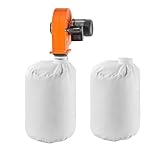
A single-stage collector with a 30-micron felt bag is often the lowest-cost workable option for chip collection. It can keep larger shavings out of the air and is reasonable for occasional use, especially if you work in a separate space and wear a suitable respirator. The trade-off is that it does not capture fine dust as well as a quality pleated cartridge filter. Fine dust can escape through the bag or remain airborne after the machine stops.
If you can stretch the budget, compare collectors with a pleated canister filter. A larger filter area can improve filtration and reduce how quickly the filter clogs, though it does not fix undersized ducting or a poor seal. Check the filter’s stated filtration rating and price before buying. A replacement filter that costs a large fraction of the collector’s price can make a bargain less attractive over time.
| Setup | Good fit | Main drawback |
|---|---|---|
| Compact shop vacuum with separator | Small portable tools, sanding and occasional cleanup | Limited capacity for high-volume chips; hose and filter can clog |
| 1-hp single-stage collector with felt bag | One stationary machine at a time; modest budget | Weaker fine-dust filtration and often a large footprint |
| 1-hp collector with canister filter | Regular use where better filtration and easier cleaning matter | Higher initial cost; still limited by small ducts and long runs |
| 2-hp collector or larger system | Longer duct runs or machines needing more airflow | Higher cost, power needs and space; may be excessive for one small tool |
When a shop vacuum is enough
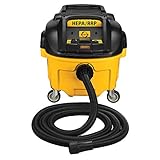
A shop vacuum with a cyclone separator is often the better value for a compact shop built around a random-orbit sander, router or small benchtop tools. It is easier to move, takes up less space and can collect fine debris effectively when paired with an appropriate filter and sealed connections. The separator catches larger chips before they reach the vacuum, helping preserve filter performance.
It is less suited to a planer that produces a large volume of chips. A small vacuum hose can clog, and the vacuum may not provide enough airflow through a machine’s 4-inch dust port. Don’t assume that a powerful-sounding vacuum fixes this: narrow hoses and adapters can become the bottleneck. Use the tool’s recommended port size where possible.
Ducting can make or break the purchase
Keep the run short and use the largest practical smooth duct that matches the collector. Corrugated flex hose is convenient, but long runs and tight bends increase resistance. A few feet of flex at the machine is useful; a shop built entirely from small, ribbed hose can leave a new collector underperforming. Seal loose joints, avoid needless reducers and open only the branch serving the machine in use.
Watch for common failure points: a bag clamp that leaks, a filter loaded with fine dust, a full collection bag, a blocked impeller or a hose that collapses under suction. Empty the bag before it is packed tight and clean filters according to the maker’s instructions. A clogged filter reduces airflow, so a collector that used to clear a saw well may gradually become ineffective.
Safety, running costs and timing
Dust collection helps with chips and airborne dust, but a budget collector is not a guarantee of safe air. Fine wood dust is a health hazard, and some species can cause serious reactions. Wear a properly fitted respirator for dusty work, keep the work area ventilated and clean settled dust with a suitable vacuum rather than blowing it into the air. Avoid collecting hot embers or sparks; a collector and its dust-filled bag can create a fire risk.
Compare the total cost: collector, filter, bags, fittings and any needed electrical work. A cheaper unit can be the sensible choice for intermittent, one-tool use if its limitations match your shop. For regular machining or indoor use, spending more on filtration and a practical duct layout is often better value than buying a larger motor with a poor filter.
Seasonal sales around major holiday weekends and end-of-year clearance can lower prices, but check the delivered price and return terms. Dust collectors are bulky, and shipping can erase a discount. Before ordering, confirm the unit’s footprint, voltage, inlet size and availability of replacement filters. Buying a common configuration from a brand with easy-to-find consumables is usually a safer value than choosing an obscure bargain with no clear filter support.