Best Value Tool Purchases to Make Before a Home Renovation
What's inside
As an Amazon Associate I earn from qualifying purchases. This post may contain affiliate links at no extra cost to you.
Buying tools before a renovation can save money, but only if the tools match the work. A drill that will assemble cabinets is not automatically the right choice for drilling concrete, and an inexpensive saw may be a poor buy if it leaves edges that need hours of cleanup. Start with the project list, then spend on tools that affect safety, accuracy, or repeated work. Rent or borrow the rest.
As an Amazon Associate we earn from qualifying purchases at no extra cost to you.


Start with the work, not the tool aisle
Write down the jobs you expect to do: removing trim, cutting sheet goods, installing drywall, drilling into masonry, or painting. Separate one-time tasks from work you will repeat across several rooms. A tool used for 30 minutes may be cheaper to rent; a tool used every weekend for a month is a stronger purchase candidate.
Check what you already own, including batteries and chargers. Cordless tools from the same battery platform can be a good value, but a bare tool is only a bargain if you have compatible batteries. If you are starting from scratch, compare the price of a kit with the tool-only price plus the batteries and charger you actually need.
Where spending pays off
A reliable drill-driver is useful for pilot holes, screws, and general assembly. For a renovation, a compact 18- or 20-volt kit is usually more versatile than a small household drill, particularly when driving long screws or drilling larger holes. A mid-priced tool is fine for occasional work; paying extra is more worthwhile if you expect sustained use, need a second battery, or want access to a broad range of compatible tools. Compare cordless drill-driver kits by total kit cost, not just the tool’s advertised price.
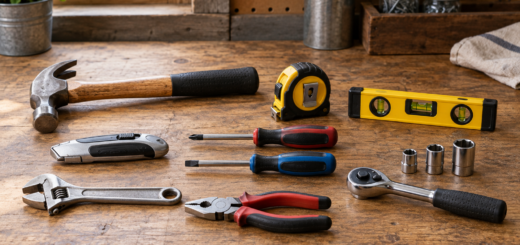
Buy a good tape measure, level, utility knife, and pencil before buying specialty power tools. These are inexpensive, but errors in measuring or layout can waste full sheets of plywood or put cabinets out of level. A 25-foot tape covers most room measurements. For longer spans, have someone hold the other end rather than trusting the hook alone.
For repeated straight cuts in plywood, a circular saw and a clamped straightedge can deliver good results without the price and storage needs of a table saw. Budget saws are adequate for occasional cuts, but check that the base stays square and the blade depth adjusts securely. A dull or rough blade can tear veneer and make a cheap saw seem worse than it is. If you need cleaner finish cuts, budget for a better blade rather than assuming the most expensive saw is necessary. Browse circular saw options alongside blade and guide costs.
Spend, save, or rent?
| Tool or category | Value choice | When to spend more | When to rent or skip |
|---|---|---|---|
| Drill-driver | Mid-priced cordless kit with two batteries | Frequent use, demanding drilling, or a platform you plan to expand | Skip a premium model for a few simple assembly jobs |
| Circular saw | Basic saw plus a suitable sharp blade | Many repeated cuts, better dust control, or more accurate adjustment | Rent a table saw for a short run of precise cabinet parts |
| Oscillating multi-tool | Entry-level corded or cordless tool for occasional trim work | Frequent plunge cuts or long work sessions | Borrow it if you only need to undercut one door jamb |
| Floor sander | Rental with fresh abrasives | Usually not a purchase priority for a single room | Rent for a one-time floor job; practice on a less visible area |
| Laser level | Basic cross-line unit for occasional layout | Multiple rooms, long layout runs, or regular trade use | A long level and careful marks may be enough for one shelf |
Rent tools with steep learning curves
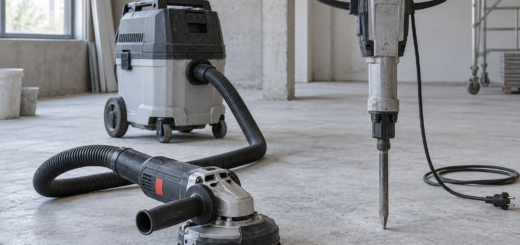
Large sanders, demolition hammers, tile saws, and floor nailers can cost hundreds of dollars, then sit unused. Rental is often the better value for a single job, even after paying for blades or abrasives. Ask what consumables are included, whether the rental clock includes pickup and return time, and what replacement charges apply if a blade or drum is damaged.
Renting does not remove the need to learn the tool. A floor sander can leave dips or gouges within minutes if held still, while a demolition hammer can damage plumbing or wiring hidden in a wall. Find out what is behind the surface before cutting or striking, and follow the rental shop’s operating instructions.
Avoid false savings
Do not save money by skipping eye protection, hearing protection, dust control, or the right respirator. Fine dust from cutting concrete, sanding finishes, and removing old materials can be a serious hazard. For renovation work in older homes, check local guidance before disturbing painted surfaces or suspect insulation; ordinary dust masks are not a substitute for proper assessment and controls.
Cheap blades and bits are another common false economy. A low-cost blade may be acceptable for rough framing cuts, but it can chip laminated panels or burn hardwood. Buy the correct blade for the material, keep it sharp, and replace it when it starts requiring excess force. For drilling, match the bit to wood, metal, masonry, or tile; using the wrong bit can ruin the bit and the workpiece.
When to buy and what to compare
Tool promotions often cluster around major holiday sales and seasonal events, but a discount is useful only against a realistic street price. Track the kit or tool for a few weeks, compare the price at several retailers, and check whether the deal includes batteries, a charger, and a case. A “free tool” promotion may be worthwhile if you need both items; it is not a saving if the bonus tool has no use for your project.
Clearance tools can be good buys, especially corded tools that do not depend on a current battery platform. Before paying, confirm the return policy, warranty, and availability of replacement parts. For cordless purchases, check whether the brand still sells the same battery connection and whether compatible tools cover your likely next jobs.
Keep a small reserve for consumables and unexpected repairs. Sandpaper, blades, drill bits, fasteners, and dust bags can add up; planning roughly 10% of the tool budget for these items is more useful than spending every dollar on a top-tier tool. The best-value setup is usually a few dependable basics, appropriate safety gear, and rentals for specialized work—not a garage full of tools bought because they were on sale.