Best Budget Tools for a Rental Property Maintenance Kit
What's inside
As an Amazon Associate I earn from qualifying purchases. This post may contain affiliate links at no extra cost to you.
A rental-property maintenance kit should handle the jobs that cause the most service calls: loose hardware, clogged drains, minor leaks, touch-up repairs, and basic safety checks. It does not need to match a professional contractor’s van. A sensible kit costs roughly $150 to $300 if you buy hand tools first, then add power tools as the property demands.
Buy tools that survive repeated use, but do not overpay for features a tenant or property manager will rarely use. A homeowner-grade screwdriver set may be adequate for one rental. For several units, mid-range tools with better grips, stronger ratchets, and replaceable parts usually cost less over time.
As an Amazon Associate we earn from qualifying purchases at no extra cost to you.



Start with the core hand tools
The first purchase should be a basic home maintenance hand tool kit, but check its contents before buying. Many inexpensive kits pad the piece count with duplicate screwdriver bits while omitting useful items.
A practical kit includes a 16- or 25-foot tape measure, claw hammer, utility knife, slip-joint pliers, tongue-and-groove pliers, adjustable wrench, level, hex keys, combination screwdrivers, and a bit driver. Add a 3/8-inch drive socket set covering roughly 8 to 19 millimeters and 5/16 to 3/4 inch. Mixed fasteners are common in rental properties, especially where appliances and imported fixtures are involved.
Spend more on the screwdriver and pliers than on the hammer. A poor screwdriver rounds Phillips heads and slips out of recessed screws, while cheap pliers can develop play at the joint. A $20 to $35 screwdriver-and-bit set is generally a better value than a large $15 kit claiming 100 pieces. For occasional picture hanging or cabinet work, a $10 to $15 hammer is fine. A fiberglass handle is preferable to a loose wooden handle.
Add only the power tools that earn their space
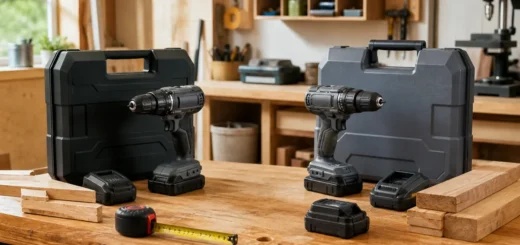
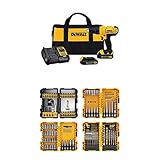
A cordless drill/driver is the most useful power tool for a rental kit. Choose an 18- or 20-volt platform with a clutch, two-speed gearbox, LED light, and a battery no smaller than 1.5 Ah. A drill kit with one battery often sells for $60 to $100; a two-battery kit commonly costs $100 to $160. Two batteries matter when assembling furniture, installing blinds, or replacing multiple door hinges in one visit.
Do not automatically buy a hammer drill. It is useful for masonry anchors in concrete or brick, but a standard drill/driver handles wood, drywall, metal, and most routine hardware. Add a cordless drill/driver kit from a platform with readily available replacement batteries. The cheapest tool is a poor bargain if a replacement battery costs nearly as much as a new kit.
An oscillating multi-tool is a useful second power tool for cutting a damaged section of trim, undercutting door jambs, removing grout, or trimming a stuck piece of flooring. It is not essential for every property. Buy one when you regularly face repair jobs that are awkward for a saw or utility knife. A compact cordless saw is more specialized and can wait unless you maintain decks, fences, or larger wood repairs.
Cover small plumbing and electrical failures
Keep two adjustable wrenches, tongue-and-groove pliers, a basin wrench, a small pipe cutter, plumber’s tape, a pick tool, and a bucket in the plumbing section. A $10 to $20 basin wrench can save a service call when replacing a faucet. Include several sizes of faucet washers, supply-line gaskets, hose clamps, and a short length of clear tubing for temporary drainage or testing.
For electrical troubleshooting, use a non-contact voltage tester, outlet tester, insulated screwdrivers, and a headlamp. An outlet tester costing $10 to $20 can identify reversed polarity or an open ground, but it cannot prove that a circuit is safe to work on. Turn off the breaker and verify with the voltage tester before removing a cover. Do not use a rental maintenance kit as a reason to perform work that local law reserves for licensed electricians.
Keep spare fuses only if the property uses them, and label the correct breaker for each room. A common failure mode is replacing a breaker or outlet without addressing an overloaded circuit, loose connection, or damaged cord. Basic tools help diagnose the problem; they do not eliminate the need for a professional.
Compare tool tiers before spending
| Tool category | Budget choice | Mid-range choice | Best value for rentals |
|---|---|---|---|
| Hand-tool kit | $25–$50; adequate for one unit | $60–$120; stronger joints and better cases | Mid-range if used weekly; budget for light use |
| Drill/driver kit | $45–$80; usually one battery | $100–$160; two batteries and better ergonomics | Mid-range platform with affordable batteries |
| Plumbing tools | $20–$40 for basics | $50–$90 with basin wrench and cutters | Buy individually; avoid unused specialty tools |
| Inspection and safety | $20–$40 for tester, flashlight, and level | $50–$100 with headlamp and moisture meter | Budget tools are usually sufficient |
Brand value matters most in cordless tools because batteries lock you into a system. A reputable budget brand can be perfectly serviceable for light maintenance, but check battery availability and warranty support before choosing it. For hand tools, established mid-priced brands often provide better warranties and more consistent fit than anonymous bulk kits. You do not need premium professional tools for changing locks or tightening cabinet pulls.
Budget for consumables and storage
Tools alone do not complete repairs. Keep assorted wall anchors, wood and drywall screws, picture hooks, zip ties, electrical tape, silicone caulk, wood filler, sandpaper, replacement utility blades, and common drill bits. A small home repair consumables assortment can cover early gaps, but restock by actual usage rather than buying every size.
Store the kit in a locking, lidded box or tool bag rather than loose in a vehicle. A 20- to 24-inch tool bag is easier to carry upstairs; a compartmented box is better for screws and fittings. Add a bright inventory label and count batteries, chargers, and testers after each job. Missing tools create more cost than modestly higher purchase prices.
Buy around seasonal maintenance
Buy cordless tools and outdoor equipment during late spring promotions, while hand-tool kits often see strong discounts around November and December. Plumbing repair supplies are worth buying before winter, when frozen or burst supply lines are more likely. Before summer, add a hose nozzle, adjustable sprinkler wrench, exterior caulk, and a reliable compact wet-dry vacuum for condensate, appliance leaks, and small floods.
Replace damaged cords, cracked tool handles, swollen batteries, and testers with unreliable indicators immediately. The cheapest kit is the one that completes a repair without a second trip, but that does not mean buying the largest kit. Build around the failures your property actually produces, then upgrade the few tools that see weekly use.