Best Value Tools for Assembling a Home Gym
What's inside
As an Amazon Associate I earn from qualifying purchases. This post may contain affiliate links at no extra cost to you.
Building a home gym does not require a room full of matching equipment. The best value usually comes from a few durable basics that cover pressing, pulling, squatting, hinging, and conditioning. Buy the movements first, then add convenience items as your training becomes more specific.
As an Amazon Associate we earn from qualifying purchases at no extra cost to you.



Where to spend first
A useful starter setup is an adjustable bench, adjustable dumbbells, resistance bands, and a way to do pull-ups. That combination supports presses, rows, split squats, Romanian deadlifts, curls, shoulder work, and core exercises without taking over a room.
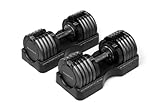
For many beginners, adjustable dumbbells are a better first purchase than a barbell set. A pair covering roughly 5 to 50 pounds handles more exercises and takes less storage space. The trade-off is that inexpensive selectorized dumbbells can rattle, have awkward handles, or limit how quickly you can change weight. For heavy rows and presses, a loadable handle with standard plates is slower but often tougher and cheaper to repair.
A flat bench is enough for floor presses, rows, step-ups, and many dumbbell movements. An adjustable bench adds incline pressing and supported rows, but the hinge and adjustment ladder become failure points. Look for a stated capacity of at least 600 pounds, including the user and weights, a firm back pad, and minimal side-to-side movement. A bench rated at 1,000 pounds is not automatically safer if the frame flexes.
What the common equipment costs
| Equipment | Useful budget range | Best value when | Common compromise |
|---|---|---|---|
| Adjustable dumbbells | $80–$350 per pair | You need many weights in little space | Slower changes, fragile adjustment parts |
| Adjustable bench | $100–$250 | You train presses and supported rows | Wobble or a narrow, short pad |
| Power rack | $250–$700 | You want to squat and bench with a barbell | More floor space and assembly |
| Olympic bar and plates | $250–$700 | You lift heavy and want simple mechanics | Noise, storage, and floor protection required |
| Resistance bands | $20–$70 per set | You need inexpensive accessory work or travel gear | Resistance varies through the movement |
| Cardio machine | $150–$1,000+ | You will use it several times a week | Large footprint and maintenance |
When a rack and barbell are worth the money
A barbell becomes the better value once you routinely need more than about 100 pounds of dumbbell load or want to progress squats and deadlifts in small increments. A basic 7-foot Olympic bar rated around 700 to 1,500 pounds is sufficient for most home lifters. You do not need a competition bar with expensive bearings for ordinary squats and presses.
Buy plates by total cost per pound, not just the sticker price. Standard iron plates are usually the cheapest and last for decades, but they are loud and can damage concrete or wood floors. Bumper plates cost more per pound and take more storage space, yet they are useful for deadlifts and Olympic lifts. A mixed set—iron plates for heavier loads and a few bumpers for drops—can be a sensible compromise.
A power rack with a pull-up bar is safer than a freestanding squat stand for solo barbell work, especially when it includes adjustable safety arms or straps. Check the rack’s footprint and ceiling clearance before ordering. Many racks need 7 to 9 feet of height once a bar is loaded. Bolt a tall or narrow rack to the floor or wall when the manufacturer requires it; an unanchored rack can tip during a failed rack pull or kipping pull-up.
The cheap accessories that earn their space
Resistance bands are excellent for warm-ups, face pulls, triceps work, assisted pull-ups, and travel. A set of loop bands costing $25 to $50 can replace a cable station for light accessory training. They are not a full substitute for weights: the resistance is lightest at the start of the movement, and latex eventually cracks. Inspect them before every session, especially near door anchors and handles. A band that snaps under tension can cause a painful recoil injury.
For a compact cable option, a plate-loaded cable machine can provide pulldowns, rows, and pressdowns without the price of a selectorized commercial unit. Budget units often have rough pulleys and short cable travel. Confirm that the mounting hardware suits your wall, and do not trust drywall anchors for a machine that will handle serious loads.
Do not skip flooring and storage
Flooring protects both the equipment and the building. For dumbbells and ordinary strength work, 3/8-inch rubber tiles or rolls are usually adequate. For repeated deadlift drops, use thicker 3/4-inch mats or lifting platforms, plus bumper plates. Puzzle tiles are inexpensive, but seams can separate and edges curl if the floor is uneven.
Storage is a value issue, not just a neatness issue. A vertical plate tree, wall-mounted bar holder, or simple rack keeps walkways clear and reduces trip hazards. Do not stack heavy plates on a narrow shelf unless its load rating includes a safety margin. Store adjustable dumbbells where they cannot fall from a bench or shelf.
How to buy at the right time
New equipment is commonly discounted around January, Memorial Day, Labor Day, and Black Friday, but a low price is not a bargain if freight costs erase it. Heavy plates and racks can add $50 to $200 in shipping. Compare the delivered total, warranty, and return policy.
Used equipment is often the strongest value. Iron plates, flat benches, racks, and basic bars have few parts that wear out. Inspect welds, holes, safety pins, bench upholstery, and bar straightness. Spin the sleeves and look for deep rust or bent ends. Used selectorized dumbbells, treadmills, and cable machines deserve more caution because proprietary parts can cost nearly as much as the equipment.
Spend more on safety-critical items and parts you will use every session. Buy cheaper bands, plates, and simple handles when their limitations are acceptable. The most economical home gym is the one you can assemble safely, adjust quickly, and keep using after the novelty wears off.