Best Budget Tools for a First-Time Woodworking Setup
What's inside
As an Amazon Associate I earn from qualifying purchases. This post may contain affiliate links at no extra cost to you.
A first woodworking setup does not need a shop full of machines. You can build useful projects with a saw, a way to make accurate marks, a method for holding work, and one or two sanding tools. The best budget strategy is to spend on accuracy and safety first, then add power tools when they remove a real bottleneck.
As an Amazon Associate we earn from qualifying purchases at no extra cost to you.


What to Buy First
Start with a 16- to 25-foot tape measure, a combination square, a sharp pencil or marking knife, a utility knife, hearing protection, safety glasses, and a dust mask rated N95 or better. These items are inexpensive, but poor measuring and unsafe dust control will ruin more projects than a lack of expensive machinery.
A 12-inch combination square is more useful than a very cheap six-inch model because it reaches across common boards and helps check both 90- and 45-degree cuts. Avoid squares with loose blades or heads that shift when tightened. A square that is off by 1/16 inch can create visibly bad joints.
For hand cutting, a basic crosscut saw is enough for rough work, while a Japanese pull saw is easier for many beginners to control. A pull saw leaves a thin kerf and cuts quickly, but its blade is usually harder to replace or sharpen. If you expect to cut plywood or make repeated straight cuts, an entry-level circular saw is the better power-tool purchase. Look for corded circular saws and straight-edge guides rather than paying extra for a cordless system before you own batteries.
Do Not Skip Workholding
A flat work surface and two or four clamps make cheap tools perform better. A pair of sawhorses with a sacrificial sheet of 3/4-inch plywood is often more practical than a small “workbench” that wobbles. Add another plywood layer if the first one bows under heavy boards.
Begin with four 6-inch bar clamps or quick clamps. Very cheap clamps can lose pressure, flex, or have jaws that do not stay parallel. They are fine for holding a trim piece while glue sets, but frustrating for cabinet panels. Buy fewer, better clamps if necessary. Two solid clamps are more useful than eight that slip.
Use a bench vise only if you have a sturdy bench to mount it to. A lightweight vise bolted to a folding table can twist the table and make planing unsafe. For a first setup, a couple of hold-down clamps and a simple bench dog system are often better value.
Where Budget Tools Make Sense
| Tool or category | Reasonable budget range | Cheap option is fine when | Spend more when |
|---|---|---|---|
| Combination square | $10–$25 | You verify it against a known straight edge before use | You need repeatable joinery or a durable locking mechanism |
| Bar clamps | $10–$25 each | You are doing light assembly and short glue-ups | You are clamping wide panels or hardwood joints |
| Circular saw | $50–$120 corded | You make occasional rough cuts and use a guide | You need cleaner cuts, better adjustment, or daily use |
| Random-orbit sander | $35–$80 | You connect it to a vacuum and sand small projects | You need lower vibration, better dust collection, or long sessions |
| Drill/driver | $50–$150 as a kit | You drill softwood and drive ordinary screws | You use it for large holes, hardwood, or frequent construction |
The First Power Tools Worth Buying
A corded circular saw is usually the best value for breaking down sheet goods. It can cut a 2-by-4 easily and does not force you into a battery platform. The trade-off is the cord: keep it behind the cut line, and do not let it catch on the workpiece. A guide made from straight plywood can produce cabinet-quality cuts if the saw base is adjusted carefully.
A random-orbit sander is the next sensible purchase. It removes scratches faster than hand sanding without leaving the obvious linear marks produced by a sheet sander. Buy a 5-inch random-orbit sander with dust collection. Budget sanders often vibrate more and have poorer hook-and-loop pads, but they are adequate for a few projects per month. Use a vacuum if possible; sanding dust clogs abrasives and can damage the sander’s switch and bearings.
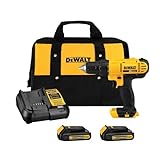
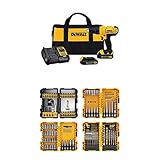
For drilling and assembly, a compact drill/driver is enough. A two-speed gearbox, clutch, keyless chuck, and a battery platform with replacement packs are more important than a high voltage number. An impact driver is useful for long construction screws, but it is noisy and can strip small screws or split boards. Do not buy one first unless your projects involve lots of structural fastening.
For hand tools, spend selectively on a small set of bevel-edge woodworking chisels, not a large kit. Two or three sizes—around 1/4, 1/2, and 3/4 inch—cover common cleanup work. The cheapest chisels may arrive blunt, but that is acceptable if the steel holds an edge after sharpening. A dull chisel is more dangerous because it requires excessive force and can slip.
Brand and Platform Value
Brand matters most for cordless tools, batteries, chargers, and warranty support. A low-cost drill that includes two batteries can be a good deal if replacement batteries remain available. A bargain tool with a discontinued battery platform becomes disposable when its pack fails, often after two to five years.
For corded tools, the value calculation is different. A basic saw or sander from a reputable budget brand can last for occasional use, and there is no battery ecosystem to maintain. Check whether replacement blades, sanding pads, and carbon brushes are easy to find. Tool-free depth and bevel adjustments are worth paying for on a circular saw because loose knobs can change the cut during use.
When to Buy
Watch for spring home-improvement sales, Father’s Day promotions, and November holiday events. Cordless kits are often discounted when manufacturers refresh a battery line, while corded sanders and saws tend to receive smaller but more predictable price cuts. Compare the kit price with the cost of a bare tool plus battery; an apparently cheap kit may include a small battery that runs out during normal work.
Buy consumables during sales only if you will use them within a year. Sandpaper loses little performance in storage, but batteries should not be left fully discharged, and low-quality clamp sets are not a bargain if their jaws bend on the first wide glue-up. Put the first money into accurate layout, solid workholding, and dust control. Those upgrades improve every later tool you buy.